

70 years of Swiss-Nepalese cooperation – a resilient partnership, even in times of crisis
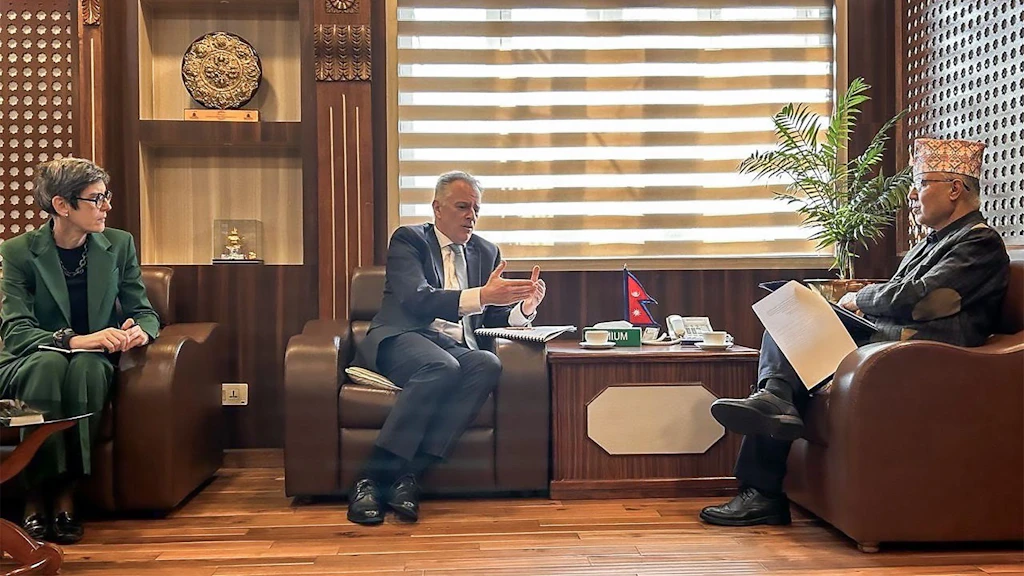
Nepal and Switzerland have maintained a close partnership since 1956. In this interview the Swiss ambassador in Nepal, Dr Danielle Meuwly, discusses the current crisis, the two countries' shared history, and Swiss-Nepalese relations.

Through the Swiss Agency for Development and Cooperation (SDC), Switzerland has made significant contributions to Nepal's development in areas such as local government, infrastructure, agriculture, vocational skills and community empowerment. Switzerland has also stood firmly with Nepal in times of crisis, including the 2015 earthquake and the COVID-19 pandemic.
The devastating flash flood of 26 August 2026 has once again caused great suffering and severe damage. The disaster underscores the importance of resilient infrastructure, effective local institutions and long-term disaster preparedness.
We interviewed Dr Danielle Meuwly, the Swiss ambassador in Nepal, as the two countries mark seventy years of bilateral relations.
Switzerland and Nepal have enjoyed almost seven decades of diplomatic relations. How do you view the deepening ties between the two countries?
Switzerland was one of the first European countries to establish diplomatic relations in 1956, when its ambassador in New Delhi at the time was also accredited to Nepal.
But the connection actually started even earlier. In the 1950s, the Nepalese government invited Swiss geologist Toni Hagen to carry out extensive fieldwork. His mapping of the country and pioneering research laid the foundation for Switzerland's early development work in Nepal.
Since then, cooperation has kept evolving to match the needs and aspirations of the Nepalese people, from cheesemaking, potato cultivation, and building roads and bridges to today's wide-ranging work in areas like federalism, private enterprise, vocational education and climate resilience. To further deepen our ties, we opened a permanent representation in 2009. Nepal has also stepped up its relations with Switzerland: in 2000, its permanent representative to the UN in Geneva was accredited as ambassador to Switzerland.
You arrived in Nepal in 2023. How would you describe your experiences so far?
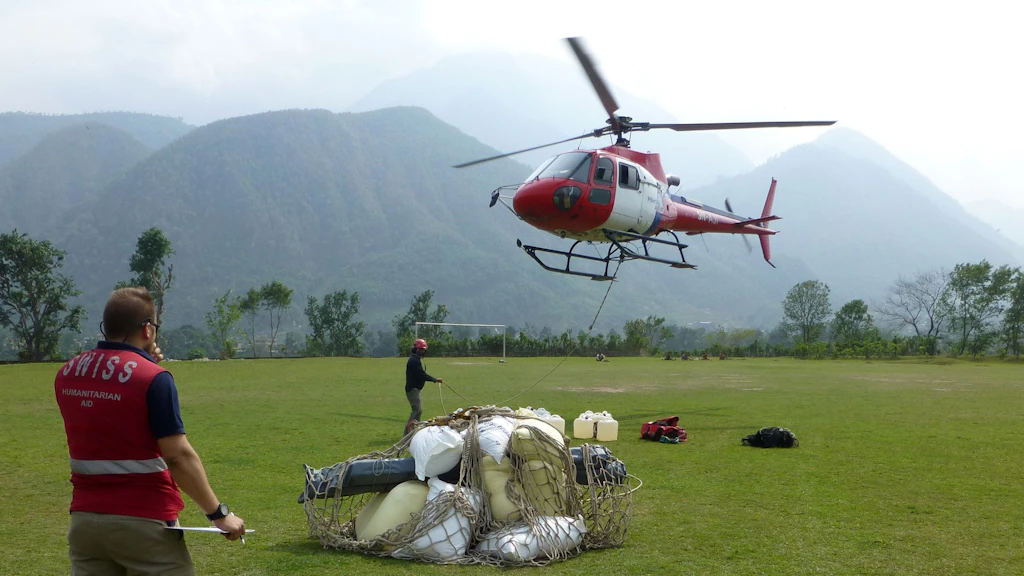
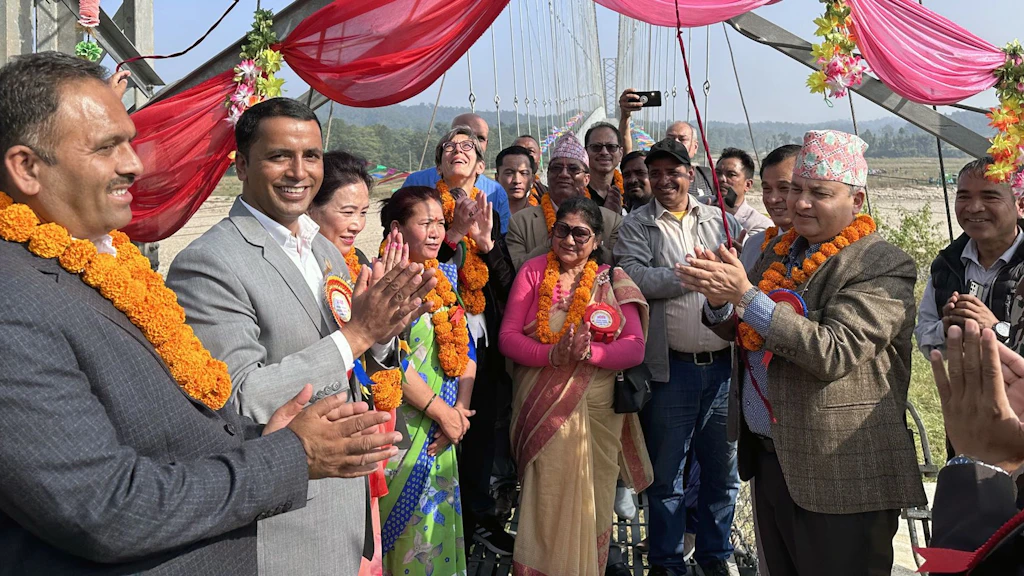
I feel extremely privileged to represent Switzerland in Nepal. My time here has been professionally rewarding and personally inspiring.The lasting impact of our cooperation is clear to see. I was there for the inauguration of the 10,000th trail bridge and its handover to the government of Nepal. These bridges serve 19 million people and save them an average of two and a half hours of walking time. We also launched other initiatives to improve governance, support SMEs, and boost climate resilience. Nepal has experienced many natural disasters, such as the earthquakes of 2015 and 2023. Switzerland has always provided humanitarian aid, rebuilding schools and health posts, training masons and helping to provide psychosocial support. I have always been impressed by the resilience of the Nepalese people in the face of these disasters.
After the devastating flash flood on 26 August, Nepal is once again reeling from the impact of a major natural disaster. What does this event mean for Swiss-Nepalese cooperation?
First and foremost, our deepest sympathies go out to the victims, their families and everyone affected by the disaster. I would also like to express my great respect for the Nepalese rescue services, authorities and volunteers. This event tragically highlights just how vulnerable Nepal is to the impact of natural hazards and climate change. Switzerland reacted very quickly and allocated USD 2 million (approx. CHF 1.6 million) for emergency aid to provide clean water, emergency shelter, food, healthcare and psychosocial support for those affected. In the medium and long term, we must work together to identify risks even earlier, further strengthen local authorities and communities, and make infrastructure more resilient. Switzerland is supporting Nepal with expertise in the field of disaster preparedness and in the management of natural hazards, as well as with an additional CHF 3 million for reconstruction efforts.
Switzerland is one of Nepal's oldest development partners. What are its current priorities with regard to Nepal?
We are very proud of what we have achieved. We have established a strong foundation that allows us to transition our partnership from development to trade.
We have established a strong foundation that allows us to transition our partnership from development to trade.
Our current cooperation programme rests on three pillars: first, supporting Nepal's journey to federalism. Second, creating more economic opportunities. Third, climate change mitigation and the reduction of natural hazards. In all our activities, we integrate gender equality and whenever possible digital solutions to increase transparency and efficiency.
Our cooperation has evolved over the years along with Nepal itself. Past initiatives included cheesemaking, potato seed farming, and the construction of roads and bridges. Following the adoption of the new constitution in 2015, Switzerland embraced the system-building approach across the federal, provincial and local levels to support Nepal's transition towards a federal system that benefits the entire population. In doing so, we aim to support provinces in their role as new administrative entities, in line with their constitutional mandate, and to empower local governments.
Nepal is set to graduate from least developed country (LDC) status. What role will Switzerland play here?
The government of Nepal has requested a three-year postponement of its LDC graduation due to the Gen Z protests and the challenging international context. This is absolutely Nepal's decision to make and we understand the reasoning behind it. Graduation is a significant transition and it is important that it happens on a solid footing.
Switzerland is committed to supporting Nepal in this process. It is important to create an environment that attracts investment and helps local businesses grow.
One key area here is access to finance for SMEs. Traditional lending in Nepal is often short-term and risk-averse, which makes it hard for local SMEs to expand. That is why we work with the Nepalese authorities and the financial sector to create favourable conditions for innovative financing instruments. For the private sector to thrive, the key is to have good framework conditions and political stability, but also fair and transparent rules and regulations that create a level playing field. We try to connect firms with development finance institutions like the Swiss Investment Fund for Emerging Markets (SIFEM), which has already made two investments in Nepal's financial sector, so that SMEs can access the longer-term financing and patient capital they need.
Foreign investment is not just about money, though. It also helps bring in technical expertise, promote international standards and strengthen good governance. Every Swiss franc invested has a multiplier effect, helping to create jobs, drive innovation and boost economic growth. This is essential to unlock the potential of Nepalese businesses, help them compete globally and create jobs for young people.
As we look ahead, how can Switzerland and Nepal work together to advance Nepal's aspirations?
Despite the current disaster and the major challenges Nepal faces, it is undergoing a significant period of political and economic change. The government is currently pursuing reform-oriented, business-friendly policies that offer new opportunities. If Nepal achieves the political stability it needs, I believe it will open the door to a new chapter in our bilateral relationship.
For Switzerland, this means shifting the centre of gravity of our partnership from development to trade. This is also in line with the Federal Council's decisions on the future direction of Switzerland's international cooperation. In June 2026, the Federal Council decided that the SDC would focus on low-income countries in future. Nepal is aiming to be classified by the United Nations as a lower-middle-income country by 2029. With this in mind, Switzerland's bilateral development cooperation in Nepal will be phased out by the end of 2029. These funds will instead be channelled into humanitarian aid. In the future, this will enable Switzerland to respond quicker and with additional resources to wars, crises and natural disasters, as was the case most recently with the devastating flash floods in Nepal. The partnership we have built over seven decades provides an excellent foundation for the further development of relations between Switzerland and Nepal. Ultimately, Switzerland stands ready to walk this path alongside Nepal, supporting its reform agenda and helping to translate this momentum into a partnership increasingly grounded in shared economic opportunity.
Photo gallery


"Governance, governance, governance!”
The federal state structure is part of the solution to getting the country back on the right path following the unrest in September 2025, says SDC Assistant Director General Arno Wicki.
Remembering the 2015 earthquake and Nepal's road to recovery
The 2015 Nepal earthquake and the importance of short- and long-term aid in response to the latest earthquake in Myanmar
How a bridge changes people's lives
A suspension bridge in Nepal is changing life in the neighbourhood. Those affected tell their stories.
Contact
Eichenweg 5
3003 Bern