

Ahead of El Niño: Switzerland's approach to disaster risk reduction
The current El Niño event is already very strong and could produce devastating consequences, pushing the cost of inaction higher and higher. Anticipating natural hazards and building on Switzerland’s holistic approach to disaster risk reduction (DRR) is therefore more important than ever. This is particularly relevant in southern Africa, where Switzerland supports anticipatory, predictable, nationally owned risk management.

An already very strong El Niño is forecast to intensify even further in the coming months, resulting in an exceptionally impactful event, with potentially devastating consequences in many parts of the world. Global temperatures are highly likely to exceed all past records. Although El Niño is a natural phenomenon not caused by climate change, global warming can amplify its impact because a warmer atmosphere and ocean increase the availability of energy and moisture for extreme weather events. Therefore, the ongoing El Niño is anticipated to increase the likelihood and severity of heatwaves, droughts and heavy rainfall, depending on the region.

It is important to bear in mind that El Niño is not primarily to be seen as a hazard in itself. Rather, it is to be understood as a risk multiplier with cascading consequences for food security, livelihoods, water, health, energy, transport and supply chains.
The cost of inaction in the face of intensifying disasters
This multiplying effect is especially distressing as climate change, environmental degradation and natural hazards are already intensifying at a rapid pace, regardless of El Niño. The resulting rising temperatures, extreme weather and ‘natural’ disasters not only make it harder to achieve the Sustainable Development Goals (SDGs), but also reduce the overall impact of development cooperation, hindering efforts to build a better future. This is not only a problem abroad: Switzerland too is feeling the effects of a changing climate, with temperatures that have been rising more than twice the global average.
If we take a look at the combination of all these hazards worldwide, the cost of inaction could potentially reach up to 20% of global income. Investing in risk reduction is therefore not only essential, but also cost-effective: every Swiss franc invested can save up to CHF 15 in post-disaster recovery. Anticipating risks and reducing vulnerabilities should therefore not be seen as a cost, but rather an investment in resilient and sustainable development.
Every Swiss franc invested in risk reduction can save up to CHF 15 in post-disaster recovery.
That is why Switzerland works towards protecting lives, livelihoods, and nature before they are lost to disasters.
Dialogue, anticipation, prevention
The SDC capitalises on leading Swiss and international expertise and promotes evidence-based solutions to inform policies at the subnational, national and regional level. It also advances global dialogue, promoting a coherent approach to DRR, climate change and environmental sustainability.
Through an integrated risk management approach, the SDC fosters, among other things, the prevention of and preparedness for climate-induced natural hazards (e.g. flash floods, glacial lake outburst floods), the development of climate-resilient water management and the introduction of drought-resistant crops. In general, the SDC integrates DRR into sustainable development and humanitarian aid and supports multilateral efforts to make development risk-informed. The focus lies mainly on reducing risks and avoiding disasters through long-term prevention. The SDC helps partner countries to better understand hazards, strengthen their disaster risk governance, and support the inclusion of the most vulnerable population. It also supports early warning systems and preparedness for upcoming events.
Moving away from a reactive disaster response in Zimbabwe and Zambia
In Zimbabwe and Zambia, Switzerland’s approach to DRR is centred on moving from predominantly reactive disaster response towards anticipatory, predictable, nationally owned risk management.
This work is crucial because southern Africa is one of the most vulnerable regions to climate change. Droughts in particular pose one of the greatest risks in Zimbabwe and Zambia, which are highly dependent on rain-fed agriculture to sustain communities. The drought during the 2023/24 El Niño event hit the two countries hard, with agricultural production, food security and livelihoods severely affected.

In the face of that devastating drought, the DRR approach followed by Switzerland proved particularly relevant. Through the African Risk Capacity (ARC) programme supported by the SDC, governments had pre-arranged financing in the form of sovereign drought insurance. This enabled them to access payouts quickly and use them to take early action as soon as the predefined insurance trigger was reached. The 2024 payouts supported approximately 509,000 vulnerable households across 27 districts in Zimbabwe and 92,515 households in Zambia.
As Zimbabwe and Zambia face this year’s El Niño event, the systems and capacities built through Swiss-supported programmes, namely the above-mentioned sovereign risk financing, early warning systems, contingency planning and climate-resilient agriculture, provide a foundation for timely, effective, nationally owned risk management.
Getting ready for El Niño
With the threats from this year's El Niño rapidly increasing, the SDC is supporting anticipatory action in Asia, Africa, Latin America and the Caribbean. As is the case in Zimbabwe and Zambia, much of the preparation is connected to longstanding SDC projects. Overall, the aim is to anticipate, protect, adapt and recover better. Switzerland’s holistic approach brings together government, scientific and civil society actors, making DRR a shared responsibility.

Climate, disaster risk reduction and environment
The SDC’s approach on Climate, Disaster Risk Reduction (DRR), and the environment focuses on combating climate change through targeted, sustainable practices.

Geneva hosts the Global Platform for Disaster Risk Reduction (GPDRR)
Geneva focuses on disaster risk reduction: From 2 to 6 June 2025, participants at the Global Platform for Disaster Risk Reduction will discuss how to deal with natural hazards.
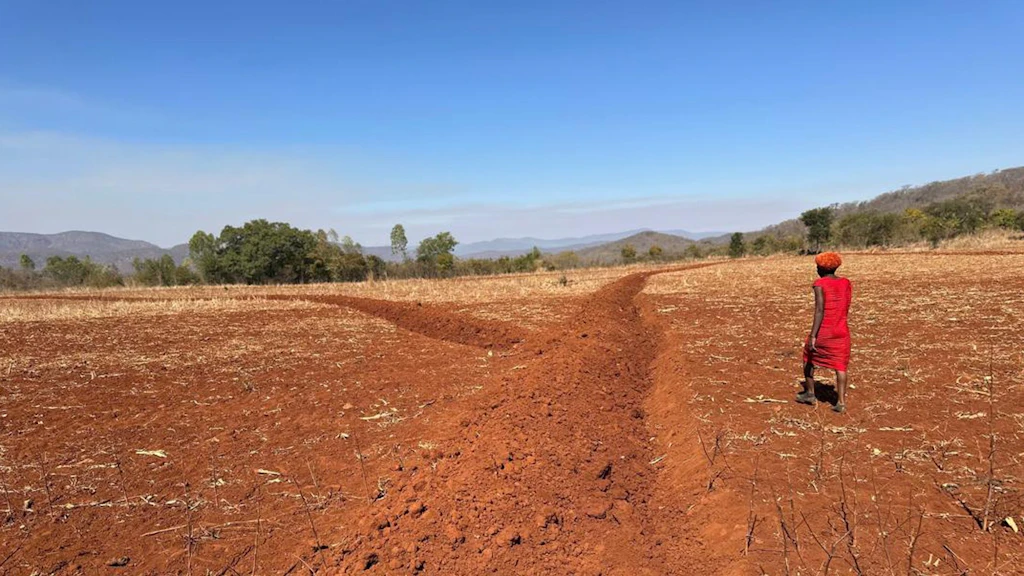
Surviving a drought thanks to sustainable agricultural practices
The Swiss Agency for Development and Cooperation (SDC) promotes drought-tolerant agricultural practices to bolster the resilience of Zimbabwe’s farming communities.
Contact
Eichenweg 5
3003 Bern