

When Forum Theatre finds its local voice
Vulnerabilities, dependencies and power dynamics in International Cooperation are directly linked to the risks of sexual exploitation, abuse and harassment. It is our obligation to address these risks and do no harm. In Tanzania and the Somali-speaking Horn of Africa, the Swiss-developed Fit for PSEAH? Forum Theatre brings local languages, stories and cultural references to the centre—empowering local actors and audiences to prevent SEAH through their own Forum Theatre.
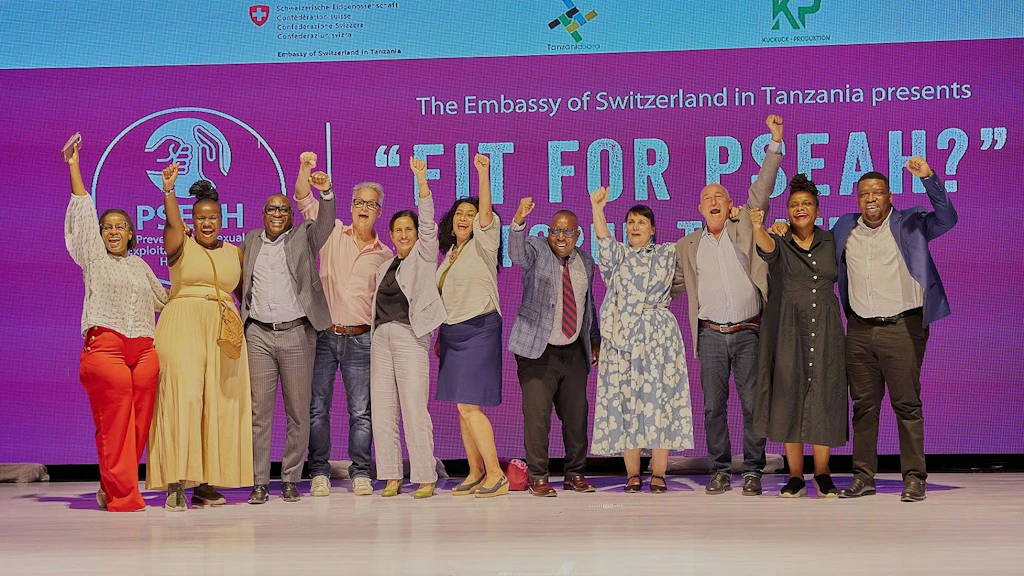
How do you start a meaningful conversation about sexual exploitation, abuse and harassment (SEAH) – especially when the subject is difficult to address openly?
Sometimes, you start by stepping onto a stage. In a Forum Theatre, audiences experience a difficult situation unfolding. But they don’t only watch, they are invited to question and debate the choices being made. They suggest alternatives – and can even step into the performance themselves to see whether a different response might change the course.
This is the idea behind Fit for PSEAH?, an interactive Forum Theatre initiative originally developed by the Swiss Agency for Development and Cooperation in 2020, in partnership with the Zürich-based theatre company Kuckuck-Produktion. Since then, performances have taken place in Bern and at the United Nations in Geneva, New York and Rome, followed by initial localisation pilots in Ethiopia and Zimbabwe. Today, the initiative is entering a new phase: moving beyond bringing Forum Theatre to different countries and towards putting the methodology into local hands.
What is PSEAH?
PSEAH stands for the prevention of sexual exploitation, abuse and harassment. It is the term used by the United Nations and non-governmental organisations (NGOs) to refer to measures taken in International Cooperation to protect people from SEAH by their own staff and associated personnel. Sexual exploitation, abuse and harassment is widespread and can have severe mental, physical, social and other consequences for the survivor or victim. Furthermore, consequences for the organisation may include loss of qualified staff and negative work atmosphere.
The FDFA promotes zero tolerance of inaction against sexual exploitation, abuse and harassment. The prevention of sexual exploitation, abuse and harassment (PSEAH) is a key priority, both internally and for partner organisations. PSEAH is relevant for the safety of beneficiaries, clients and staff, of the SDC and its partner organisations. Strong PSEAH systems are not optional—they are fundamental to delivering safe and accountable assistance and uphold Switzerland’s credibility in international cooperation.
From translation to localisation
In 2026, Tanzania and the Somali-speaking regions of the Horn of Africa became the first two contexts under the SDC's new PSEAH localisation programme (2026–29) to transform the PSEAH Forum Theatre into a local theatre play, reflecting the lived realities of the people working in development and humanitarian organisations or who are part of the communities targeted by such programmes.
Forum theatre experts from Kuckuck-Produktion worked together with local theatre companies, PSEAH specialists, facilitators and implementing partners to develop new scenarios, drawing on situations, languages and power dynamics familiar to their audiences. Scripts were developed in Swahili and Somali, and local facilitators were trained to lead future performances independently. The objective was not simply to translate an existing Swiss initiative, but to localise it.
Localisation is much more than translation. It is about ensuring communities see themselves in the stories being told, hear their own language, and discuss issues that reflect their lived realities.
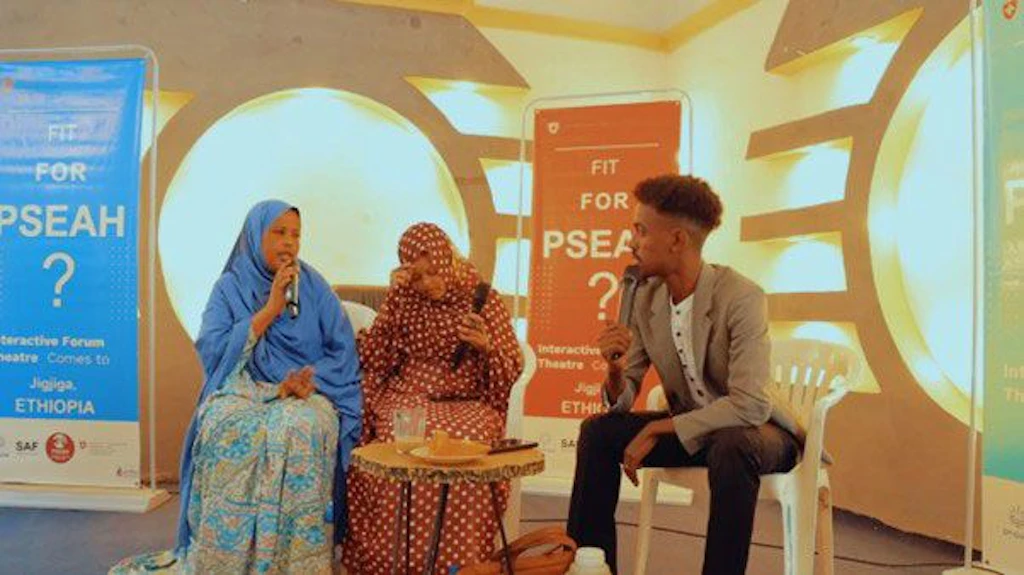
For the Somali-speaking regions, this meant first examining the specific SEAH risks and social dynamics in Mogadishu, Jigjiga and Garissa through a context assessment. These findings helped local teams create three plays rooted in recognisable settings: universities, workplaces and during aid distributions.
Language, dialects and familiar expressions were incorporated alongside local concepts of dignity, authority, protection and accountability. Somali music and dance also became part of the performances – helping create a familiar environment in which sensitive questions could be discussed. The result is not simply a local version of the same play, it is a sensitization tool designed to feel recognisable to the people using it.
As Bihawa puts it: “The performances resonated because they reflected situations that people recognised from their own lives.”
When the audience becomes part of the story
In Tanzania, the new phase was launched with a high-level Forum Theatre event hosted by the Swiss embassy in Dar es Salaam and developed together with the Tanzania Bora Initiative as local implementing partner. Local music, dance and spoken-word interventions accompanied the Swiss Fit for PSEAH? performance, bringing together representatives from the UN, civil society, development partners and local organisations.
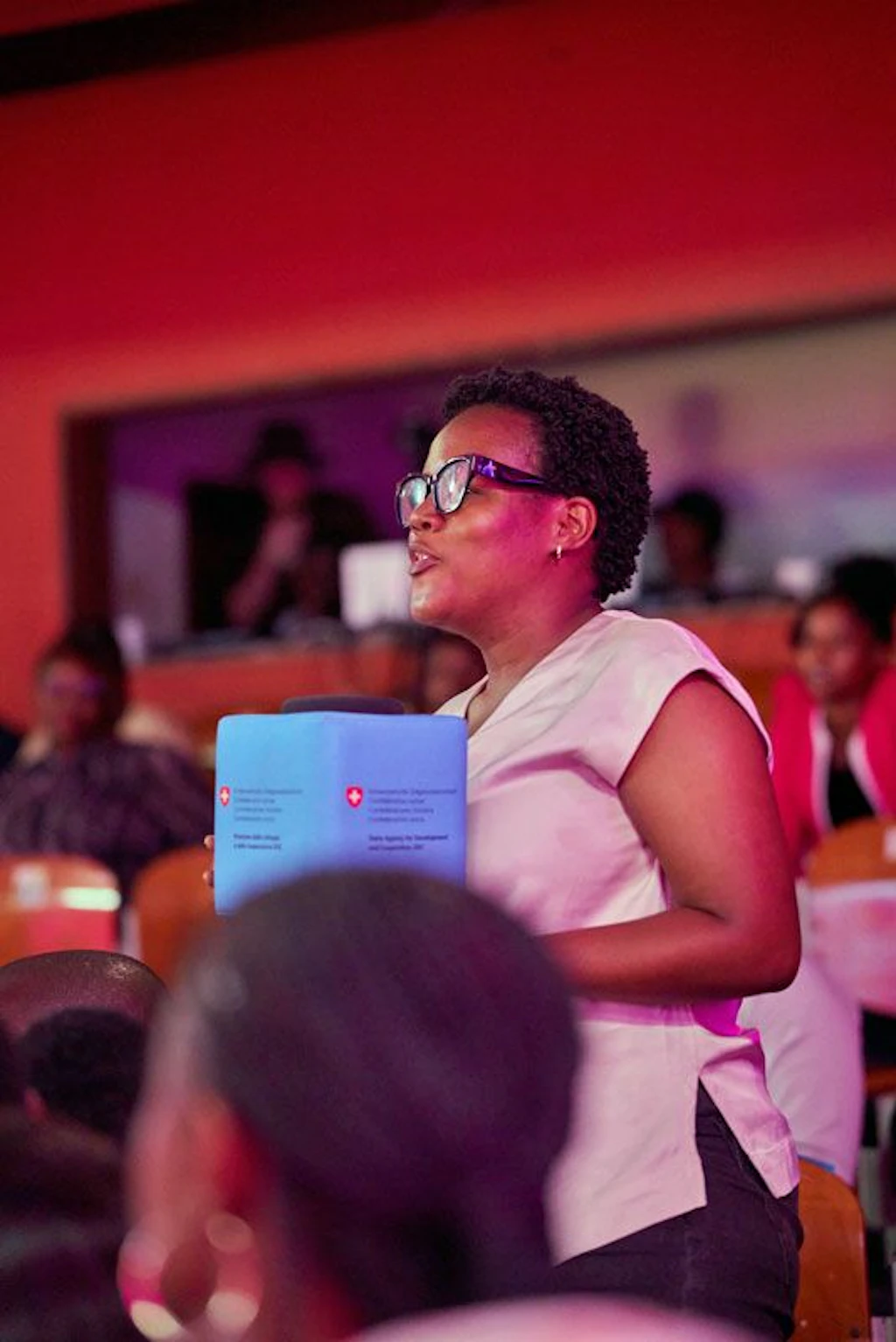
However, the most important processes emerged when the distinction between stage and audience began to disappear. Participants challenged decisions made by the characters. They proposed alternatives. Some stepped onto the stage themselves. Together, they explored questions around power, gender inequality, accountability and survivor-centred responses.
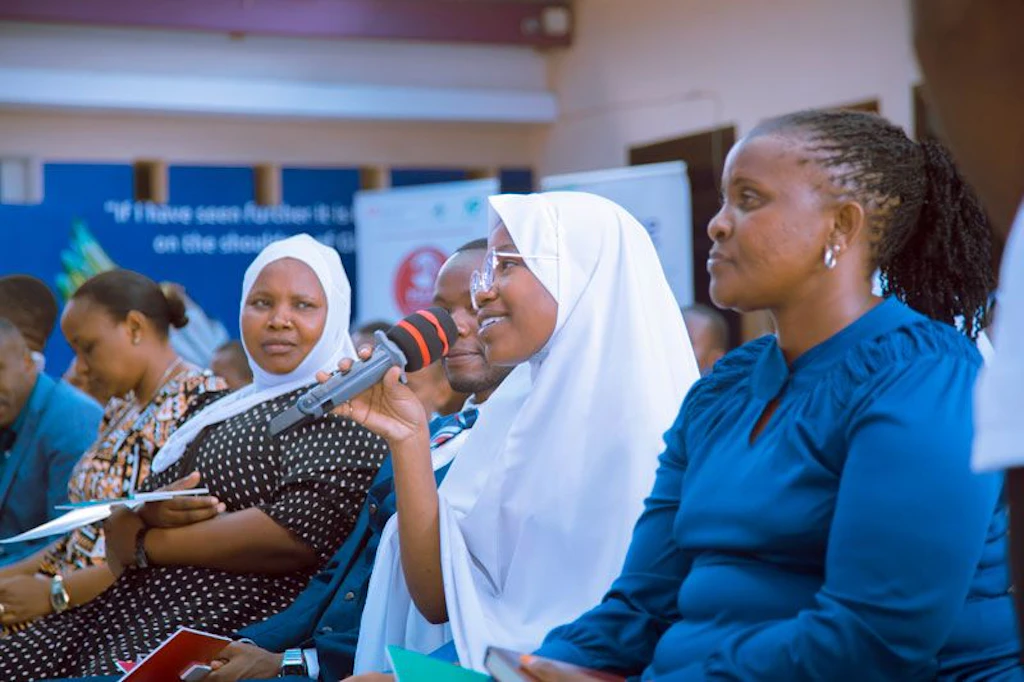
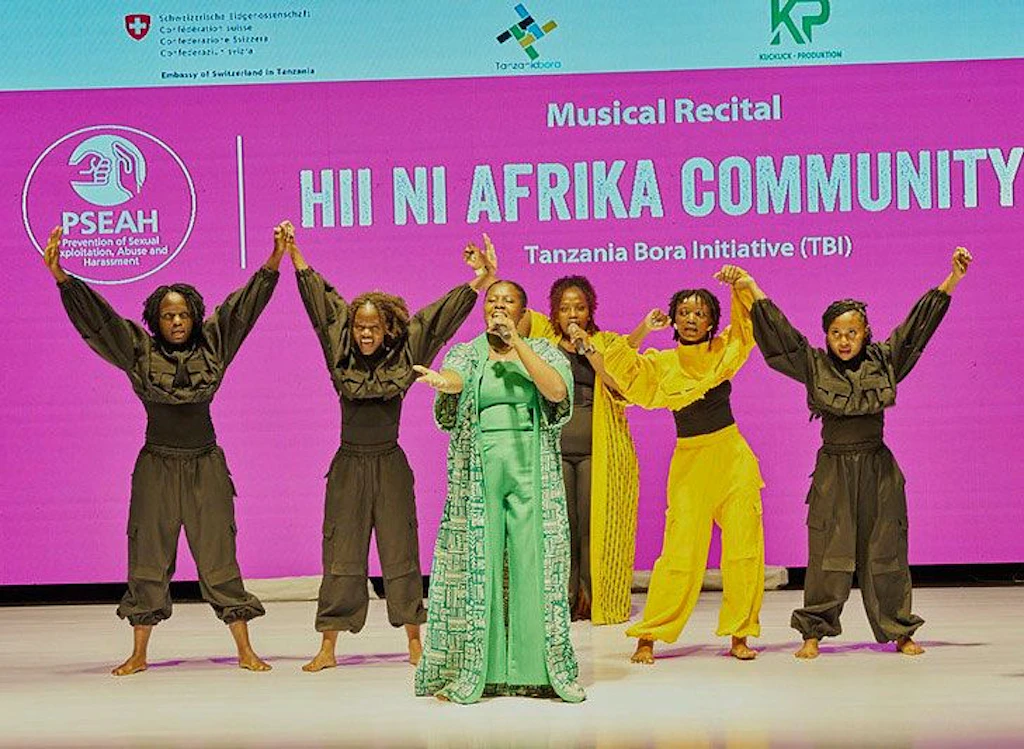
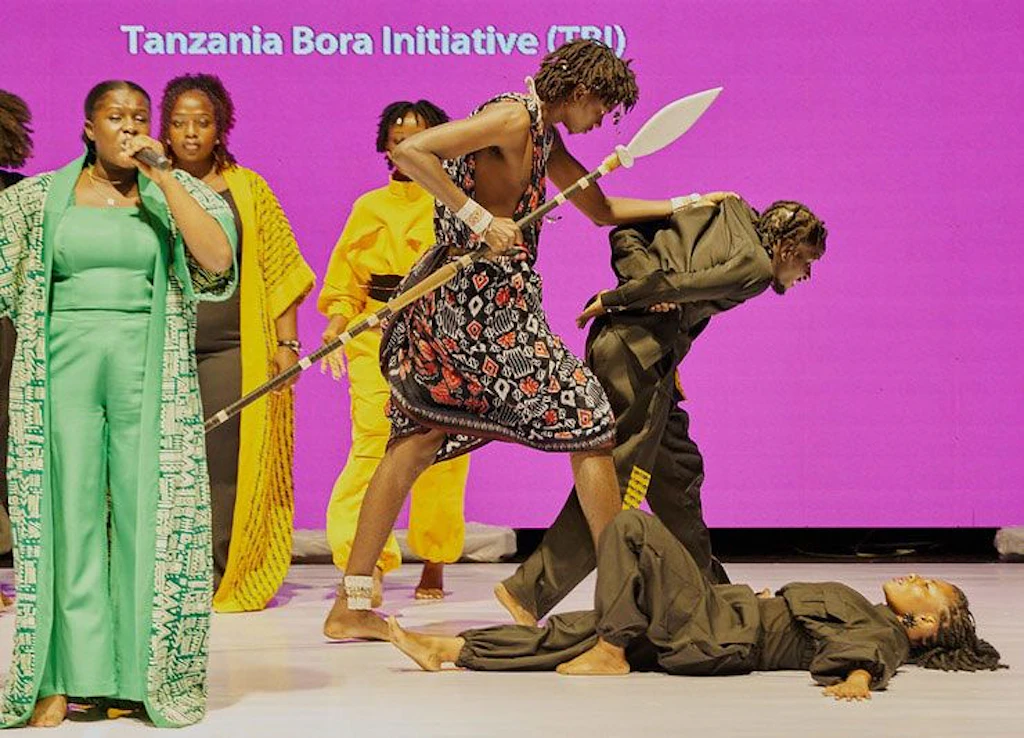
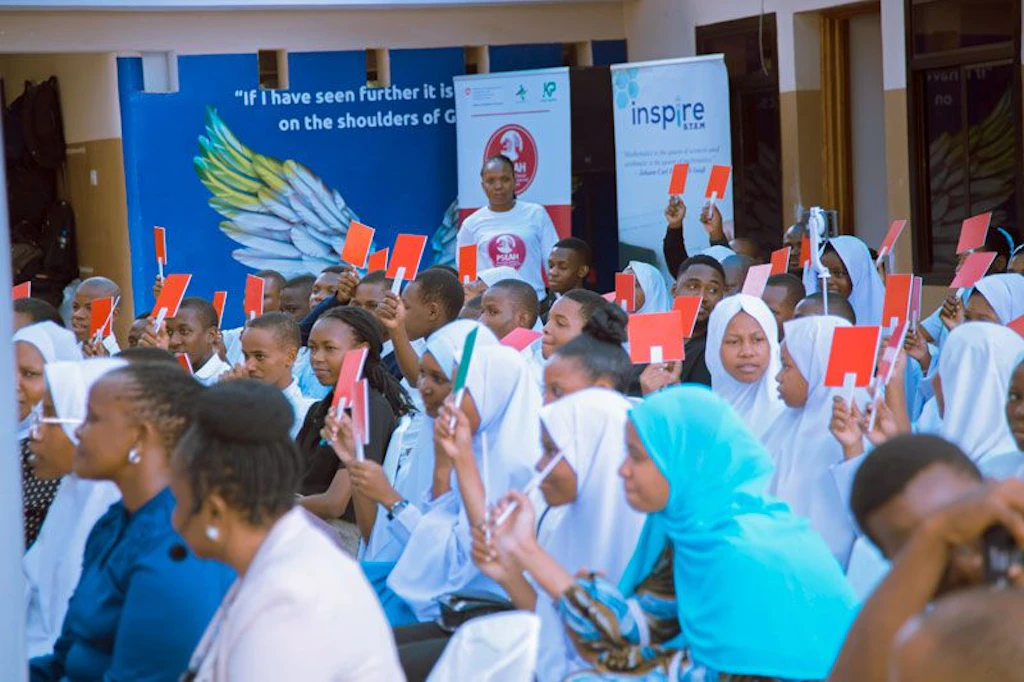
For Esther Majani, national programme officer at the SDC Cooperation Office in Tanzania, this is where localisation makes a tangible difference: “Once participants recognise localised scenarios as their own reality, the conversation becomes much more honest and practical.”
Forum Theatre does something that a presentation or policy document cannot easily achieve: it allows participants to experience the uncertainty of a difficult situation. There is not always one obvious answer. Participants can test a response, see its consequences, disagree with one another and feel their own responsibility. As Esther describes it, people can “rehearse real-life decisions in a safe environment” rather than simply being told what a PSEAH policy requires.
Creating a space to talk about what is difficult to say
That interaction matters particularly when addressing a subject that can remain taboo. For Omer Abdirahman Muhumed, one of the actors involved in the initiative in Jigjiga in south-eastern Ethiopia, the audience's response showed that such conversations are possible when the right space is created. Instead of receiving information passively, participants become part of the search for solutions.
People listened carefully to different opinions, respected those who spoke, and encouraged audience members who came onto the stage. This created a positive and supportive atmosphere where people felt increasingly confident to express their views on a sensitive topic.
Following the performances, community members asked for the programme to be brought to additional districts and rural areas, while community leaders and government officials expressed interest in bringing it into their own offices.
Building local capacity beyond a single performance
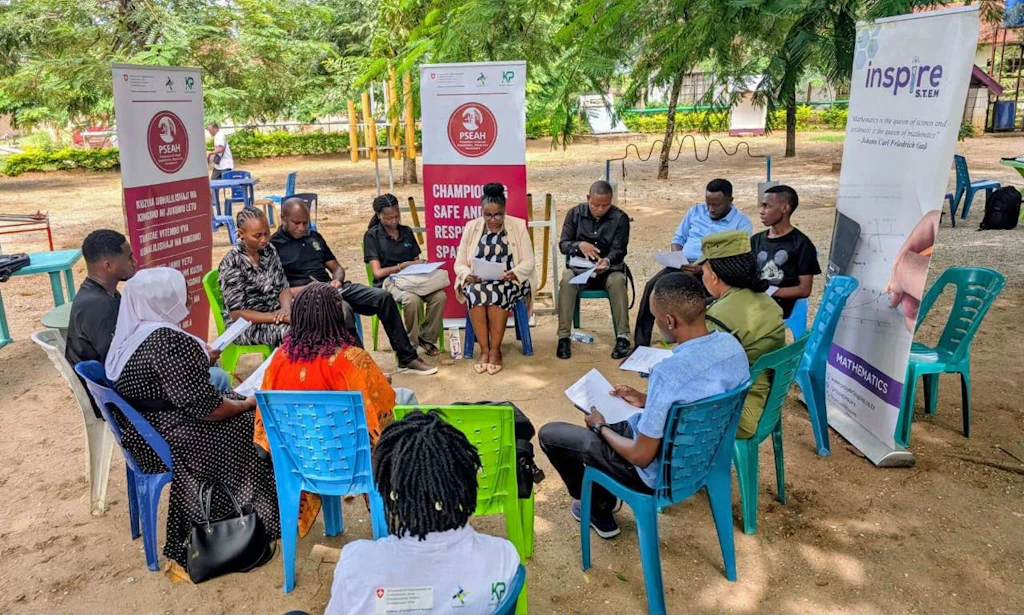
The performances are only one part of the initiative. Following the high-level launch in Dar Es Salaam, localisation workshops and intense multi-day Forum Theatre training, scriptwriting and rehearsing processes brought together theatre groups, PSEAH specialists and facilitators in Tanzania and Nairobi to develop and test localised and context-specific performances. Four local Forum Theatre trained teams have now started to disseminate the approach across eight regions of Tanzania and throughout the Somali-speaking Horn of Africa. On each implementation site, locally rooted survivor-support services are identified and actively included in the process and pre-event stakeholder meetings facilitate participation in and local ownership of the localised performances, while also setting the stage for their further dissemination.
At the heart of this approach is localisation: combining cultural knowledge, theatre skills and safeguarding expertise so that locally rooted teams can make the methodology their own.
Different languages, different stages and different stories – but the same ultimate ambition: to create spaces where people can recognise risks, question harmful behaviours and explore better ways of responding to sexual exploitation, abuse and harassment.
About the PSEAH Forum Theatre
The SDC PSEAH Forum Theatre Localisation initiative is part of SDC's four-year strategic partnership programme for PSEAH localisation. In partnership with the theatre company Kuckuck-Produktion from Zurich and in cooperation with SDC country offices, the SDC PSEAH Forum Theatre will be localised in nine different countries or regions between 2026 and 2029. Local theatre companies will be trained in the Forum Theatre's methodology and supported in developing a fully localised PSEAH Forum Theatre production that will then tour the given country or region, performing in communities where relevant SDC and other programmes are in place.
Representations that are interested can contact the PSEAH Focal Point at sdcpseah@eda.admin.ch for further information.
Contact
Eichenweg 5
3003 Bern