
10 years on the humanitarian frontline
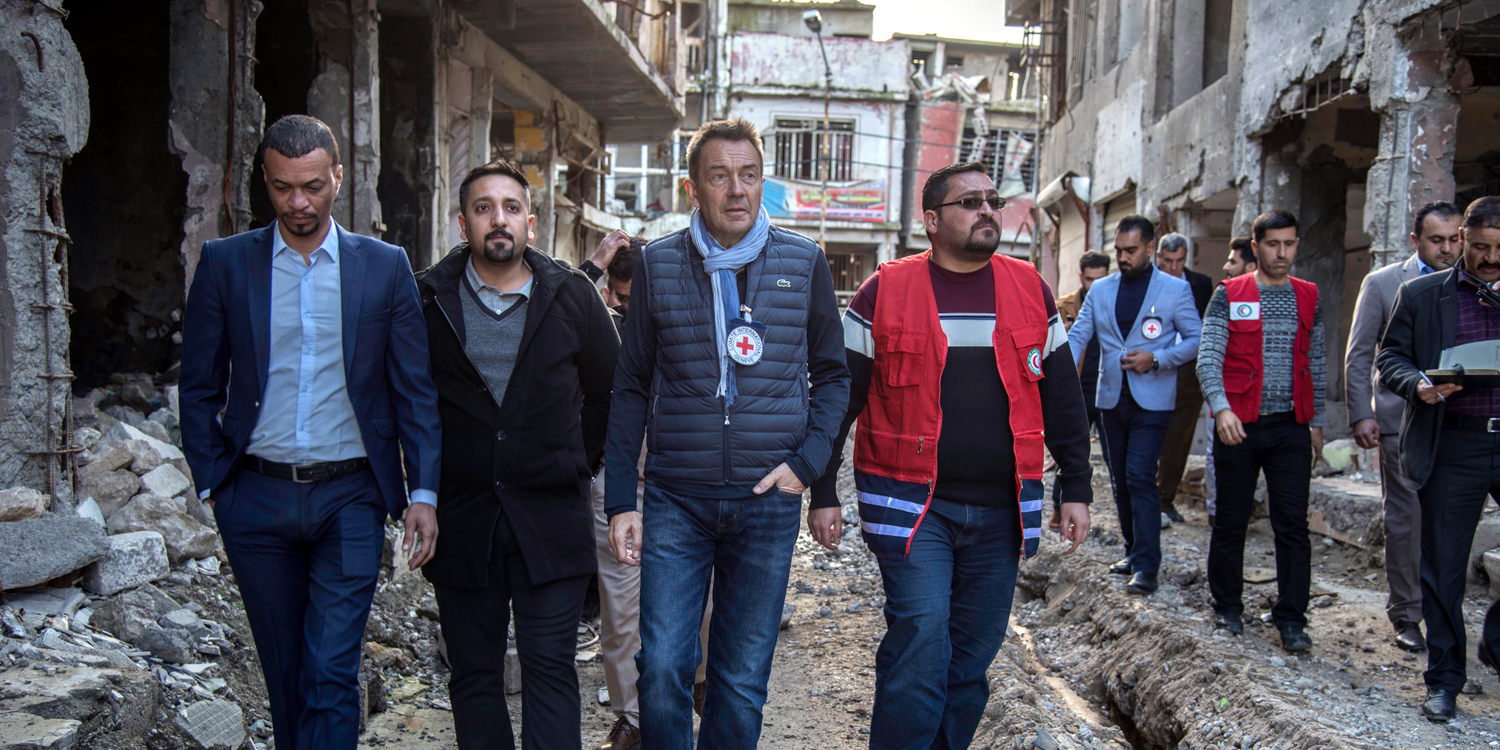
Diplomat and former Swiss State Secretary Peter Maurer is set to step down as President of the International Committee of the Red Cross (ICRC). His 10 years in office have had a global impact on humanitarian aid. As his presidency draws to a close, we take a look at the organisation which has its roots in Switzerland and provides independent and neutral humanitarian relief in times of war and other disasters.
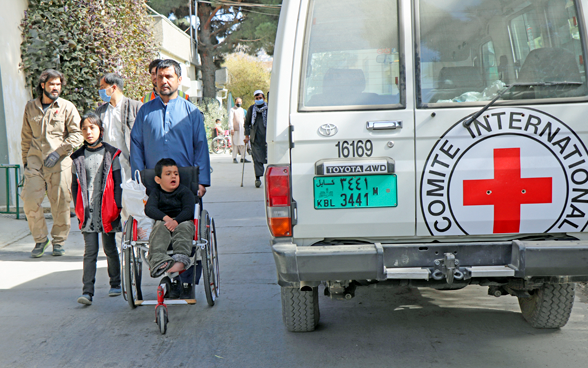
Armed conflicts, wars and natural disasters are leaving millions of people around the world dependent on humanitarian aid. The ICRC, which is based in Geneva, is one of the world's leading contributors to humanitarian missions in conflict and crisis regions. Its work helps to alleviate the suffering of many thousands of people.
The ICRC has more than 20,000 staff around the world; among them is Peter Maurer. Few ICRC presidents have had an impact on the organisation like the former Swiss diplomat. Recent years have seen a sharp rise in the number of people requiring humanitarian aid and protection. The ICRC has adapted its structures and expanded its operational activities in response to these developments. Under Maurer's leadership, the ICRC budget doubled, putting more resources at the organisation's disposal to help people in need. As ICRC President, Maurer worked to strengthen humanitarian diplomacy, improve compliance with and implementation of international humanitarian law, and forge new partnerships. His time in office was also marked by many major armed conflicts around the world, including Syria, Yemen, Afghanistan and most recently Ukraine. At the end of September Maurer will step down as ICRC President, after 10 years in the role. President of the Swiss Confederation Ignazio Cassis took to social media to thank him for his longstanding service, tireless commitment and humanity.
@ignaziocassis, social media platform X, 30.09.2022
An important SDC partner
The ICRC is also a key partner for the Swiss Agency for Development and Cooperation (SDC). Switzerland is the ICRC's third largest donor, providing annual core contributions to ICRC headquarters in Geneva as well as contributions to field operations. One third of the Swiss humanitarian budget goes to the ICRC. With the allocation of this funding to the ICRC, Switzerland contributes to the strengthening of international humanitarian law and the protection of the civilian population.
I know from personal experience how important the ICRC is when it comes to protecting and helping people affected by war and deprivation.
Switzerland needs reliable and effective partners on the ground. Contexts like Afghanistan and Ukraine are a reminder of how vital local cooperation with the International Red Cross and the national Red Cross and Red Crescent Societies is in emergency situations. The ICRC's long tradition of neutrality and independence means that it frequently enjoys access to places that other organisations are no longer able to reach. For Patricia Danzi, SDC Director General and former ICRC Regional Director for Africa, «The ICRC is our main humanitarian aid partner, especially on the ground in conflict zones, which are often inaccessible to other actors. I know from personal experience how important the ICRC is when it comes to protecting and helping people affected by war and deprivation.»
Swiss contributions to the ICRC
The ICRC annually receives CHF 150 million from Switzerland, making it the organisation's third largest donor. CHF 80 million are earmarked for ICRC headquarters in Geneva, while the remaining CHF 70 million go towards specific field operations. These projects are often implemented in direct cooperation with Swiss Humanitarian Aid personnel on the ground.
A modern and future-ready organisation
The world is changing, so too is the work of the Red Cross. Current challenges are far removed from the crises and conflicts of 150 years ago. Although its core mission remains the same, the ICRC has shown itself ready and able to adapt to its evolving operational environment. One of these new challenges is the pressing issue of digitalisation. Switzerland supports ICRC efforts to better safeguard personal data in order to prevent their disclosure to and misuse by third parties. Lives could be at stake if lists of missing persons or sensitive emergency shelter databases containing information on individuals fleeing persecution were to fall into the wrong hands. In recent years, the ICRC has led the humanitarian field on cybersecurity.
Climate change and protection of the environment are a further two challenges that the humanitarian sector cannot afford to overlook. Under Maurer's leadership, the ICRC established the Climate and Environment Transition Fund to boost climate action in its operational activities and programmes. These climate mitigation measures include the reduction of greenhouse gas emissions and environmental mainstreaming in all ICRC programmes. As a longstanding ICRC partner, Switzerland supports this initiative, as well as the 2021 Climate and Environment Charter for Humanitarian Organisations, which was formulated by the ICRC and the International Federation of Red Cross and Red Crescent Societies (IFRC) to ensure that humanitarian operations also implement the required environmental measures. Switzerland was the first country to sign the Charter as a Supporter and will continue to champion efforts that seek to align humanitarian aid more closely with environmental protection.
Protection of the civilian population in armed conflicts
Switzerland and the ICRC have many values and goals in common; they also have a shared history. The ICRC was founded in 1863 by Henry Dunant of Switzerland and works worldwide to protect civilian populations and promote compliance with international humanitarian law in armed conflicts. Whether caring for the wounded, visiting prisoners of war or searching for missing persons, the ICRC carries out a wide range of often life-saving missions to help those affected by war and its consequences.
The mandate of the ICRC is based on the Geneva Conventions of 1949, which require all states parties to abide by international humanitarian law in their treatment of prisoners of war and civilians. The Conventions were supplemented by two Additional Protocols in 1977. These conventions, coupled with the ICRC's neutrality and impartiality, allow the organisation to engage with all parties to a conflict, maintain dialogue with them, negotiate humanitarian access and urge them to respect international humanitarian law.
On 1 October 2022, Mirjana Spoljaric Egger will succeed Peter Maurer as President of the International Committee of the Red Cross. She will be the first woman to hold the position since the ICRC was established more than 150 years ago. The former Swiss diplomat will bring a wealth of international and multilateral cooperation experience to her new role. Prior to her ICRC appointment, Spoljaric Egger was the Assistant Secretary-General and Assistant Administrator of the United Nations Development Programme (UNDP), as well as the head of the UNDP Regional Bureau for Europe and the Commonwealth of Independent States.
@_PeterMaurer, social media platform X, 25.11.2021
Links
Contact
Eichenweg 5
3003 Bern