
A truck against child marriage
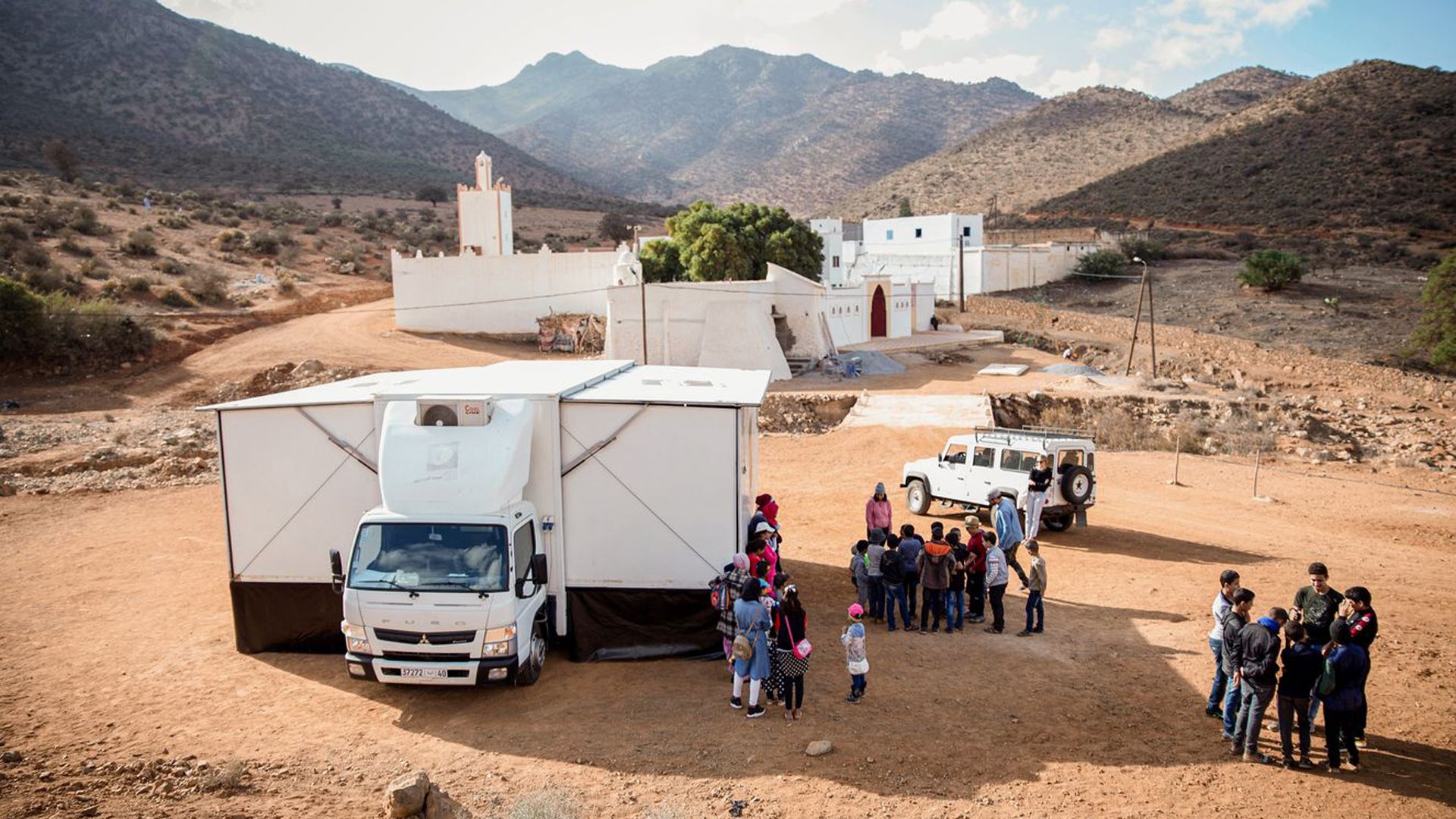
A truck that can be transformed into a stage travels through remote villages in Morocco, bringing theatre to the people and sensitising them to the dangers of child marriage.
Author: Zélie Schaller
Amal is a dreamy, talented and optimistic Moroccan girl. She likes going to school and wants to learn skills to get a job, but her father has other plans. He has promised her to a man. The girl is deeply troubled and suffers from nightmares. Can she overcome her fears? Will she find a way out from darkness into light?
Amal (which means courage in Arabic) is the main protagonist in the play, The Wall. This SDC-supported stage production of the theatre company Spectacle Pour Tous (Show for All) is playing on a truck stage named Aji Tfarej, which literally means come, see. Last winter, the show was on the move and gave over 40 performances, subsequently stopping by in La Chaux-de-Fonds at the invitation of the Ton sur Ton foundation.
The play is suitable for all audiences and has two messages. First: «Marrying off a child means stealing their childhood,» says Hamza Boulaiz, director of Spectacle Pour Tous. Second: «All children must be able to go to school and choose their own path in life.»
No escape from the downward spiral
On the stage, a wall symbolises everything that prevents Amal from taking her own decisions. The play depicts the serious consequences of child marriage for minors and their communities. First of all, there are health risks. Complications during pregnancy and birth are among the most frequent causes of death among 15 to 19-year olds. Girl brides are more likely to suffer from depression, which is frequently associated with isolation, domestic violence and sexual abuse.
Child marriages also result in greater poverty. Once girls are married, they are considered adult and must assume responsibility for household chores and child raising. Young mothers are forced to give up school. But without an education they are not equipped to find a job and cannot support their families. This leads to a downward spiral, from which there is hardly any escape. The loss of development potential for the community is also high.

Too many exceptions
The number of early and child marriages is rising in Morocco. According to Amina Bouayach, president of the Moroccan National Human Rights Council, over 40,000 minors were married in 2018. The actual situation is likely to be much more alarming, since this figure only includes legal marriages. The informal ‹contract› marriages, usually entered into by men living abroad and irresponsible fathers, are not even reflected in official statistics.
This custom, which is equally prevalent in rural and urban areas, has been banned since 2004, when the Moroccan family code known as Moudawana was revised to improve the status of women. The legal age for marriage was changed from 15 to 18 years, although the Moudawana allows for exceptions in special cases. If the parents submit an application, a court can permit marriages under the age of 18. The court's decision is irrevocable and cannot be appealed. In 2018, about 25,000 exceptions were granted, leading to a rise in child marriages. In all cases it was the girls who were underage. Feminist organisations have demanded the withdrawal of the exception clause. The authorities are aware of the problem and have commissioned a study.
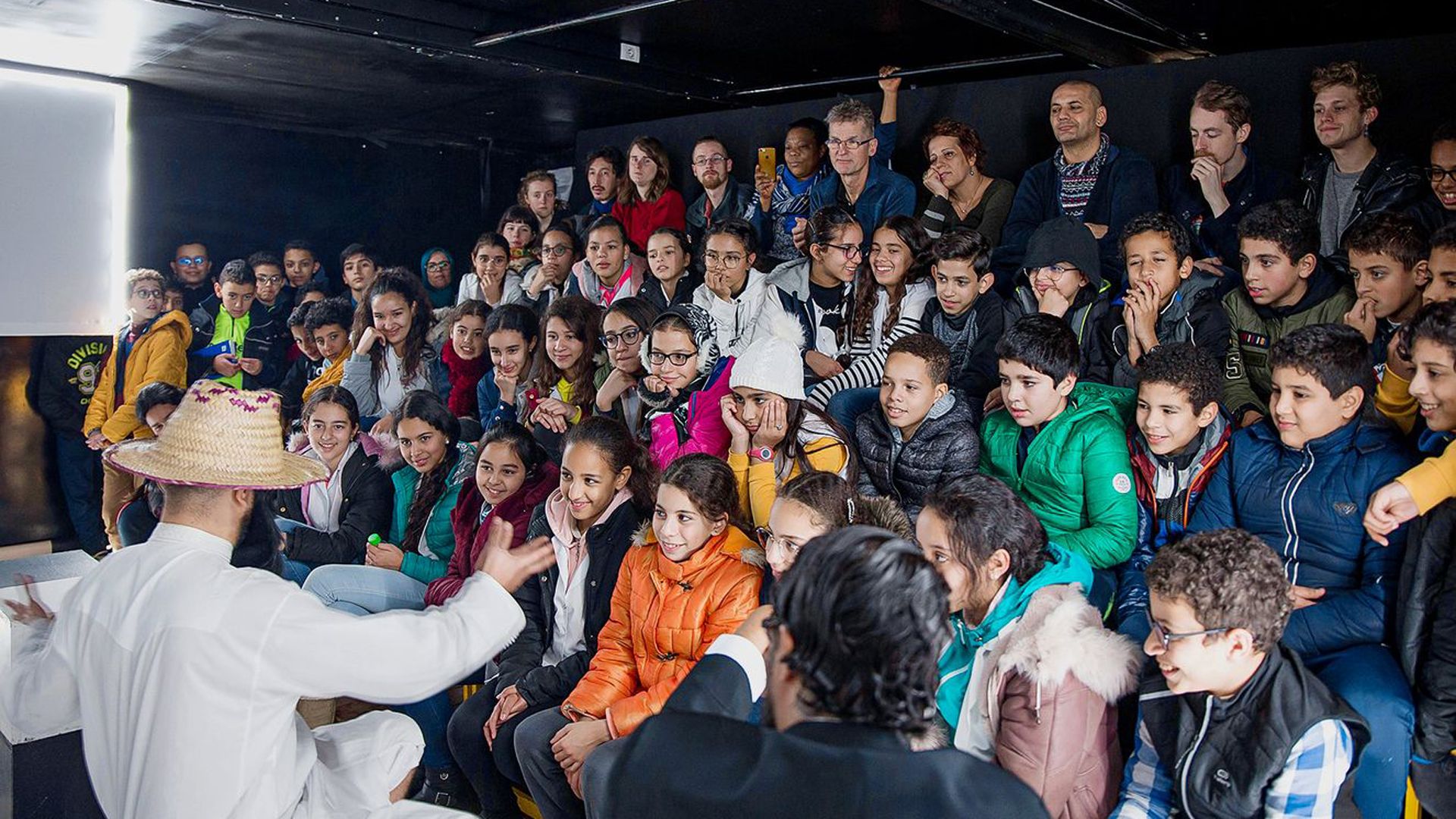
In the meanwhile, Spectacle Pour Tous sensitises parents and society with their play, which features four young professional actors. Inside the 38 sqm box of the theatre truck an irresistible pull is created. «The emotions are more powerful than in a large theatre,» emphasises Hamza Boulaiz. «The audience is gripped in succession by joy, sorrow and empathy.»
Sparking debates
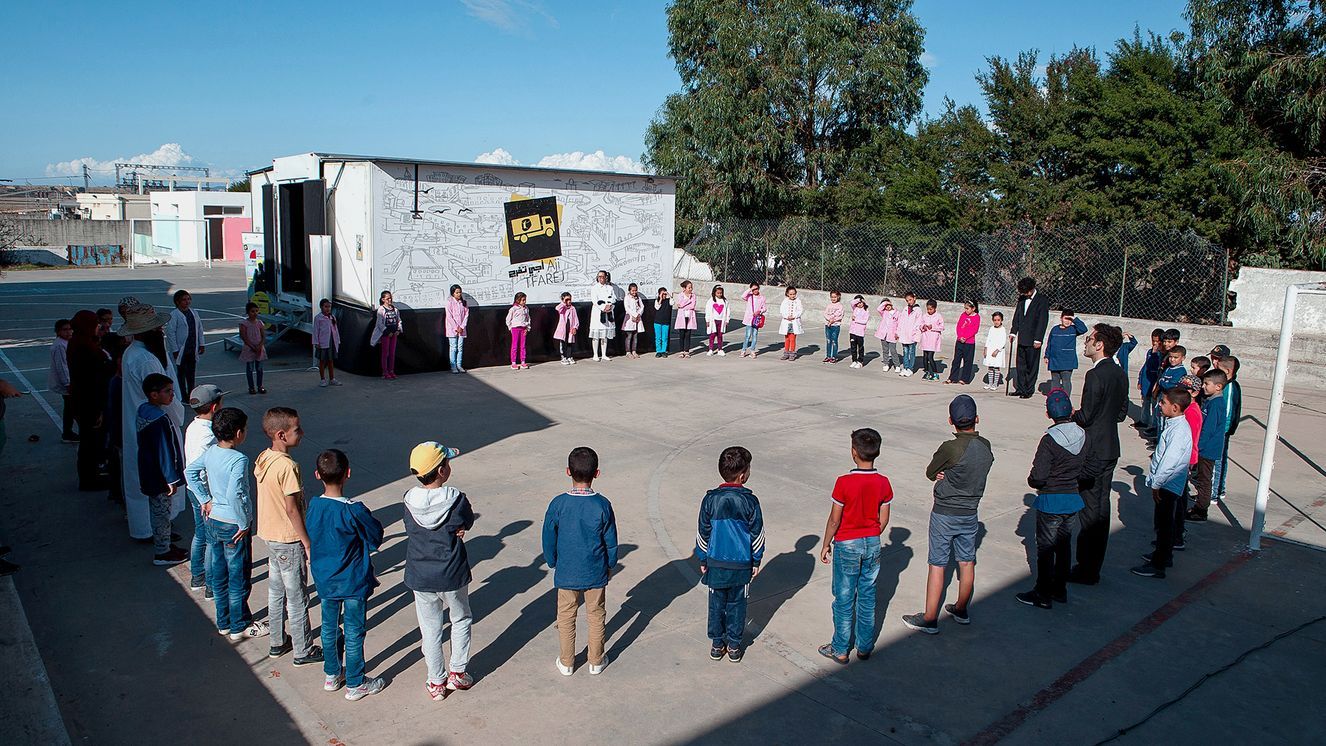
Before the performance, an introduction to theatre is offered in Moroccan Arabic and in the Berber language. Activities take place outside – at a school or a youth centre. The children and adolescents learn how to act on stage using their bodies and their voices, and they are encouraged to improvise. «Often it's the first time that they are taking part in such a workshop and watching a performance,» says Hamza Boulaiz.
The mobile ‹truck stage› has helped spark debates even in remote areas on child marriage, gender relations, minorities, discrimination and extremism. It brings the world of theatre and freedom of expression to all sections of the community. Spectacle Pour Tous was founded in 2010. It condemns the denial of rights in the name of religion, politics and tradition and aims to spark an inclusive cultural movement for the people of Morocco.
Contact
Eichenweg 5
3003 Bern