
Colombia
In a context of extreme inequality and protracted conflict, the SDC works closely with PHRD and SECO towards a peaceful, prosperous and inclusive Colombia. Through its humanitarian aid, it complements the country’s own capacities to assist conflict-affected and migrating people. The SDC aims to improve access to basic services (water, sanitation, health, education), secure land thanks to demining and protect vulnerable people and communities. It also promotes a sustainable and inclusive management of natural resources.
Context Colombia
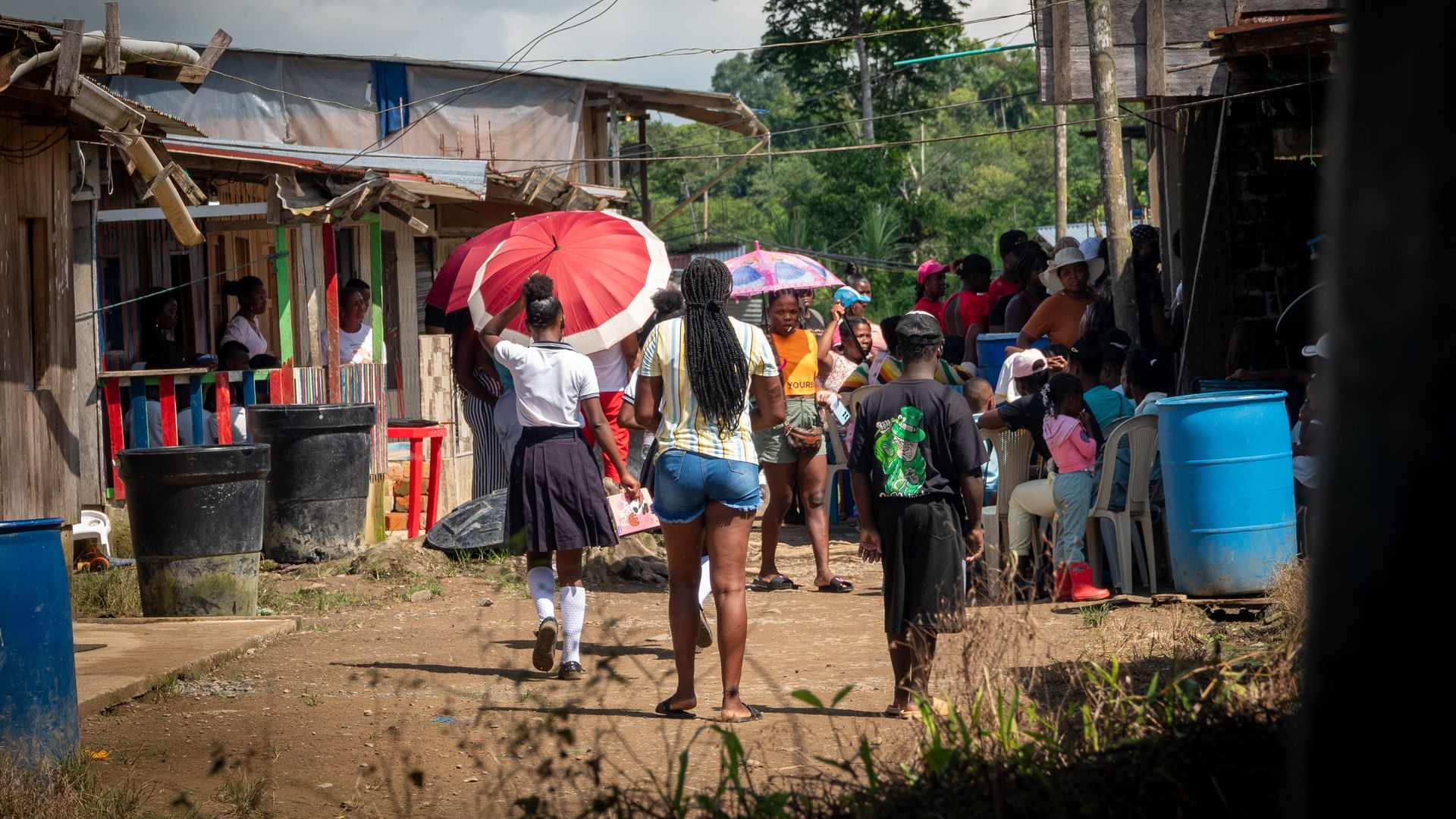
Colombia continues to suffer from extreme inequality and protracted armed conflicts, while its civilian population is exposed to violence. This situation makes it very difficult to guarantee the provision of public services, the security of the population and social justice in certain areas of the country. The SDC has been active in Colombia since 2001, with a focus on humanitarian aid. Geographically, the SDC’s activities are concentrated on the Pacific coast and the border regions of Colombia. By strengthening and empowering government institutions, citizens, civil society and the private sector, the SDC works towards achieving a sustainable peace in Colombia. At the regional level, the SDC addresses the challenges of human mobility exacerbated by the crisis in Venezuela and works with various stakeholders to improve water management.
Protection of the civilian population and vulnerable groups
Switzerland helps protect people affected by armed conflict and the challenges of human mobility in Latin America, with a special focus on people who have fled Venezuela due to the economic and political crisis. The vulnerable population groups include women, children, social leaders, ethnic communities, peace activists and victims of landmines. The needs of refugees, migrants and host communities are especially relevant for the SDC’s humanitarian aid in the Colombian context.
Durable solutions for civilians and vulnerable groups
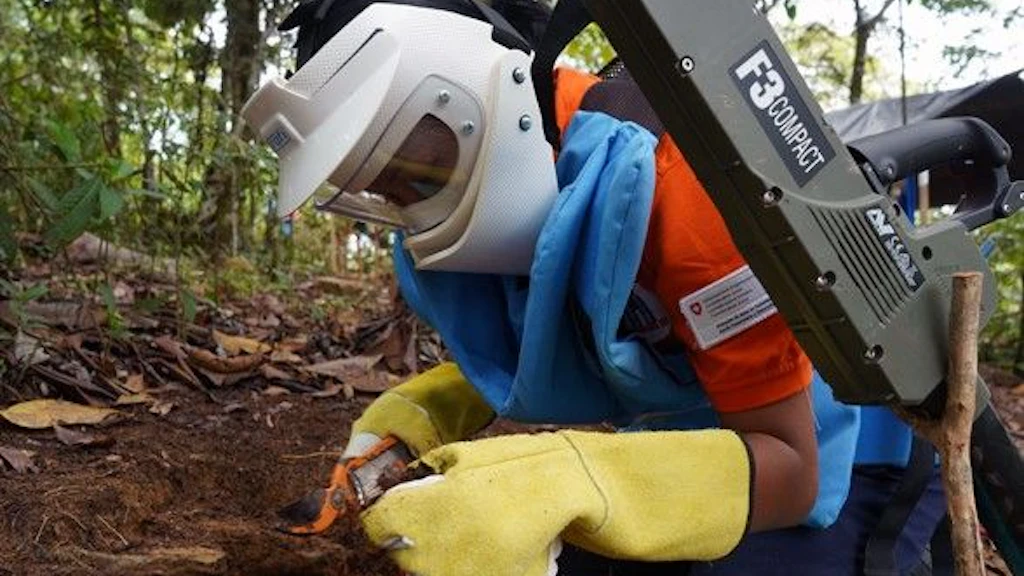
The SDC contributes to the implementation of the peace agreement in Colombia in the territories affected by the conflict. It focuses on the early recovery process, on finding durable solutions to the consequences of the armed conflict for the vulnerable groups, as well as on the challenges of human mobility induced by the crisis in Venezuela. Through an approach that combines humanitarian aid with building the capacities of local and national actors and strengthening social cohesion, the SDC promotes better access to basic services such as water, sanitation, health care and education, as well as employment and livelihoods for people affected by human mobility and/or victims of conflict. Humanitarian demining is an important component of these activities in the most mine-affected country in South America.
Sustainable and inclusive management of natural resources
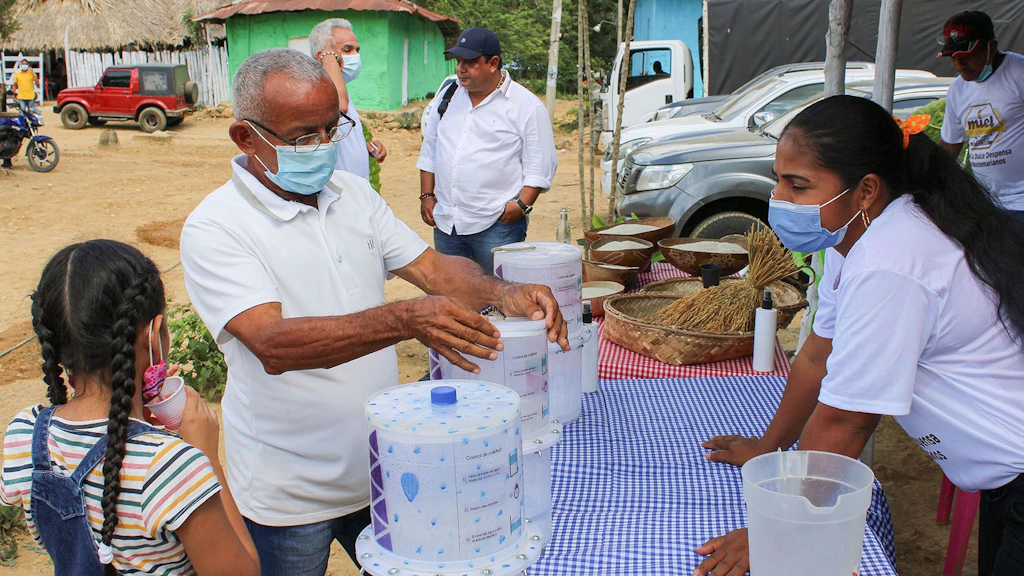
The SDC aims at strengthening state institutions and works with the private sector to promote evidence-based decision-making that respects environmental considerations. In Colombia, it has supported the Institute of Hydrology, Meteorology and Environmental Studies (IDEAM) in the national water study and provided technical inputs for water monitoring. It has advised more than 60 companies in Colombia, Peru, Mexico and Brazil on how to reduce their water footprint and continues to promote a sustainable management of water at regional level both with public and private actors The SDC also promotes the protection of ecosystems through 102 nature conservation agreements and supports improvements in emissions monitoring and energy efficiency.
Approach and main partners
In Colombia, Switzerland is maintaining its universal humanitarian tradition, promoting respect for international humanitarian law and human rights, and advocating for the concerns of the civilian population and vulnerable communities. The SDC’s approach is directed at protecting and swiftly rehabilitating these groups and finding sustainable solutions for people affected by the overlapping humanitarian crises caused by armed conflict and human mobility in Latin America, especially in Venezuela.
In order to articulate responses to these complex issues, the SDC mobilises resources by providing financial support to the International Committee of the Red Cross (ICRC), multilateral organisations such as the United Nations High Commissioner for Refugees (UNHCR) and the World Food Programme (WFP), as well as local partners. The SDC also supports the Inter-American Development Bank (IDB) and a national fund for the implementation of the peace agreement. It systematically combines funding with capacity building, putting the local and national Colombian actors in the driving seat.


Contact
Eichenweg 5
3003 Bern