
Venezuela
Venezuela is in the midst of a profound crisis and has one of the highest poverty rates in Latin America.
Switzerland is helping to support the most vulnerable groups through access to basic services and protection from violence and exploitation. To this end, it uses a combination of emergency relief and measures to strengthen the resilience of Venezuelan stakeholders.
Context
For years, Venezuela has been in the grip of a deep social, economic and political crisis.
Millions of Venezuelans have left their country in recent years.
The arrest of President Nicolás Maduro in early 2026 heralded a political turning point and marked the start of a period of restructuring. Although the situation remains uncertain, there are opportunities for economic recovery, such as through reforms and greater openness to international investment. At the same time, security issues persist, particularly in the border regions with Colombia, and humanitarian needs continue to grow.
Switzerland supports people affected by the ongoing crisis with humanitarian aid and helps ensure access to basic services such as healthcare, food, water and protection. These measures fall under Switzerland's regional engagement, which also includes efforts to promote stability in Colombia.
Protection for migrants
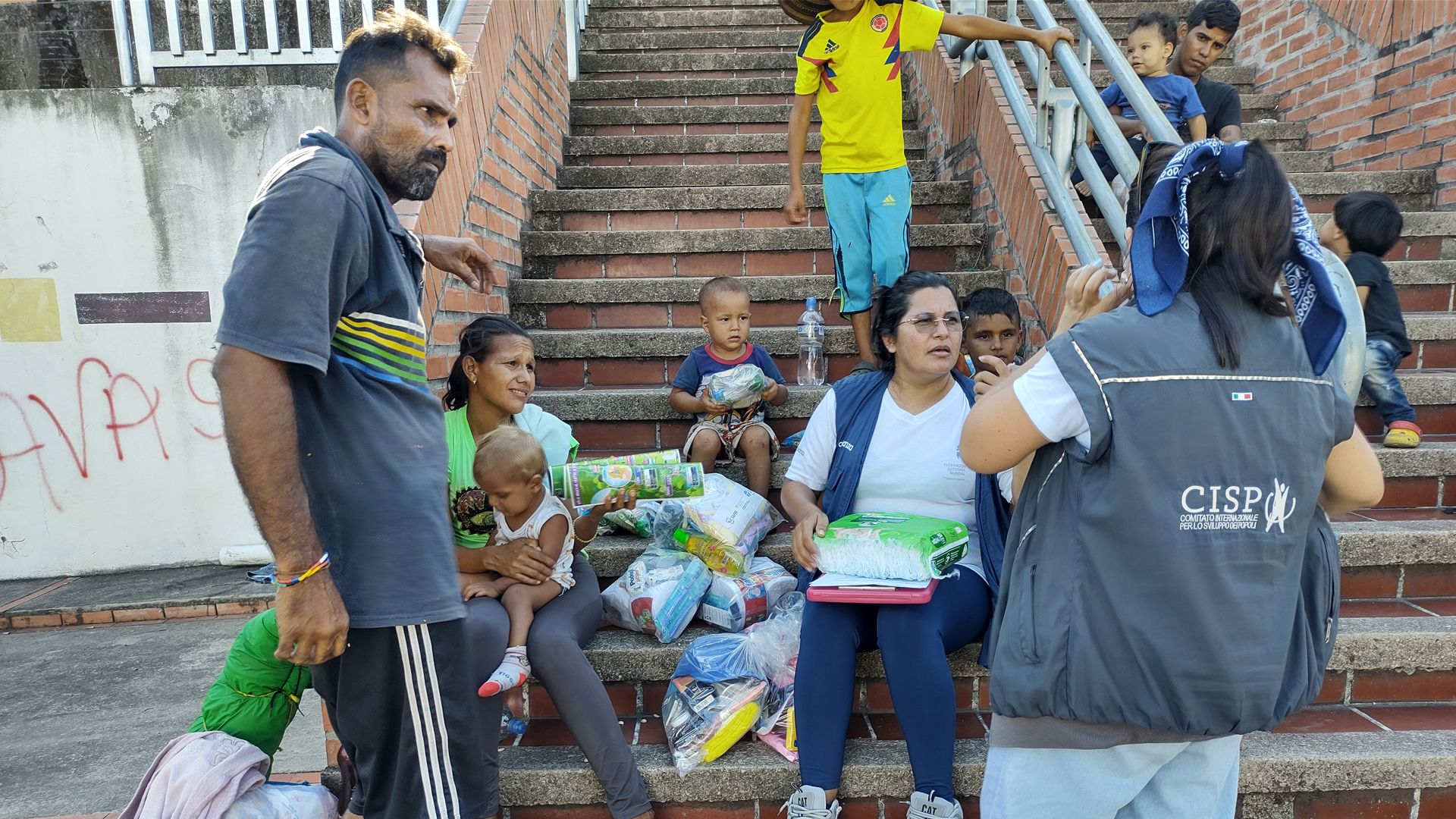
Venezuela has one of the highest levels of migration among the Latin American nations. For a long time, Venezuela was primarily seen as a country of emigration. However, an increasing number of Venezuelans are now returning home, even though living conditions remain challenging for many. Since 2016, host countries throughout Latin America as well as the international community have been supporting Venezuelans through healthcare, sanitation and water supply, food security and psychosocial support for women and children. In the past, Switzerland mainly focused its efforts on meeting basic needs along migration routes. Today, it pursues an integrated regional approach: helping to curb violence and exploitation, improve access to legal and protection services for migrants, and strengthen local livelihoods and job opportunities for returnees.
Disaster risk reduction
Switzerland promotes dialogue with the authorities responsible for disaster prevention and preparedness in order to outline potential areas of cooperation. It invests in this field by supporting the relevant stakeholders in capacity-building and by strengthening the resilience of vulnerable communities.
Strengthening resilience and reducing the risk of violence
Switzerland works to strengthen the resilience of affected communities and local stakeholders so that they are better equipped to respond to humanitarian crises in the future. It also promotes conflict prevention and social cohesion in order to reduce the possible need for humanitarian aid.
Approach and key partners
Switzerland works with various partners and aims to steadily build the capacity of Venezuelan stakeholders. It also contributes to the implementation of mandates of the International Committee of the Red Cross and the International Federation of Red Cross and Red Crescent Societies. Through its additional support for UN humanitarian agencies (Office for the Coordination of Humanitarian Affairs, World Food Programme and Office of the High Commissioner for Refugees) and international and local NGOs, Switzerland is able to support migrants, children, families and communities in need and strengthen the resilience of local actors.
Earthquake in Venezuela
Following the devastating earthquake in Venezuela, Swiss Humanitarian Aid has mobilised a rescue chain. More news on this in the Americas Ticker.
Contact
Eichenweg 5
3003 Bern