
Culture creates space for dialogue – a foundation for sustainable peace
In Rwanda, the Swiss Agency for Development and Cooperation (SDC) is promoting culture as a driver for peaceful social transformation. Artists are creating inclusive spaces for dialogue and peaceful coexistence, while the SDC is supporting culture in communities threatened by conflict.
Art opens up spaces – for dialogue, hope and social healing
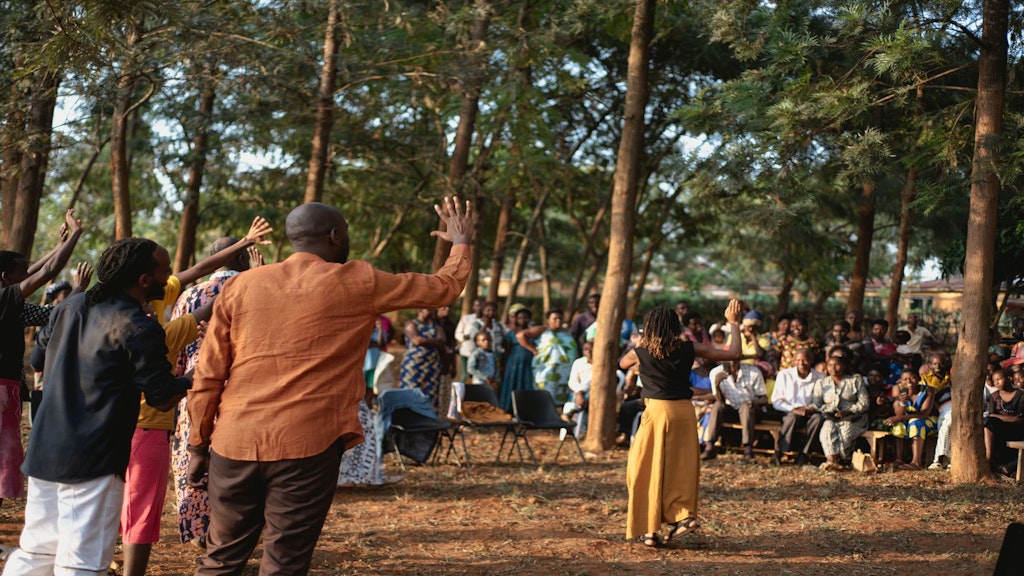
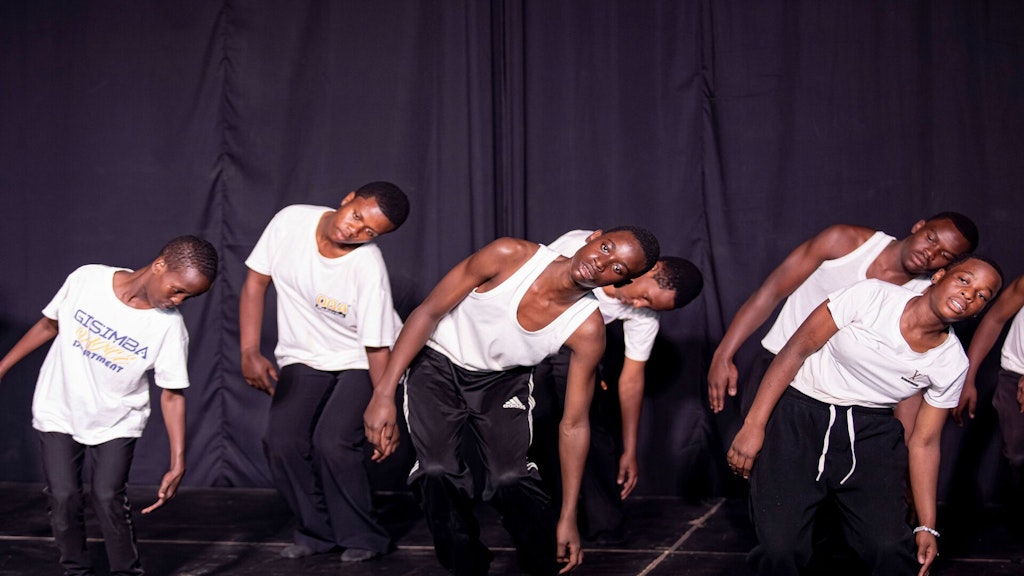
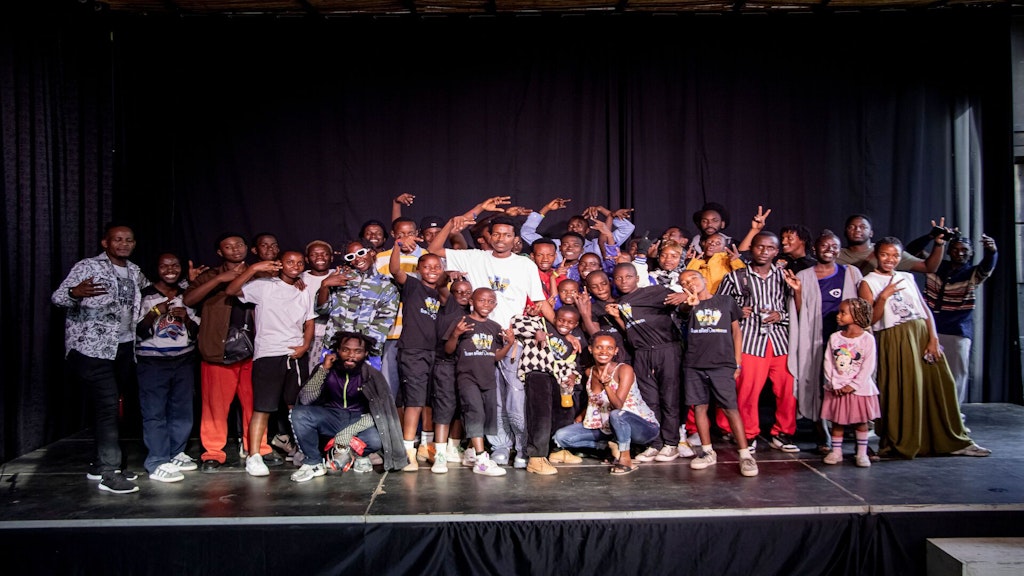
The cultural centre ‘L'Espace’ is located at the heart of the vibrant sector of Nyamirambo in Kigali, and is run by the organisation ‘Espace Plus’. The cultural centre is a meeting point for artists from Rwanda and the surrounding region. It brings together three organisations spanning the fields of dance, film, theatre, literature and comedy: Imitana Production, Agati Library and Comedy Knights. Some events take place at the cultural centre, while others – such as performances of the play Gahugu Gato – take place in rural areas.
Gahugu Gato is an adaptation of the novel Petit Pays by Gaël Faye, translated into Kinyarwanda, the country's national language. It explores the topics of migration, identity and belonging. It was staged by Rwandan and Burundian actors in the hills of northern and southern Rwanda, from Musanze to Nyamagabe, passing through Burera and Nyamata. The actors appeared on improvised stages in clearings, markets and other everyday locations. Despite performing for audiences unaccustomed to such performances, the play succeeds in forging an intense emotional connection with them. Its tragic events are presented in a narrative style that combines seriousness with humour and a lightness of touch. This approach creates an accessible and emotional space for reflection and expression. For rural communities, a play that brings their language, their everyday routines, and the reality of their lives onto the stage is a source of recognition and dignity, and transforms the theatre into a tool for collective memory and social healing.
Staging a play like Gahugu Gato, whose 30-year-old story still resonates as if it happened yesterday, for an audience in the hills of Rwanda who live with that tragic history on a daily basis... Seeing them laugh and embrace us after the performance – it gives me hope that art can heal us, and even bring us closer together. It's something we experience at every performance, on every hill.
Culture as a driver for peaceful social transformation
In Rwanda, the SDC is supporting local culture as a driver for peaceful social transformation. Thanks to the dedicated work of its partners, the project helps strengthen social cohesion and promote characteristic Swiss values such as the rule of law, democracy, human rights, solidarity and peace, as well as an inclusive vision for coexistence.
In partnership with L'Espace, Switzerland is promoting the cultural offering in Rwanda and supporting national and regional cultural exchanges. This includes the annual Kigali Cine Junction festival, which brings together filmmakers from the region and encourages dialogue and mutual understanding. From September 2024 to July 2025, over 10,000 people took part in events – 5,500 of them in rural areas.
Thanks to Switzerland's mediation, the city of Kigali has granted L'Espace a plot of land in Nyamirambo for the construction of a cultural and artistic centre. This step represents a decisive milestone in ensuring the sustainability of the project and creating a permanent venue for social engagement. It also demonstrates the Rwandan government's interest in the role of art in peace promotion.
Culture and peace in international cooperation (facts and background)
One of the priorities of Swiss foreign policy is peace promotion and conflict prevention, particularly in fragile contexts. Switzerland's approach focuses on local ownership, cultural sensitivity and the strengthening of institutions.
Art creates spaces for dialogue and empathy. This is essential in societies affected by conflict and is a characteristic feature of culture in development cooperation. Space for creativity – for shared visions and social cohesion.
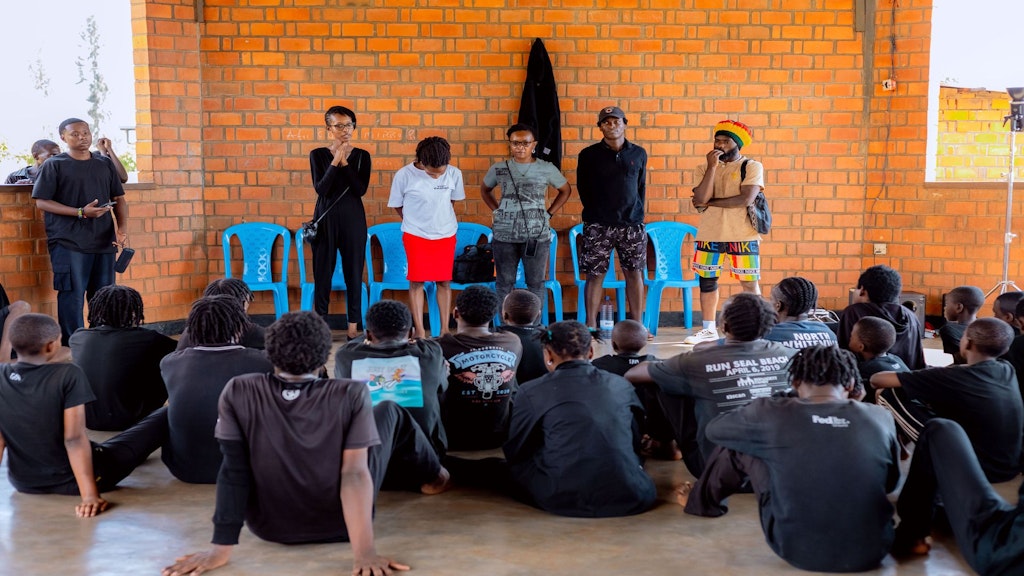
Conflict prevention and peace promotion are gaining importance in a world increasingly defined by polarisation, division and conflict. Around 200 projects are currently being implemented to specifically address the causes of conflicts, help prevent them, and contribute to peaceful social transformation. Culture also plays an important role here: art has the power to build bridges, promote understanding and strengthen ties between communities.
Looking ahead
Promoting culture remains an important part of Swiss development cooperation in partner countries. In times of growing conflict, it is all the more important to strengthen peaceful coexistence, promote open spaces for conflict resolution and diversity of opinion, and instil a sense of responsibility, belonging and hope in the younger generation. Investing in culture also supports social cohesion and, by extension, conflict prevention and security, which is in Switzerland's interests.
The SDC's cultural mandate is to strengthen independent, diverse and participatory cultural sectors and actors in partner countries that make an important contribution to sustainable development, democratic participation, conflict prevention and peace. The contribution of culture to the promotion of peaceful coexistence is set out in the International Cooperation Strategy 2025–28 and in the Thematic Guidance on Culture and Development. The SDC is currently implementing 10 country programmes and five regional programmes in the cultural sphere, covering a total of 30 partner countries. The Reflection Paper on Culture and Sustaining Peace published by the SDC in 2024 proposes three categories of how art and culture contribute to sustainable peace: resilience, spaces and shifts. First, art and culture promote resilience by helping to strengthen and bolster the stamina and courage of people affected by conflict. Second, they provide, strengthen or maintain civic spaces for cultural diversity, expression and dialogue, thus helping to build a foundation for peace. Third, art and culture contribute to shifts in attitudes, perceptions and behaviour, which in turn are motors for change.
Contact
Eichenweg 5
3003 Bern