
Egypt: Switzerland combines its efforts for a sustainable impact
Switzerland and Egypt have built a strong and evolving partnership over the past 45 years. The cooperation programme for 2025–2028 marks a new phase in their bilateral relations. Luca Etter, head of the Swiss cooperation in Cairo, outlines the programme's main features in an interview.
With rapid urbanization, a population that now exceeds 110 million inhabitants – of whom around 35 million live in poverty – and a regional context marked by strong tensions, Egypt is confronted with numerous challenges. However, the country has considerable assets to strengthen its resilience and support its development objectives.
Faced with these challenges, Switzerland – a reliable, agile partner open to change – continues to provide significant added value. The long-standing partnership that unites Switzerland and Egypt has just been renewed with a new cooperation programme for the period 2025-2028. As head of the Cooperation Office at the Embassy of Switzerland in Cairo, Luca Etter explains the priorities of this new programme and underlines how the synergies between the Swiss Agency for Development and Cooperation (SDC), the State Secretariat for Economic Affairs (SECO) and the State Secretariat for Migration (SEM) strengthen this partnership.
Switzerland has just launched its new cooperation programme with Egypt for 2025–2028. Can you tell us about the programme's priorities? What has changed compared with the previous programme – and what hasn't?
Switzerland focuses its efforts on three priority areas where the needs of the local population converge with Switzerland's interests and the added value of its international cooperation (IC).
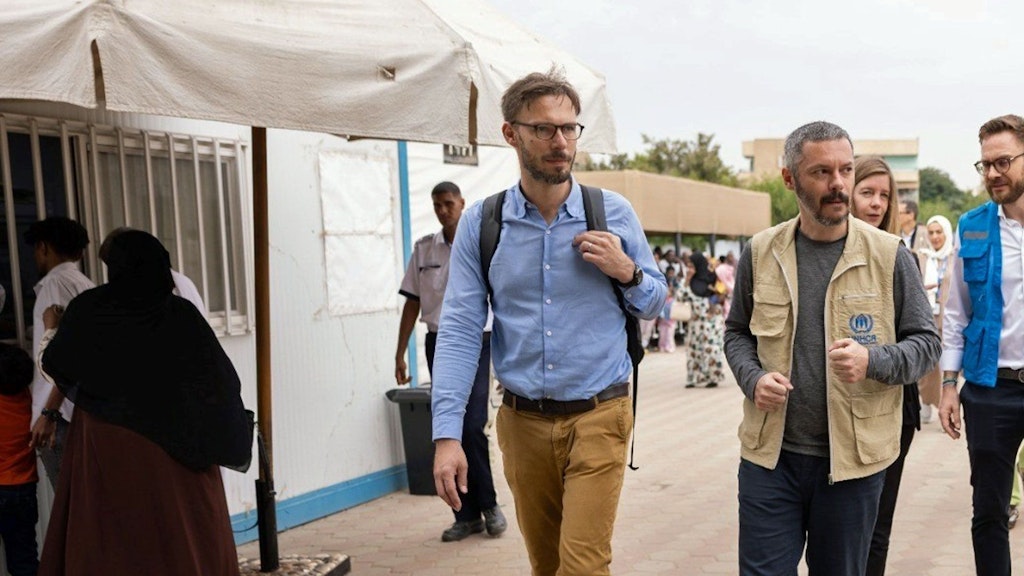
The first focus area concerns refugees from neighbouring countries and local people affected by poverty, especially women. Here, we are working with an approach that combines humanitarian aid and development cooperation, supporting the immediate provision of basic services such as food and healthcare (including in mental health), while also strengthening individual professional or entrepreneurial skills in the longer term. We are concentrating our efforts on the south of the country, where a particularly high number of Sudanese refugees arrive.
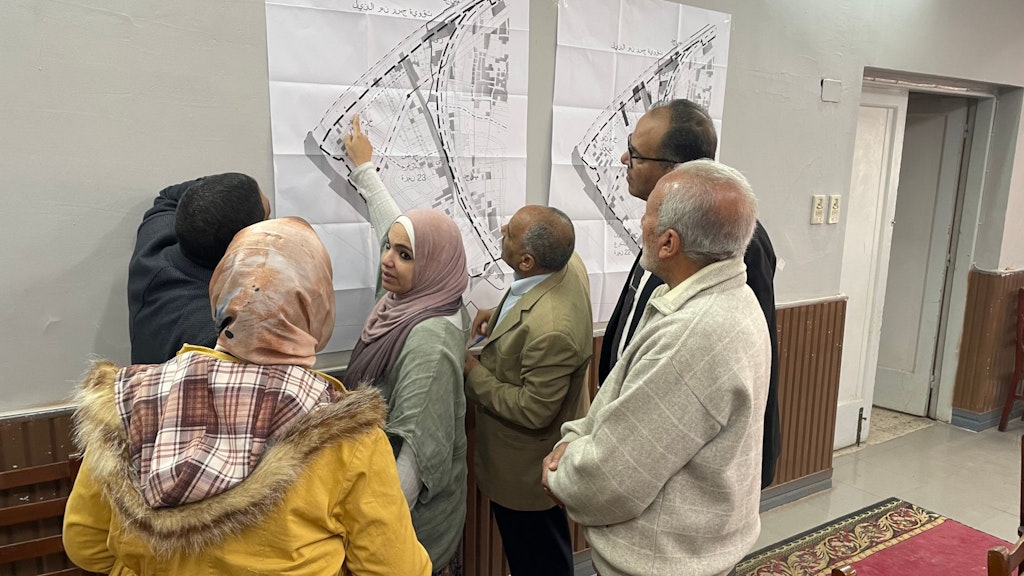
Secondly, we are using our economic development cooperation to strengthen SMEs, particularly in the agricultural sector and green industries. Switzerland is also contributing its expertise in the field of urban development. Egyptian cities are growing extremely fast, so smart urban development has a major impact on quality of life.
Thirdly, we are one of the only Western donors working to support good governance on the ground, including in the area of human rights. However, good governance also includes economic governance, and Switzerland is able to achieve good and significant results in difficult circumstances, notably in the areas of budgetary revenue, debt management and fiscal transparency.
The programme is led by the cooperation office at the embassy in Cairo, which coordinates support from the SDC, SECO and SEM. How does this cooperation between federal offices work and what added value does it bring?
The themes we work on require substantial expertise in order to implement this programme. Fortunately, we can draw on a wealth of resources and leverage the expertise of various offices. These synergies are a hallmark of Switzerland's international cooperation on the ground and offer us exceptional credibility and visibility.
This collaboration notably led to the signing of a memorandum of understanding with Egypt on migration, two weeks after the launch of our cooperation programme, thereby contributing to the achievement of political objectives in Switzerland’s interest.
Another example: in the economic sphere, a joint Swiss–Egyptian economic commission was established at the beginning of the year to open up new markets for Swiss companies. Egypt offers considerable potential, particularly in the areas of green economy and renewable energies, as well as important interfaces between international cooperation and trade promotion, that we can certainly make greater use of in the future.
The history of Switzerland and Egypt’s cooperation is multifaceted and has continuously evolved
Egypt lies at the heart of a region subject to enormous tensions and conflicts. What role does it play in regional stability? And how can Swiss cooperation support Egypt in this role?
When we consider which countries Egypt borders, we realise how vital its stability is. The extremely fragile situation in the north-east (Gaza) and the conflict in the south (Sudan) have a direct impact on Egypt. Since the outbreak of the conflict in Sudan, over a million people have fled to Egypt.
The needs are enormous: according to the UNHCR, Egypt receives the second-highest number of asylum applications worldwide. Since the outbreak of war in Sudan, the number of refugees has tripled. Both SDC and SEM support the care of migrants and refugees in Egypt: on the one hand through direct financial and human support to UNHCR, and on the other hand by supporting local organizations to enable access to education, legal counselling and health services, in particular mental health care. This support also benefits Egyptian host communities, as in Egypt migrants and refugees do not live in refugee camps but work and live among the local population. By combining expertise, reliability and commitment, Switzerland reaffirms its role as an innovative partner and provides significant added value for a sustainable and inclusive impact.
Links
Documents
Contact
Eichenweg 5
3003 Bern