
Fight for land rights: villagers in Laos gain new self-confidence
In Laos, many people do not have official documents certifying their land use rights. The lack of recognition of these rights makes them vulnerable to land grabbing, disputes and the exploitation of natural resources. In the small community of Ban Nam Deua, villagers are discovering their rights and learning to stand up for their future thanks to a Swiss project.
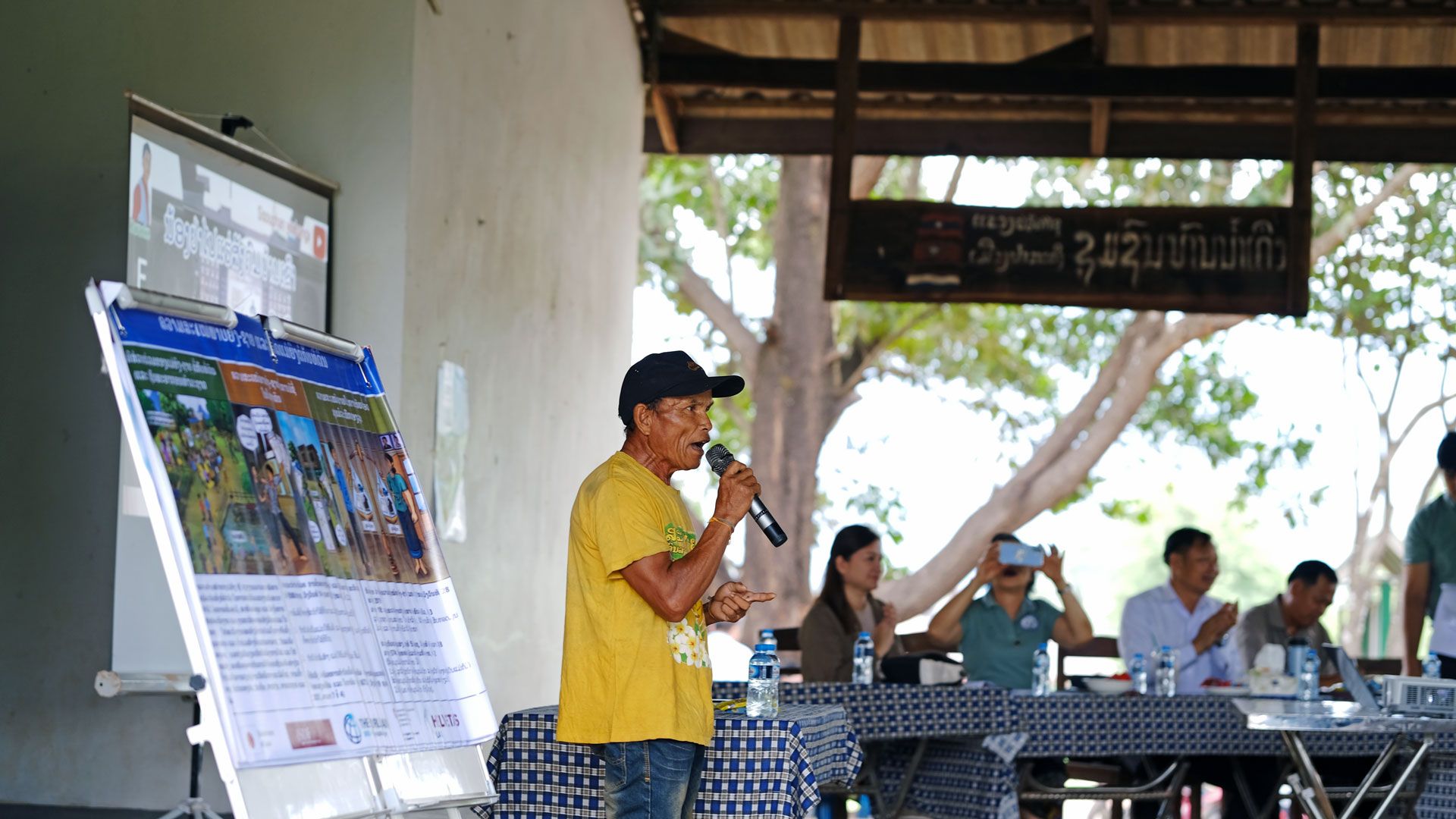
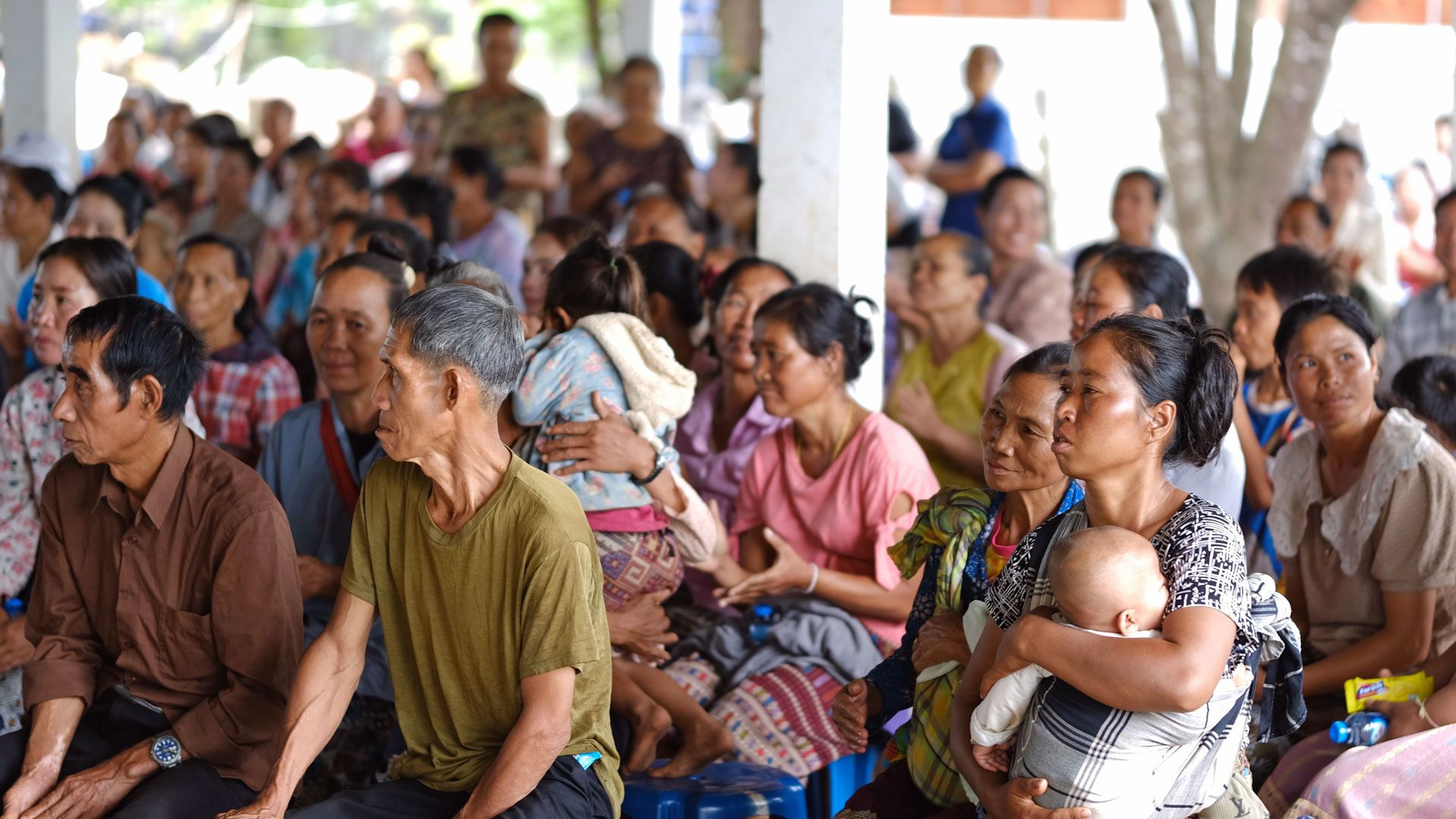
At a community hall shaded by a tin roof and framed by paddy fields, more than two hundred villagers from Ban Nam Deua gather on an early warm morning. Some arrive on foot, others by motorbike. Blue plastic chairs line the hall, filled with young mothers, village elders, and community leaders. Just before the session begins, a facilitator lifts the microphone and asks, “Would anyone like to sing?”
As a familiar tune rolls across the karaoke screen, the room changes. Smiles spread through the crowd. What had felt like a meeting suddenly becomes a cheerful and participatory community moment with a family feeling. It is the perfect way to start talking about something as serious as land rights.
Here in Ban Nam Deua, land is not just territory. It is the foundation of life, for farming, for inheritance, for stability. Yet for decades, many villagers lived on land without formal rights, with unclear boundaries and limited legal knowledge. When disputes arose, they rarely had the tools to fight back.
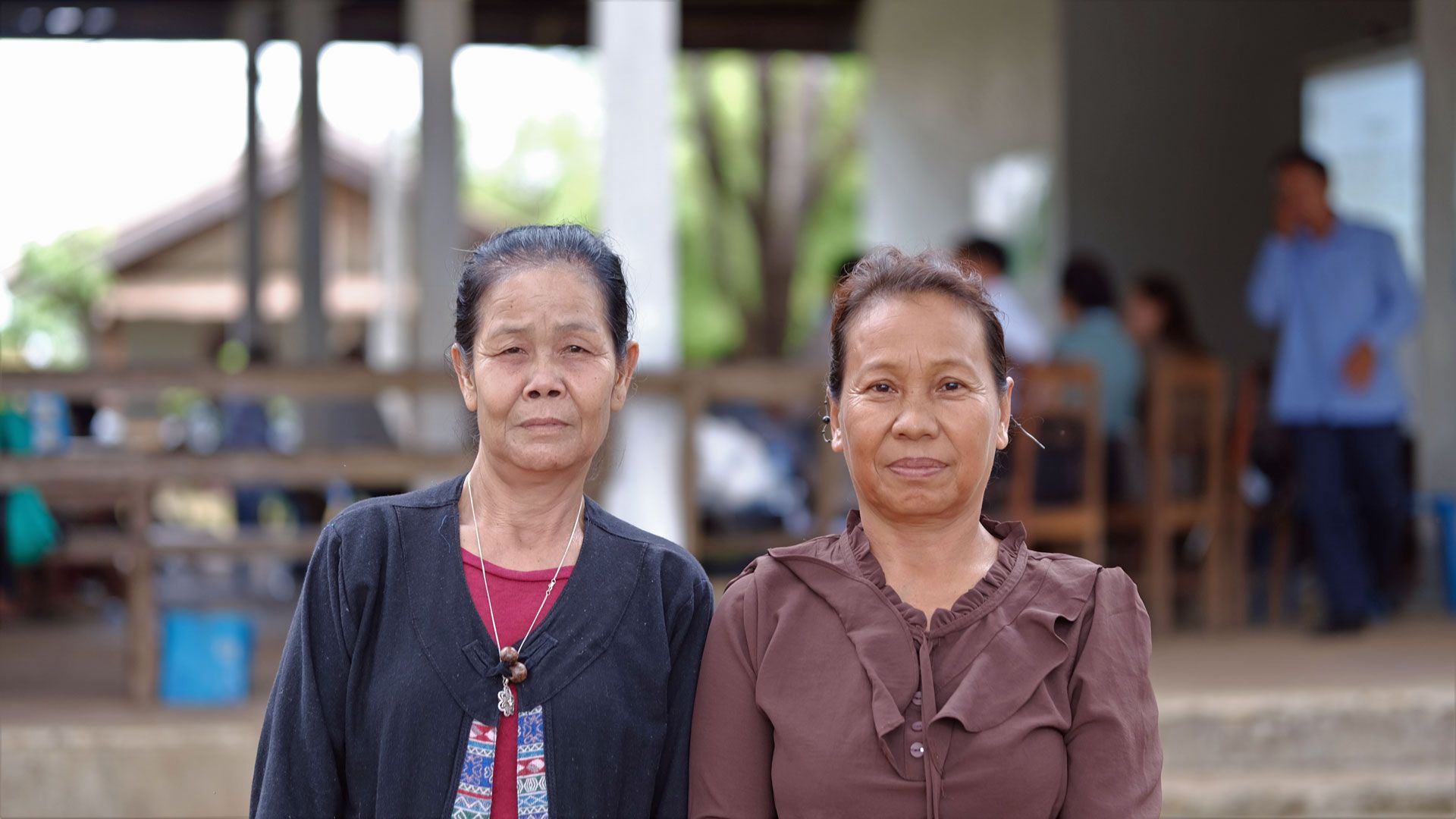
“I have been farming on the same plot of land for decades,” says Bounthanh Seephantha. “Then one day, someone came, measured it, fenced it, and said it was theirs. We had no knowledge, no title, no way to stop it.”
Her friend, Loun Makmanee, bravely adds her own experience after hearing Bounthanh speak. “A neighbour crossed the boundary into my land,” she says quietly. “But I didn't know how to speak up, so I just stayed quiet.” These women, and many others from disadvantaged and ethnic groups, are now slowly finding their voice. As their awareness of rights to land and natural resources grows, so does their confidence; even the quietest voices are beginning to speak for their land and future.
This shift didn't happen overnight. It is the result of a multi-year effort under the Public Information and Awareness Services for Vulnerable Communities (PIASVC) project supported by Switzerland, implemented by Helvetas and delivered in Ban Nam Deua by the Association for Development of Women and Legal Education (ADWLE), one of eleven civil society organisations across Lao PDR working under this project.
PIASVC is designed to reach over 30,000 people in eight provinces. In Pakkading District alone, it aims to reach 6,000 people across 12 villages, with 4,100 gaining deeper awareness of land and natural resource rights.
The success of this work lies in the hands of many local change agents. 120 village-based facilitators from Pakkading have been trained to lead local sessions, including Thongthee Douangdee. “Before, I was too shy to even hold a mic. Now I lead awareness sessions and this is my fourth one so far. I help people with land conflicts and I am proud of who I have become.”
For this particular district, over 90 trained individuals are now trusted sources of basic legal guidance within their communities. The village mediation committees have also grown stronger, with multiple rounds of training helping more than 100 members, over 30 of whom are women, to confidently mediate disputes at the village level, where solutions are more accessible and trusted. “We don't just lead,” says Bounlai Khamsoukthavong, the village chief. “We follow and we listen. That's how we've earned trust.”
“People now understand different types of land use. They talk about inheritance and about putting both husband and wife on land titles. Conflicts have dropped even at home. Land use within the nearby protected forest has also improved and villagers now understand where they can and cannot go, and respect the rules accordingly,” he adds.
The change in Ban Nam Deua is not happening in isolation. It is part of a broader, long-term vision supported by Switzerland where community knowledge, legal empowerment, land registration, sustainable management, and policy reform all move in the same direction.
While projects like PIASVC build awareness and help resolve disputes at the village level, other Swiss-supported efforts work in tandem to strengthen the land system as a whole. Land titles are being systematically formalised through the Enhancing Systematic Land Registration (ESLR) initiative, while the Land for Life (L4L) project focuses on ensuring that land is used productively and responsibly with communities at the centre of investment decisions. The Mekong Region Land Governance (MRLG) initiative contributes by creating space for dialogue, recognising customary land practices, and encouraging policy reform across the region. The more recent work of the Land Management and Decentralised Planning (LMDP) programme has been helping to extend legal clarity and governance into forested areas, often home to the most vulnerable communities.
Together, these efforts reflect a Swiss cooperation approach that sees land not only as a legal issue, but as a foundation for social cohesion, gender equality, economic opportunity, and climate resilience. Strengthening land governance from the household to the national and regional level means that when someone like Bounthanh faces a land conflict or when Thongthee leads a session, they are both participating in a larger shift, one that aims to make land systems fairer, more transparent and truly inclusive. So Switzerland's work remains key not just to making progress in the region, but also to sustaining it where it matters most.
At the end of the session, the village hall is buzzing. Children run past the flipcharts while farmers chat quietly by the doorway. Loun, standing beside her friend, smiles and reflects: “We are just simple villagers. But now we know more. And that means we've slowly stepped out of darkness and it seems a bit brighter now.”
Contact
Eichenweg 5
3003 Bern