
Floods in Armenia: lessons learned help with future challenges
In May 2024, devastating flash floods in northern Armenia cost lives and caused considerable damage to infrastructure. The Swiss Agency for Development and Cooperation (SDC) responded to the emergency by sending a team of engineers and environmental specialists from the Swiss Humanitarian Aid Unit (SHA) to carry out a comprehensive technical assessment.
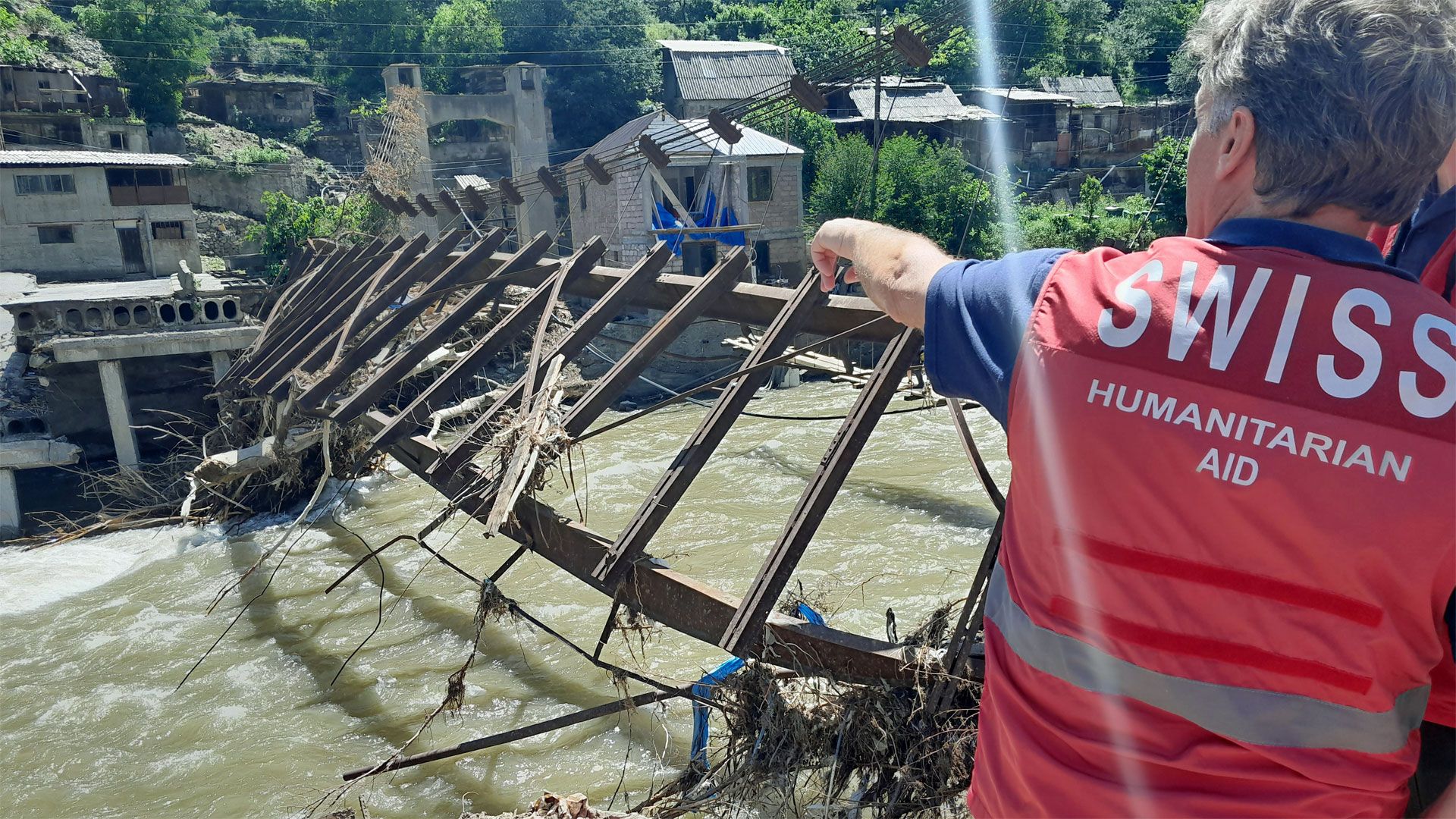
The assessment identified a number of issues. Firstly, the flow of water in some places significantly exceeded the infrastructure's intended capacity. Secondly, recent work undertaken to redevelop or extend infrastructure – especially roads – had exacerbated the situation. Finally, a failure to identify (and prevent) localised erosion caused damage to bridges or resulted in them collapsing. Based on these findings, the following recommendation was made: the basic hydraulic parameters must be defined before rebuilding any infrastructure. Three priorities were identified to aid recovery and build the resilience of affected regions: conduct a comprehensive assessment to understand what caused the disaster and learn lessons for the future, provide targeted training to build local technical capacity, and design pedestrian bridges to allow movement of people and goods, pending the reconstruction of road bridges.
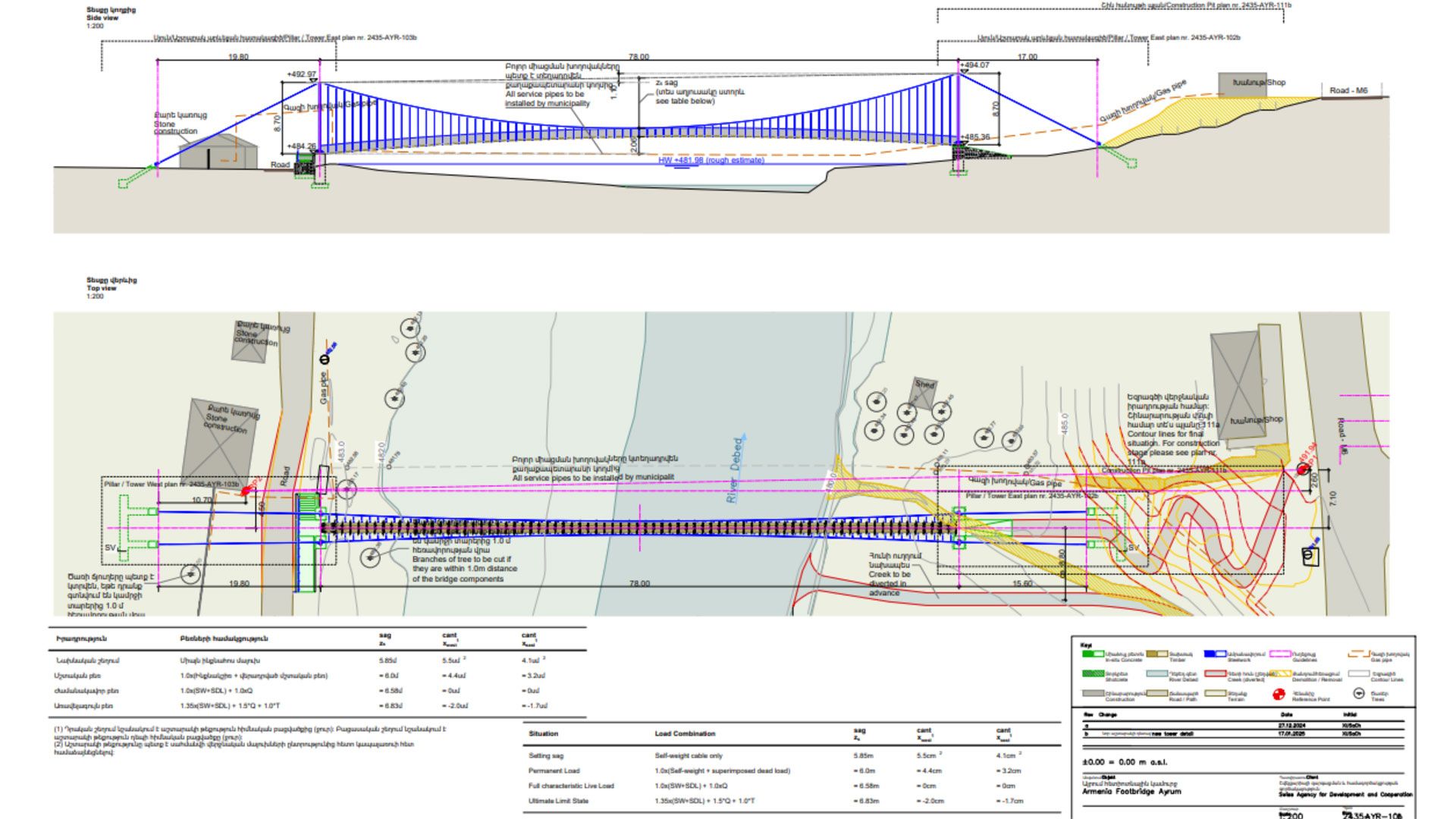
SHA engineers Andreas Galmarini and Matthias Ludin were members of the rapid response team deployed in response to the floods. Drawing on their experience from previous assignments, they came up with designs to build three footbridges in Saratovka, Alaverdi and Ayrum, which would be capable of withstanding floods in line with international standards. Having consulted local stakeholders, the SDC submitted the plans for implementation by the Armenian authorities.
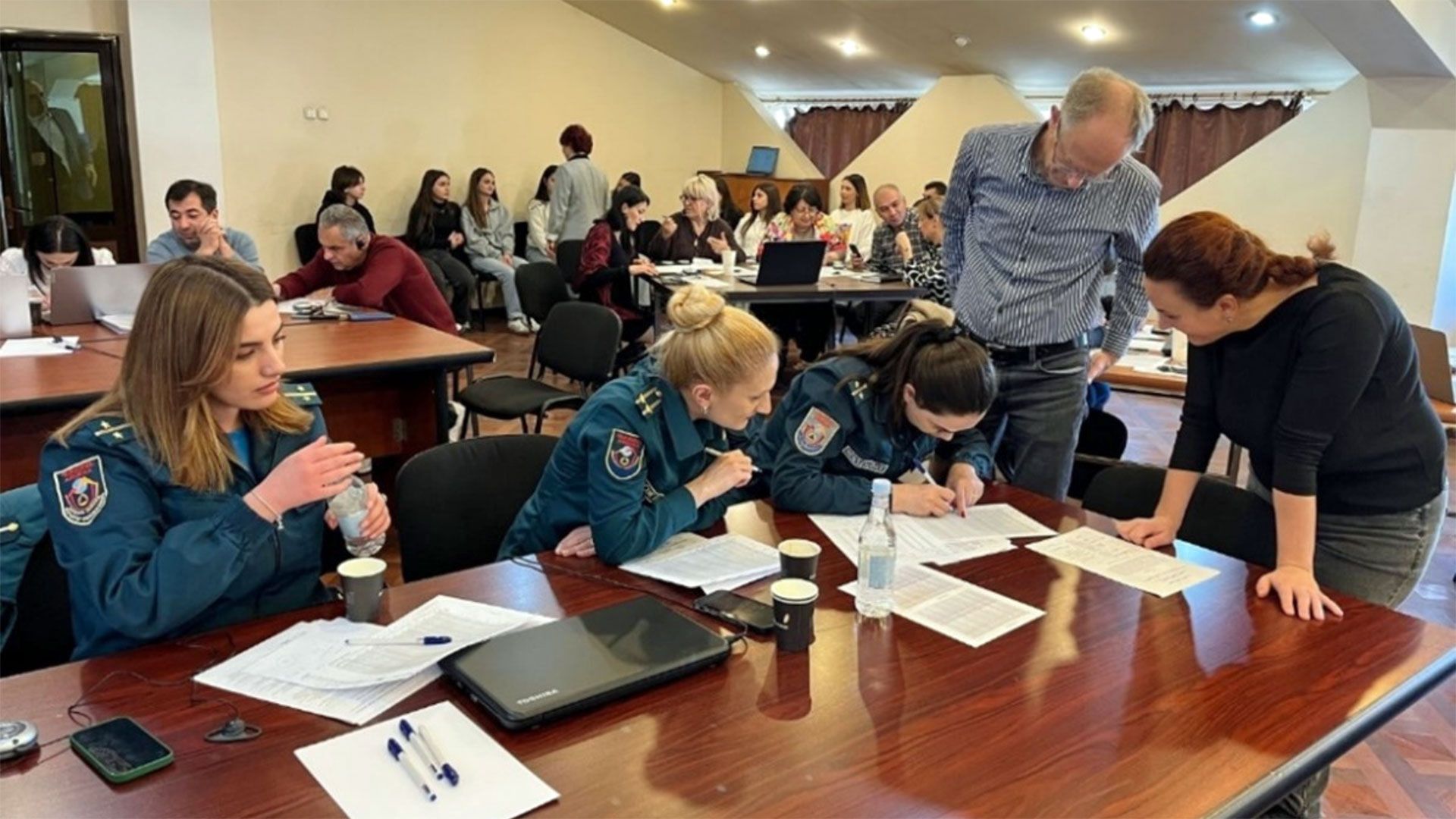
In addition, the SDC arranged training courses in hydraulic engineering and designing resilient infrastructure for engineers from the Roads Department, Civil Protection Division, Water Resources Management Agency, and various universities. The courses, taught by SHA members Lukas Hunzinger and Ali Neumann, provided hands-on knowledge based on the local context, which will improve the quality of future structures and integrate resilience into river construction projects (bridge piles and abutments, protection of embankments).
Christoph Lehmann, who previously worked at the Federal Office for the Environment (FOEN), conducted a disaster assessment in cooperation with the Crisis Management State Academy, Armenian State Hydrometeorological and Monitoring Service and local authorities. The assessment covered the weather, hydrologic and hydraulic conditions, and the management of the disaster, making specific recommendations regarding risk governance, early warning systems and spatial planning. The findings were widely disseminated to technical and academic institutions at local and national level with the aim of fostering better preparedness for future disasters. The results will contribute to greater sustainability and skills transfer, improvements in local governance, and higher standards of quality for future infrastructure.
In Armenia, the SDC has therefore reaffirmed its commitment to humanitarian action based on capacity building, technical innovation and careful risk assessment. By drawing on the expertise of staff from the SHA and FOEN and working with Armenian partners, it has turned an emergency response into a driver for sustainable development and disaster preparedness. As a result of this proactive approach, the lessons learned in Armenia will provide inspiration for further initiatives in similar contexts, where local preparedness and capacity building are key to reducing vulnerability to natural hazards.
The experience in Armenia shows the importance of mounting rapid, well-planned responses that do not just address the immediate emergency but form part of a wider risk management and sustainable development framework. By drawing on lessons learned in post-disaster analysis and translating them into concrete action, the project has initiated discussion between Armenian organisations on construction practices, adding river engineering as a subject to academic courses, and the importance of more resilient planning.
In taking this approach, the SDC has not just delivered a technical response, but helped to strengthen skills and responsibilities, and build ties between the authorities, universities, specialists and the general public. This type of intervention does not just repair past damage, but helps address future challenges.
Documents
Contact
Eichenweg 5
3003 Bern