
Global food crisis: acting collaboratively
The global food crisis is one of the main challenges the world faces today. As is often the case, it is the most vulnerable people who are affected first and suffer disproportionately from its impact. In response, SDC acts in a collaborative and crosscutting manner to mitigate it.
A multifactorial crisis
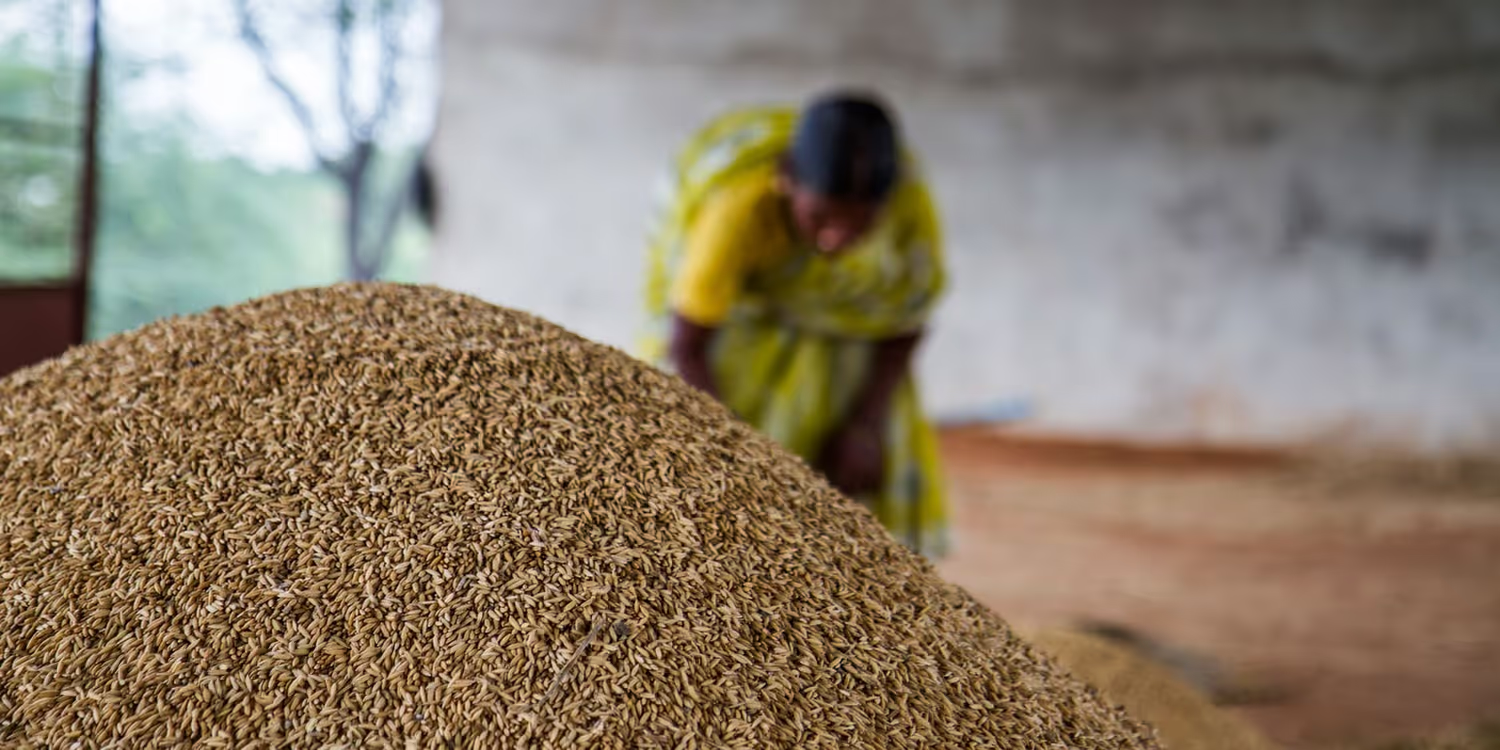
The global food crisis is a multifactorial crisis. Climate change and extreme weather events regularly plunge large numbers of people into food insecurity, as shown by the prolonged drought in the Horn of Africa or the floods in Pakistan in 2022. Similarly, the COVID-19 health crisis and the war in Ukraine have also been factors that have greatly disrupted global food production and thus access to essential foodstuffs. The global food crisis is thus a corollary of other crises, simultaneously aggravating the situations that produce it.
A collaborative and crosscutting approach
Faced with this situation, the SDC provides assistance in emergencies and is active in strengthening people's resilience to climate risks. It acts in a collaborative and crosscutting manner to mitigate the impact of the food crisis on vulnerable people. To this end, the SDC implements development projects in affected countries, as is the case in southern Africa, where its agricultural development programs support producers with drought-resistant seeds.
At the same time, in emergencies or natural disasters, it can finance emergency aid and deploy its specialists from the Swiss Humanitarian Aid Unit to provide rapid and direct assistance.
Finally, in view of the complexity of the global food crisis and the multiplicity of its impacts, the SDC promotes various collaborations and partnerships with multilateral organizations such as the United Nations World Food Program (WFP), but also with numerous Swiss, local and international NGOs. They indeed benefit from a great deal of expertise in the field and pass on essential expertise in order to deal with the dramatic situations created by the global food crisis.
Focus: food crisis
The need for humanitarian interventions and long-term development projects to strengthen food security is greater than ever and is not expected to diminish in 2023. Quite the contrary: given current trends, many more people will depend on assistance from the global community. Because the reasons for food insecurity vary, different approaches are necessary to help people in need and to work together to develop long-term sustainable food security solutions. From 5 to 9 December 2022, the SDC will host a thematic week via a variety of channels to raise awareness of the causes of the global food crisis in various regional contexts as well as projects working to address it.
Contact
Eichenweg 5
3003 Bern