
"Governance, governance, governance!”
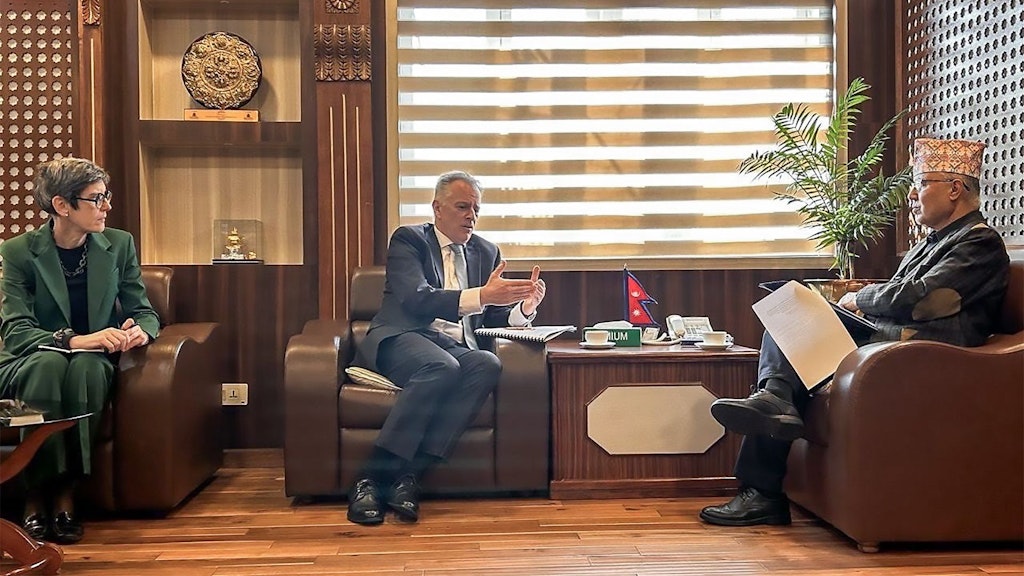
Over a period of several years, Switzerland supported the drafting of Nepal's new constitution, which entered into force a decade ago. For Arno Wicki, Head of the Asia and the Americas Division of the Agency for Development and Cooperation (SDC), the resulting federal state structure is one of the most important achievements. It is part of the solution to getting the country back on the right path following the unrest of September 2025. The promotion of well-functioning institutions remains a key priority of Switzerland's development cooperation in Nepal.
Mr Wicki, this year marks the tenth anniversary of Nepal's constitution – one that Switzerland was involved in drafting. Where can the Swiss support be seen?
Swiss experts worked in Nepal for decades and supported the political process of drafting the constitution. By sharing Switzerland's experience, the view came to be accepted that for a multi-ethnic country such as Nepal, a federal state structure would be more suitable than a centralised system of government. Federalism is definitely an aspect of Nepal's constitution that is shaped by Switzerland.
Does the constitution also represent a democratisation process in Nepal? If so, what role does the constitution play?
A look at Nepal's history reveals an evolution in distinct stages from an absolute monarchy towards a democratic system. The democratic constitution was a key step in this journey. But it's also important that the constitution is upheld in practice, particularly at provincial level. Switzerland has done a great deal in this area in the past, and continues to support relevant projects.
Back in September, Nepal experienced unrest following protests led by Generation Z. Was the unrest a sign of instability – or was the fact that it didn't last long actually a sign of stability?
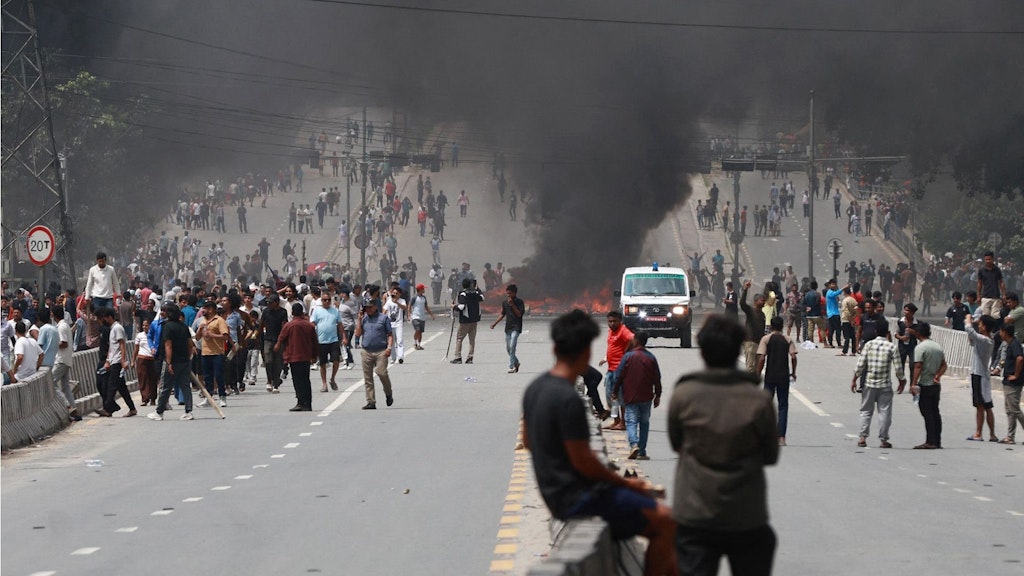
As is often the case in countries undergoing a process of change, certain issues and moments become stress tests. For example, when reforms are carried out, but – as in Nepal – take too long, particularly in the eyes of younger generations. The protests in September 2025 were also against corruption and a lack of job opportunities. Additionally, there is resistance from politicians intent on maintaining the ingrained power
Did the constitution have a stabilising effect during this unrest?
In my view, the fact that a solution was found in the form of an interim government in a very dramatic situation shows that the constitution is able to absorb such shocks. In the debate over whether a federal system is realistic for Nepal, or whether the country should return to a centralised system of government, the unrest has proven that all three levels have a key role to play (e.g. local authorities for basic services) and must therefore be further strengthened. It's a good sign that the World Bank and the Asian Development Bank now also finance projects to develop decentralised authorities – in part thanks to Switzerland's influence.
You mentioned groups who reject the democratisation process. Where does the public stand on this?
The majority of Nepalese people support the implementation of the constitution, in other words, a democratic system. But there are also forces that regret the abolition of the monarchy or that see the federalist state as inefficient, prone to corruption and expensive. The form of government is a hotly-debated topic in Nepal.
How did the riots in September affect the projects that Switzerland is supporting in Nepal within the framework of international cooperation?
A few projects were directly affected. In communities where we are working to promote localisation, local authorities suffered damage and projects were halted due to the deadlock that gripped Nepal for several weeks.
How did Switzerland respond to this?
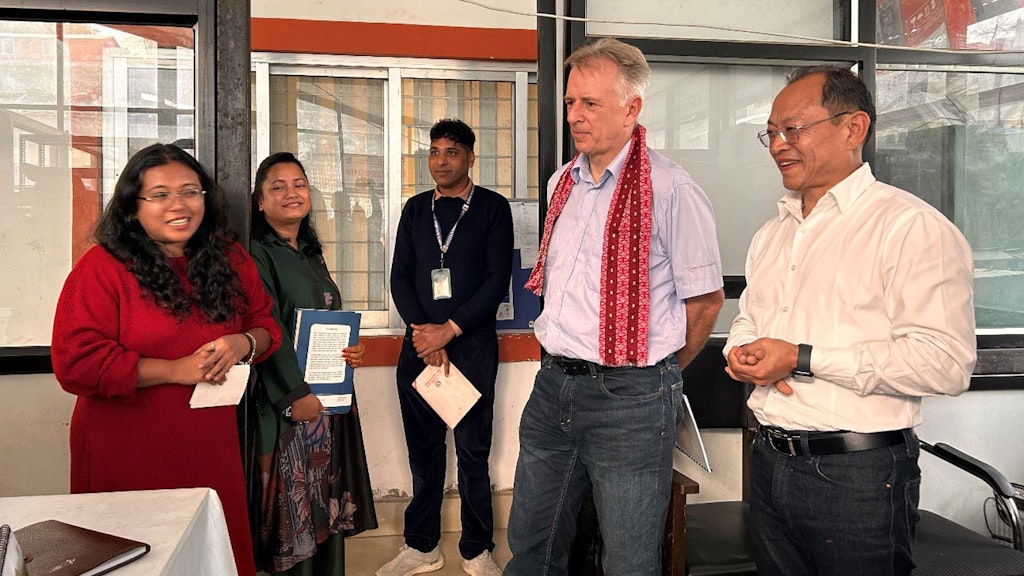
During this phase, our concern was to ensure that basic services could be restored at provincial and local level. Administrative buildings were burned to the ground and everything was in short supply. Through targeted assistance from Switzerland, a temporary office with a computer and desk was set up, for example at the welfare office and at the vehicle licensing authority. This allowed people to access welfare benefits and obtain driving licences again. The authorities resumed operations in the most basic conditions, which can be seen as a sign of resilience and hope. The actual reconstruction is being financed by the Nepalese government, but the fact that Switzerland provided unbureaucratic assistance in a dramatic situation will not be forgotten.
A constitution is developed over time – Switzerland's support in this area takes effect via the adaptation of societal systems and structures. Is that an isolated case, or is Switzerland supporting other projects in Nepal as part of this systemic approach?
Most of the projects that Switzerland is supporting in Nepal aim to support reform or achieve a systemic effect. For example, Switzerland is helping young Nepalese people access information on their rights and obligations if they want to work abroad and later return. They are registered and are aware of their situation if they migrate. But this is also about preventing exploitation and abuse, which many migrants face.
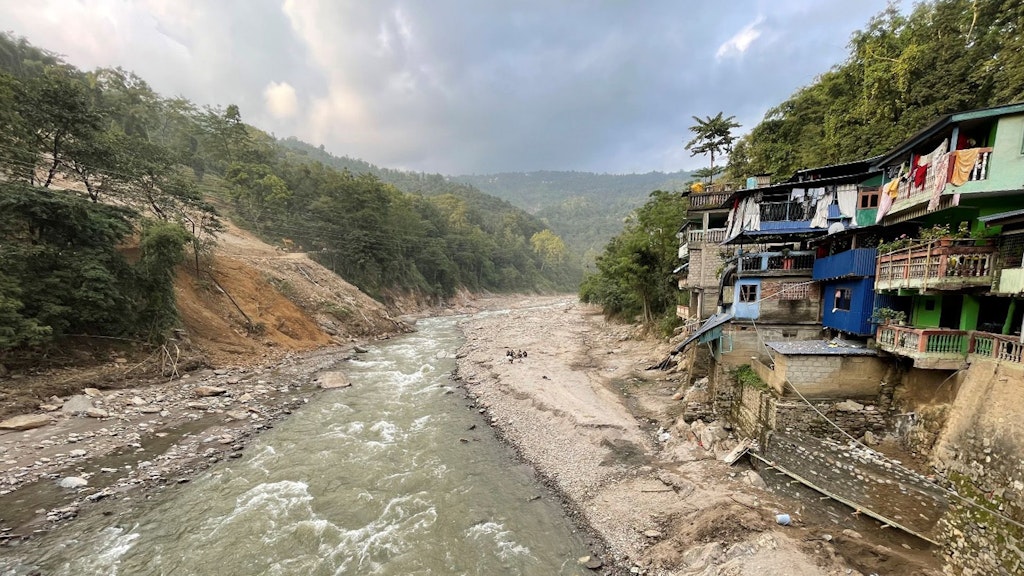
Suspension bridges are another example as the topography in Nepal is even more extreme than in the Alps. Swiss suspension bridges have therefore become a symbol of the connection between valley communities and regions that barely had any contact. Initially Switzerland helped build bridges and crossings at difficult locations in the country. It then shifted to more fundamental – namely systemic – issues, such as technical standards, the training of specialist workers, regulation and legislation in the field of bridge and road infrastructure. We're proud that over the course of several decades, 10,000 bridges have been built in connection with Swiss projects. Nepal now has its own engineers and construction companies and we only have a small number of projects that are nearing completion (e.g. knowledge transfer in tunnel construction).
Switzerland and Nepal are celebrating the 70th anniversary of bilateral relations next year. How have diplomatic ties developed in this time?
In 1956, Switzerland's ambassador in New Delhi was also accredited to Nepal. From then on, Switzerland established official relations with Nepal – and was one of the first European countries to do so. But the ties go back even further: in the 1950s, Swiss geologist Toni Hagen carried out extensive field research in Nepal. He mapped the country and through his research laid the foundation for cooperation between Switzerland and Nepal.
And that cooperation has since been continuously developed. In 2009 Switzerland opened an embassy in Nepal – in the building where the Swiss cooperation office had previously worked.
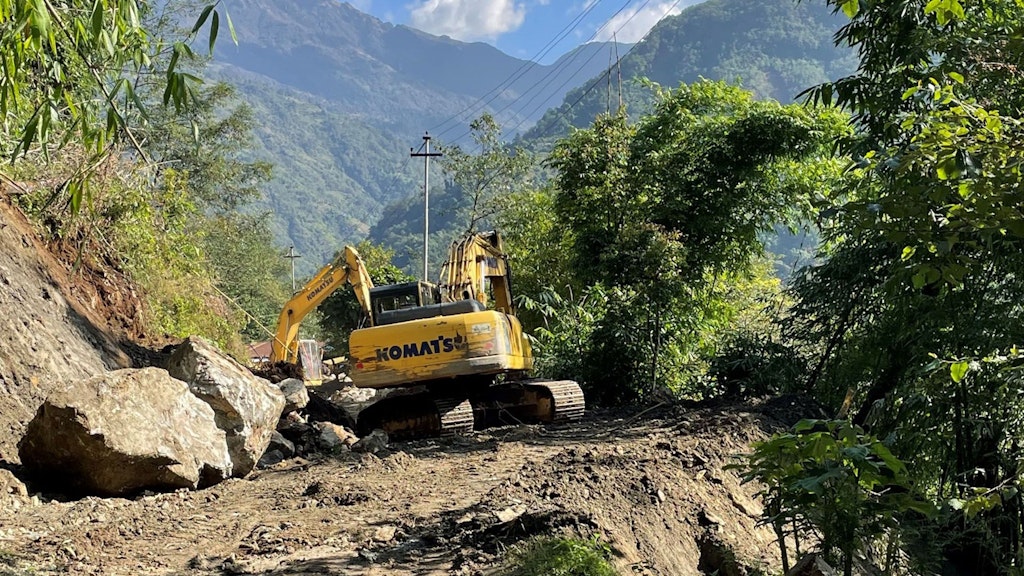
Owing to its long-standing presence in the country and the close development cooperation, Switzerland nowadays enjoys an excellent reputation in Nepal. I also believe that Nepal's mountains, geopolitical situation and diversity result in a sort of spiritual kinship between our two countries, despite major differences. As well as the technical aspects, this connection also has an emotional dimension – and leads to tangible outcomes. One example is suspension bridges, and another is the sharing of knowledge on natural hazards in mountain regions where the impact of climate change is particularly marked.
From working in the field to taking a systemic approach, what are the priority areas going forward?
Our current cooperation programme is based on three pillars. First, supporting Nepal in its transition to federalism. Second, creating more economic opportunities. Third, promoting safe migration and supporting the reintegration of returnee migrants.
I believe Switzerland can add value primarily through its contribution in key ‘niche areas’ where it can contribute its expertise, and through innovative approaches. These include private sector engagement and managing the considerable disaster risks. In this way, Switzerland complements the loan support from the World Bank and the Asian Development Bank by providing technical expertise, thereby leveraging the impact of projects. We do not use any development funds for the actual infrastructure.
Ultimately, it's about governance, governance, governance. If we support well-functioning institutions through our work, this brings services closer to people – particularly at provincial level – and guarantees accountability and efficiency. Because good governance means development cooperation is no longer needed.
Contact
Eichenweg 5
3003 Bern