
Mali: child protection and education in emergency
Since 2012, the crisis in Mali has deprived hundreds of thousands of children of their right to education. As well as dropping out of school, children are exposed to risks such as recruitment by armed groups and forced marriages. To remedy this situation, the SDC is supporting a project that focuses on both education and child protection.
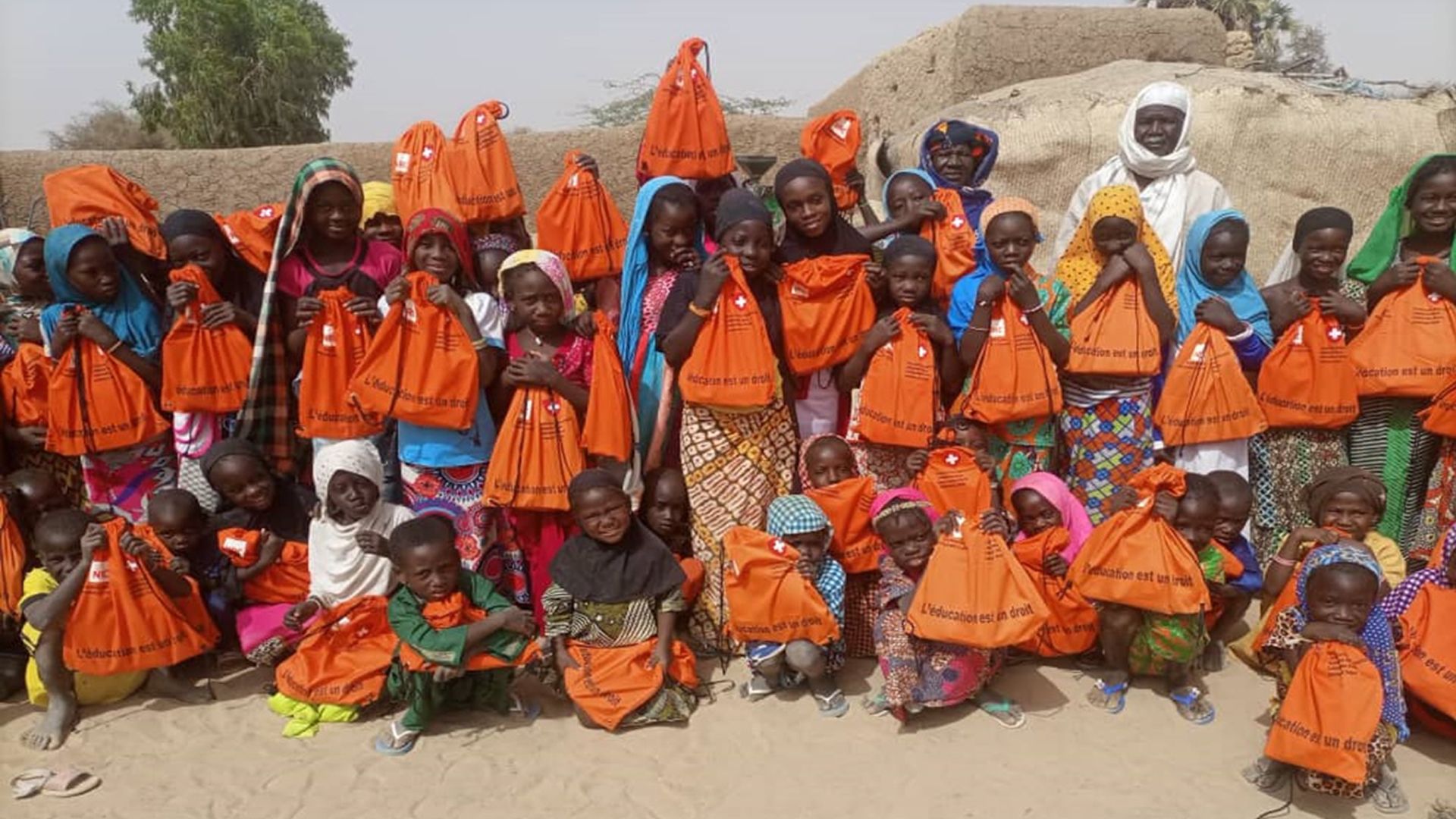
Since 2012, Mali has been plunged into a complex crisis with serious consequences for children's education. This situation, marked by insecurity, massive school closures and deteriorating infrastructures, has deprived hundreds of thousands of children of their right to education. The number of children not attending school has risen from 50,000 to 500,000 in a decade. Dropping out of school exposes children to serious risks such as exploitation, early marriage or recruitment into armed groups.
Education and protection
To mitigate the consequences of this crisis, the SDC mobilise both its humanitarian aid and its development cooperation. In collaboration with its international and local partners, it is working on a project that places protection and education at the heart of its action. Activities are focused on three pillars.
Firstly, the project supports alternative education in areas where schools are closed due to conflict. Community learning centres have been set up. They provide education for out-of-school children aged between 8 and 12. More than 3,000 children and young people have received an education in a safe and protective environment. In some cases, these centres have helped to reopen closed schools. The project also supports state schools that are continuing to operate despite the ever-present risk of closure. An accelerated emergency learning programme has been specially designed for these schools, which are often located close to conflict zones.
The second pillar concerns access to civil status documents. In Mali, the education system requires a birth certificate for the first primary exam. However, many families lack this document. Working with local authorities, the project has set up mobile and fixed centres to issue and distribute tens of thousands of birth certificates, with priority given to children of school age.
Traumatic scenes around schools
Finally, the project focuses on child protection issues. In certain areas of Mali, the presence of armed groups and the lack of security pose a threat to the physical and psychological integrity of children. They are sometimes exposed to traumatic scenes: the destruction of villages by armed groups, mass or targeted assassinations, explosive devices and remnants of war munitions. Not to mention the risk of recruitment into armed groups, exploitation and forced labour, as well as early marriage.
The children were able to express their fears and say where they felt unsafe. On the basis of these testimonies, the communities have put in place measures to minimise insecurity threats, such as gender-based violence or physical dangers around schools. Protection committees have been set up and their members have been trained to report cases of violence against children. They have also acquired a basic understanding of how to provide psychological first aid.
Challenges and prospects
Despite the reopening of several schools, many challenges remain, such as the shortage of teachers, the vulnerability of schools to armed attacks and the difficulties of coordinating educational initiatives. Several ideas are being explored for the future, starting with the development of distance learning. Modern means of communication, radio or tablets could be used to cope with closure of schools or to make education more accessible. An improved coordination of education actors and the sustainability of protection mechanisms will be further developed.
Links
Contact
Eichenweg 5
3003 Bern