
Once the mines are gone, there is an explosion in development
A total of 30 years of war and conflict have left an estimated 3 to 4 million mines, cluster munitions and other explosive remnants of war in Cambodia. Switzerland is supporting the HALO Trust with CHF 4 million for mine clearance. Humanitarian demining makes entire areas safe and habitable again. It enables farmers to re-enter their land and use it for agricultural purposes.
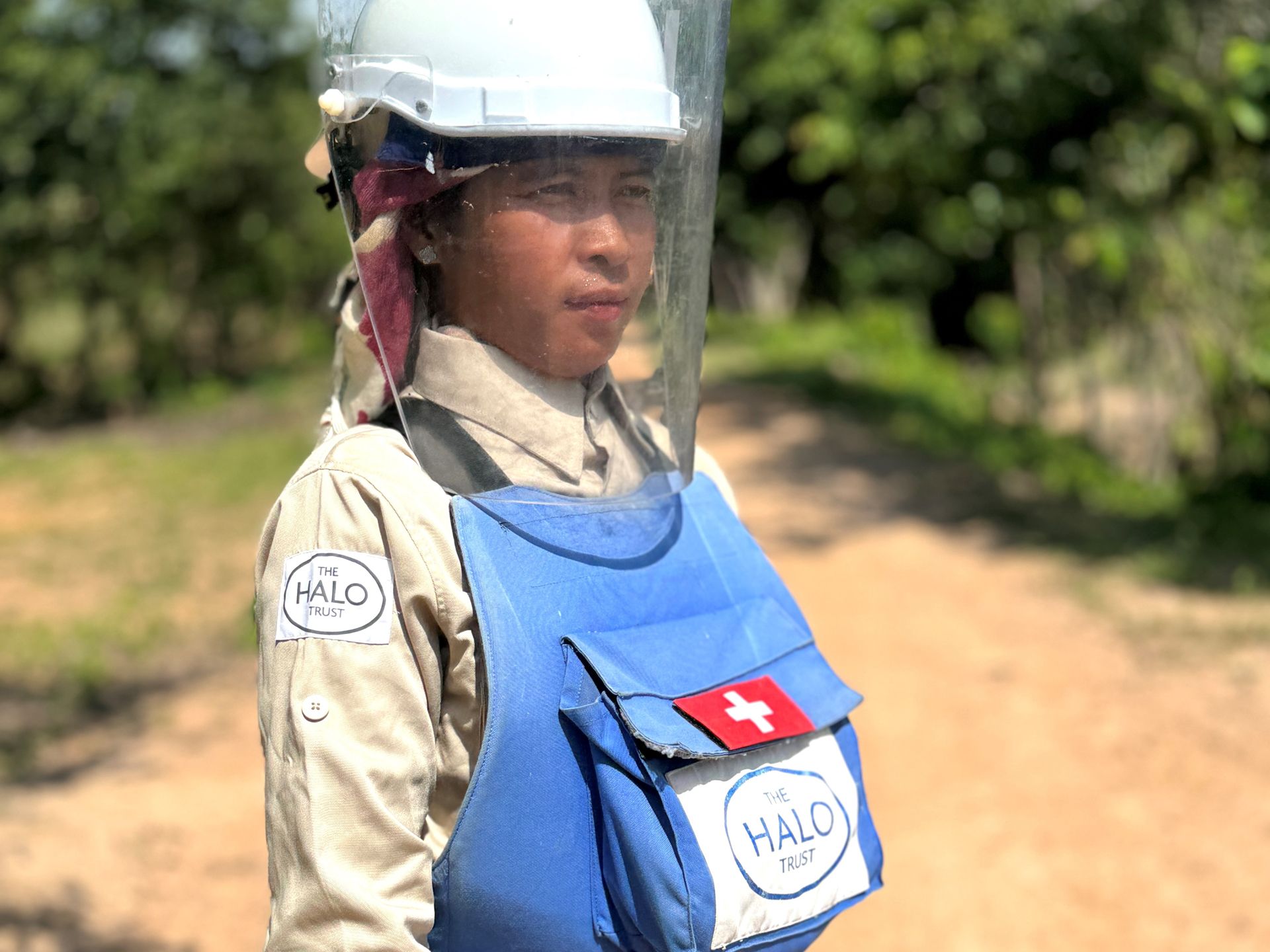
Nowhere else in the world are there as many anti-personnel mines as along the Cambodian border with Thailand. In this 700 km long stretch of land – known as the K5 belt – an estimated 3,000 mines per kilometre lie concealed. Although the Vietnam War, Pol Pot and the civil war are now consigned to the past, their explosive legacy continues to pose a threat to the people of Cambodia to this day. «Landmines are patient, insidious weapons,» says Leav Path from the HALO Trust, the largest international humanitarian organisation for mine clearance. «They claim most of their victims only after a war has ended.» During the conflict, the soldiers were aware of the danger. But the civilians who returned to their villages after the end of the war would walk unsuspectingly into their fields which were strewn with mines. «People in my village had their legs blown off in this way,» says Path. This experience motivated her to train as a deminer herself. She has been cleaning up her country from the legacy of the past conflict for some 13 years. One day at a time, one metre at a time.
39 injured in the current year
One centimetre at a time, Leav works her way towards the mine, which she had previously tracked down with a metal detector. She snips off a few roots with the secateurs and scrapes away the dry soil until she uncovers the explosive device with the garden shovel: a plastic container the size of a margarine tub, loaded with 50 grams of explosives. Enough to tear off a person's foot or leg. Since 1979, more than 65,000 Cambodian men, women and children have been killed or critically injured by accidents involving mines and unexploded ordnance. Thanks to demining operations, the number of victims has fallen significantly from 2,069 in 1993 to under 40 this year. However, one million people still live in areas contaminated by unexploded ordnance. Even here, just a few kilometres away from the famous temples of Angkor Wat, mines are frequently discovered. «A water buffalo fell victim to a mine on this little road,» says Leav. Her team was therefore called out to inform the local population about the risks and to clean up the surrounding area.
On safe ground without fear
Leav attaches an explosive charge of TNT to the exposed mine to blow it up. «Even after 13 years, I'm still happy about every single mine that I can neutralise,» she says. But she experiences real satisfaction when an entire minefield can be cleared. «Then we can return this valuable land to civilians for farming, and for building roads and houses.» Humanitarian demining is therefore the first step in the development of a country. Her village is the best example: «Since people have been able to build and work there without fear, development has literally exploded,» says Leav with a laugh.
Clearing mines, warning people
Switzerland has been supporting humanitarian demining in Cambodia since 2013, initially through the UNDP-led ‹Clearing for Results› project, and from 2020 by supporting the work of the HALO Trust.
To date, the Swiss contribution has enabled the discovery and destruction of
- 10,273 anti-personnel mines
- 160 anti-tank mines
- 8,214 other explosive remnants of war
Thanks to Switzerland's commitment, 32 km2 of contaminated land has been cleared. More than 1.5 million people now have secure access to land and water, which opens up new economic opportunities. Three quarters of the cleared land is used for agriculture, the rest for housing or infrastructure projects.
Mine clearance is only one part of the commitment. Equally important are Explosive Ordnance Risk Education (EORE) programmes to educate people about mine risks. In recent years, 5.4 million people have taken part in such training courses. Children in particular need to learn how to recognise mines and how to behave safely in their presence.
Contact
Eichenweg 5
3003 Bern