
Reconstruction and rehabilitation
The reconstruction phase focuses on restoring the living conditions of populations affected by disasters. SDC humanitarian experts help victims overcome the consequences of war or natural disasters by implementing sustainable improvements in housing, infrastructure and income-generating opportunities.
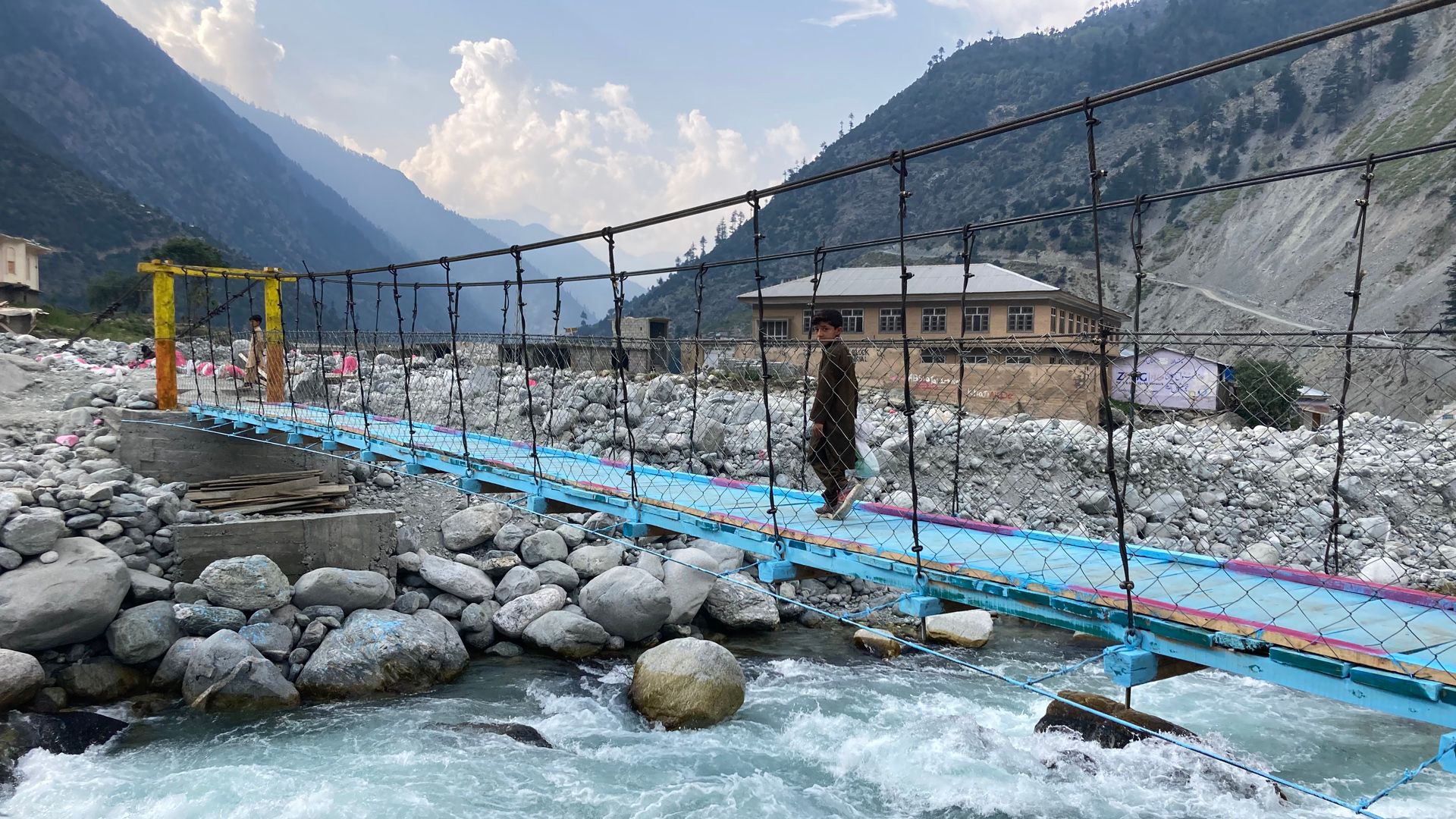
The SDC’s Humanitarian Aid has a long and solid experience in the field of reconstruction and rehabilitation. Post-disaster reconstruction includes both material reconstruction and the social and economic recovery of affected communities. Projects include the rehabilitation of public buildings (schools, hospitals, roads, bridges) and damaged houses, as well as the restoration of water supply systems. Humanitarian aid also aims, when circumstances permit, to restore local economic activity and to provide social protection for the victims so that they can meet their own needs.
The SDC’s Humanitarian Aid has two main objectives: to strengthen the capacities and capabilities of the beneficiaries and to ensure that its activities produce sustainable results. The reconstruction phase is often an opportunity for humanitarian aid and development cooperation to work together.
Background
In the aftermath of a disaster, as well as in normal times, a person’s standard of living is determined by a number of factors, including housing, income, health and the quality of the food they consume. The living conditions of the most vulnerable communities can be significantly improved by restoring access to basic necessities (water, sanitation and hygiene, farmland, livestock) and repairing roads and bridges. In addition, the restoration of income-generating activities will provide the basis for much-needed social and political stability.
It is therefore vital to ensure that the plans drawn up at the beginning of a reconstruction phase are accurate and in line with the needs identified on the ground. Working with local authorities at this stage is essential to ensure that the aid provided delivers sustainable results.
Reconstruction activities also require extensive coordination between local and international humanitarian and development organisations. Ideally, donors and partners should agree on a division of labour in order to make the most efficient use of the financial resources available.
Contact
Eichenweg 5
3003 Bern