
SDC supports Uzbekistan's path to sustainable water policy
Uzbekistan has adopted a new legal framework to protect and manage its increasingly scarce water resources. The water code, whose development Switzerland has accompanied closely in recent years, marks a significant step towards greater sustainability and climate resilience.
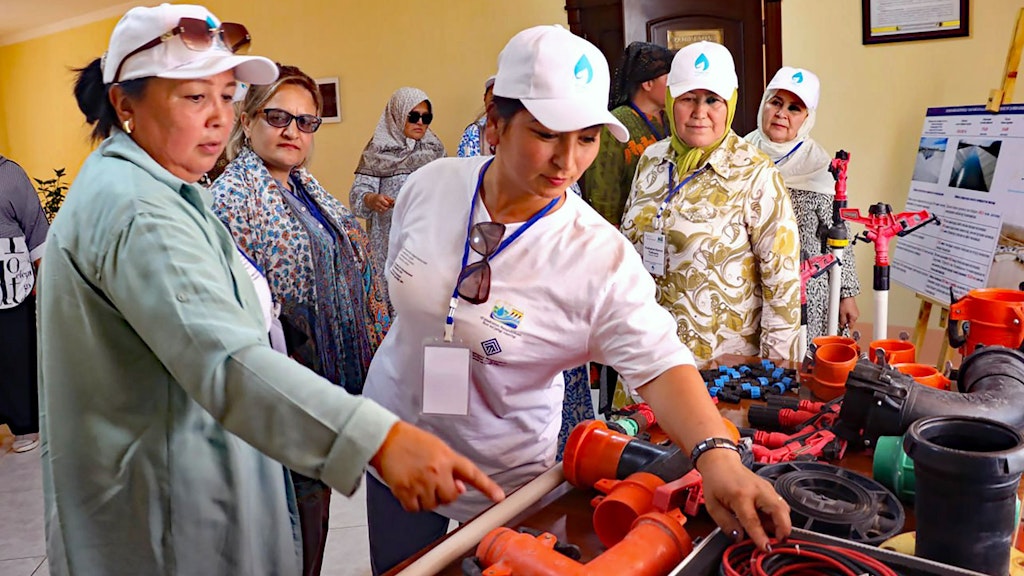
In the summer of 2025, President Shavkat Mirziyoyev signed Law No. 1076, which recognises water as a national asset and thus places it under additional state protection. The code defines two major categories of use: general and special use. General uses – such as drinking, bathing, watering livestock and recreational fishing – do not require a permit. Special uses, such as industrial applications, now require a licence and are subject to regulatory oversight.
A multi-stage process
Several preparatory steps were necessary before the code could be drafted. The Swiss Agency for Development and Cooperation (SDC) was involved in defining the tasks and provided advice to the Uzbek authorities. Task definition serves as the basis for drafting codes. Once the ministries involved had given their approval, the code was released for public consultation. This is an important tool for federal cooperation between the Uzbek authorities, as it allows all citizens of the country to view new laws and submit comments, suggestions for improvement, or more specific requirements. The SDC clearly emphasised the importance of this step in the process and worked to ensure that the code effectively incorporated the various perspectives.
The law introduces a new classification system for water bodies, including surface water, groundwater and transboundary water bodies. Transboundary waters are waters that cross national borders – an increasingly sensitive issue due to water scarcity caused by climate change and developments in the headwaters of Central Asia. The law also regulates the use of water bodies, including through public-private partnerships.
A foundation for future improvements
Uzbekistan now has a comprehensive body of legislation in the water sector. The SDC worked in particular to ensure that the basic principles of integrated water resources management were taken into account and that a federal development process was followed, as water resources are scarce and are claimed by various Central Asian countries. As a result, cross-border cooperation is vital and Switzerland works to support it. This is one of the reasons why the code incorporates different approaches taken in Switzerland's development cooperation with Uzbekistan:
- Cross-border cooperation on water issues at the highest level.
- The creation of river basin councils to address water issues across sectors.
- The possibility of private and civil society providers offering water services.
- Water protection, including sanction mechanisms.
- The introduction of a water quota system to regulate water distribution among different consumer groups.
Thanks to the anchoring of these aspects, Switzerland will be able to support Uzbekistan even more effectively in future, and SDC projects in the water sector can be implemented and scaled up more quickly. One example of this is the Blue Peace Initiative, which is designed to promote cross-border cooperation on water issues. The river basin councils are now also enshrined in law, which facilitates the participation of government representatives in discussions while also legitimising their existence.
Future implementation and support
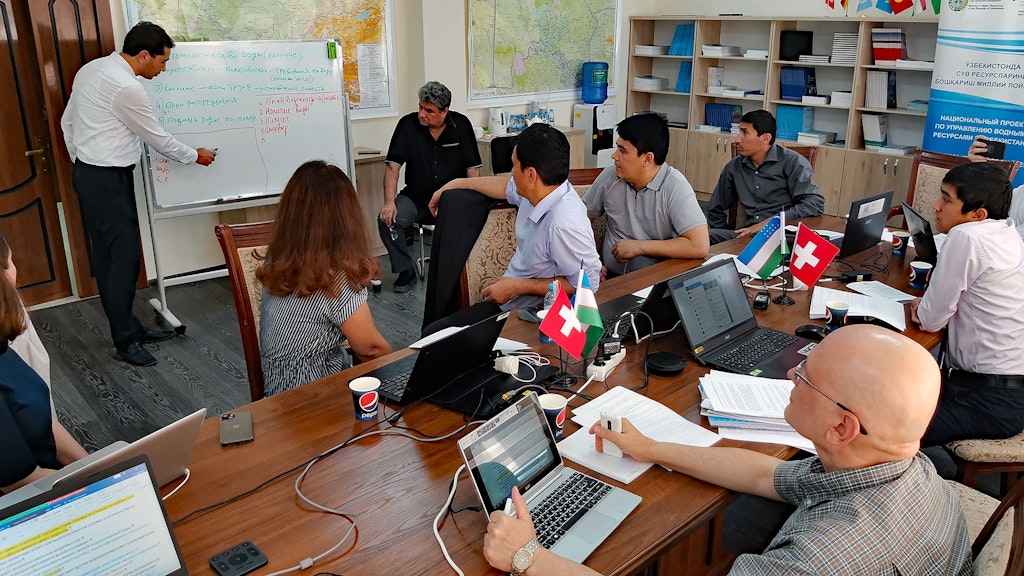
The SDC's support will not end with the code's entry into force. For administrative purposes, the law provides for the establishment of national and regional water councils as advisory bodies. Switzerland will continue to support implementation by:
- Raising awareness among the population and local authorities of the existence and implementation of the code.
- Training local authorities to efficiently implement the code on the ground.
- Strengthening cross-border cooperation, including disseminating Uzbekistan's experiences in the region.
In view of rising temperatures, water scarcity and growing demand from agriculture and industry, the new water law is an important step towards systematically securing Uzbekistan's long-term water supply. It also shows that the SDC, as a long-standing partner, can successfully contribute to peace and stability in a region – for example through its work in the areas of governance and water.
Contact
Eichenweg 5
3003 Bern