
Sudan: Athousand days after the war broke out
As the war in Sudan enters its third year, 30 million people have been affected, with 15 million of them having had to flee their homes. In response to this unprecedented humanitarian situation, Switzerland has allocated around CHF 190 million since the start of the conflict to support Sudan and neighbouring countries (Chad, South Sudan and Egypt), while promoting respect for international humanitarian law and calling for a ceasefire.
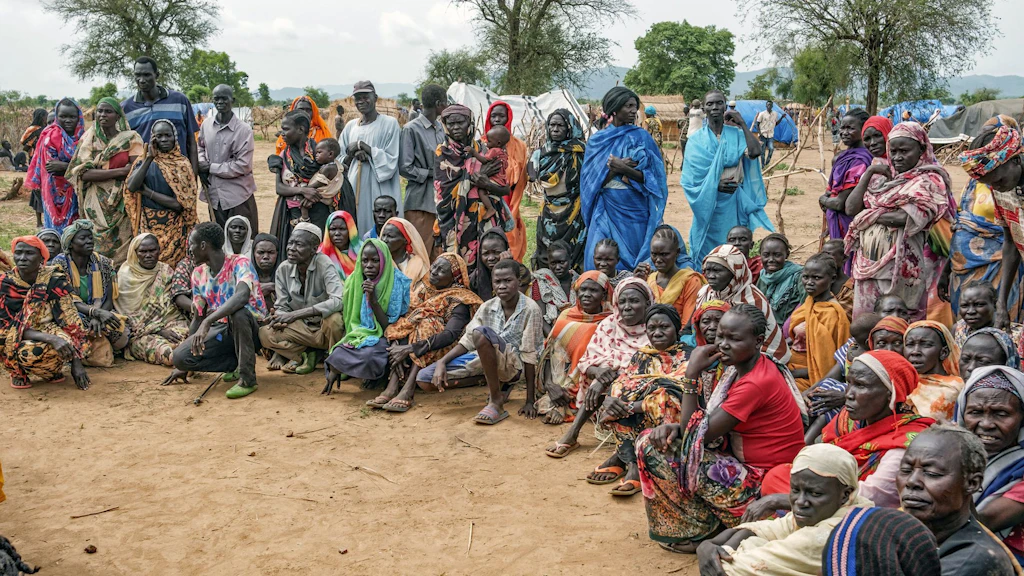
At the outset of 2026, the situation in Sudan remains critical. Clashes between the Sudanese Armed Forces (SAF) and the Rapid Support Forces (RSF) and their respective allies, which have been ongoing since April 2023, have plunged the population into an acute humanitarian crisis. The conflict has claimed tens of thousands of lives, forced millions of people to flee and led to a severe food shortage. Essential infrastructure – health, education, supplies – has been largely destroyed, leading to soaring prices and worsening hunger.
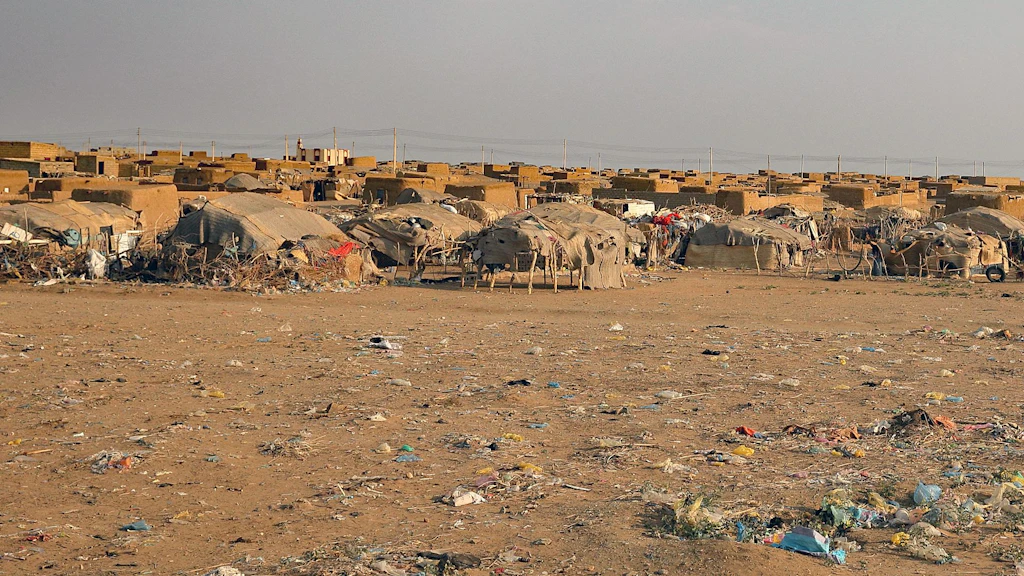
The UN estimates that over half of the population is suffering from acute food insecurity and that 30 million people are dependent on humanitarian aid. In some regions, hunger has reached very high levels, and cholera continues to spread. Women, children and marginalised groups are exposed to serious violations of international humanitarian law, including large-scale sexual violence. 11 million people are currently internally displaced, and 4 million have fled to neighbouring countries, mainly Chad, South Sudan and Egypt.
A crisis with regional dimensions
Neighbouring countries, particularly Chad, South Sudan and Egypt, are under increasing pressure from a massive influx of refugees, putting a severe strain on already fragile infrastructure. During a visit to South Sudan in 2025, SDC Director General Patricia Danzi stressed that “the war in Sudan is worsening the living conditions of host populations in northern South Sudan and in the neighbouring countries. It is having a devastating impact on the economy and inflation levels. It's essential that we help resolve this conflict and restore peace.”
Close monitoring by Switzerland
Since the start of the war, Switzerland has been closely monitoring the humanitarian situation in Sudan and its repercussions in neighbouring countries. The SDC's operations have been coordinated from the Swiss embassy in Cairo since the embassy in Khartoum was temporarily closed. For Kathrin Wyss, deputy head of international cooperation for Sudan, “this location allows for closer monitoring of activities and a faster response to developments.”
During a mission to Kassala, in the south-east of the country, where she met internally displaced persons and refugees from South Sudan and Ethiopia, Ms Wyss stressed that “beyond emergency aid, longer-term approaches are possible to enable people to rebuild their lives and their autonomy, including in unexpected regions such as Darfur”. She also explained how Switzerland's partners are working with the local population, for example to build and maintain roads that help people get to markets.
In response to this crisis, Switzerland has adopted a regional approach that mobilises all relevant FDFA units, at head office and on the ground. The SDC office for Sudan in Cairo, which has four expatriate staff members, relies on experienced local employees and support from colleagues in Bern. In addition, visits to the field are organised whenever possible in order to better assess the situation on site. The most recent visits took place in January and February 2026 in Northern State, in particular in Dongola. The office also works closely with the Federal Council's Special Envoy for the Horn of Africa and with the FDFA's Peace and Human Rights Division (PHRD) liaison officer for Sudan, both based in Nairobi, Kenya.
Switzerland mobilises funds and expertise
To date, Switzerland has allocated around CHF 190 million to Sudan and neighbouring countries, distributed among United Nations organisations (OCHA, WFP, UNHCR), the ICRC and international NGOs (Médecins Sans Frontières/MSF, Norwegian Refugee Council, Save the Children). This amount includes the additional CHF 50 million released in December 2025 by the Swiss Parliament following the intensification of fighting in North Darfur and the capture of Al Fasher. This decision comes shortly after the joint visit to Sudan by Dominik Stillhart, Deputy Director General of the SDC and Delegate for Humanitarian Aid, and Valérie Liechti, Assistant Director General of the SDC and Head of the Africa Division. “With this allocation, Switzerland is sending a strong signal and demonstrating that it does not remain indifferent to the plight of the civilian population in Sudan and the region,” emphasized Dominik Stillhart.
Half of this supplementary credit is being used to support the population in Sudan and half to respond to the crisis in neighbouring countries (South Sudan, Chad and Egypt). It covers the most urgent needs – food, access to drinking water and healthcare, sanitation and hygiene, shelter, protection of populations and prevention of violence against women and children, and improvement of food security – and also supports longer-term sustainable solutions, such as strengthening local markets and access to education for refugees and host communities.
Through international NGOs, Switzerland is working with a growing number of local organisations, particularly in Darfur and on the border with Chad. In some regions, these organisations are the only humanitarian actors able to reach the affected populations.
Since the beginning of the crisis, Switzerland has also made experts from the Swiss Humanitarian Aid Unit available to several organisations (OCHA, UNHCR, WHO, IOM, WFP, MSF and Mercy Corps). Their expertise – in water, sanitation, hygiene, protection and health – supports the work of these organisations in the field.
Some figures on the aid distributed
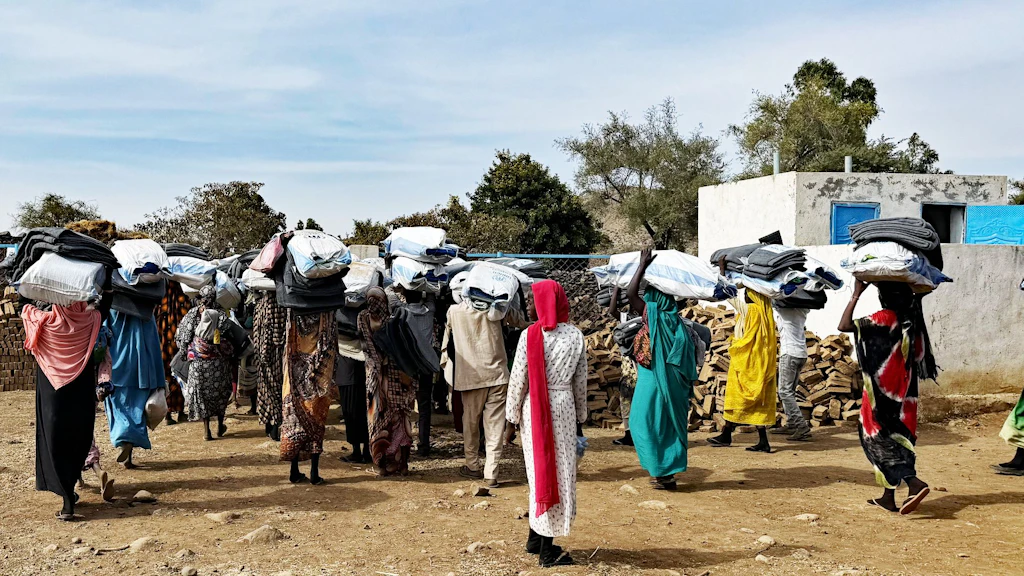
Thanks to the supplementary credit at the end of 2025, the WFP purchased 1,150 tonnes of food to support around 1.1 million people for one month.
Since 2023, Swiss support has reached more than 3 million people across the country, 55% of whom are women, with nearly 6,000 tonnes of food distributed in all regions, particularly in North Darfur and Khartoum.
Diplomatic commitment to peace
On the diplomatic front, Switzerland calls for respect for international humanitarian law and protection of civilians, rapid and unimpeded humanitarian access to conflict zones, and a ceasefire. As in previous years, Sudan will be on the agenda of two upcoming conferences: one in Brussels on 26 March 2026 and the other in Berlin on 15 April 2026.
Sudan: a priority for Swiss peace policy
Since July 2023, Switzerland has been hosting confidential talks between Sudanese civilian parties as part of its good offices in order to improve the chances of success of the official negotiations on Sudan's political future after the war. At the initiative of the US, the FDFA also organised a peace conference in Switzerland in August 2024. However, the absence of one of the parties to the conflict prevented ceasefire talks from taking place. The conference therefore focused on humanitarian access and the protection of the civilian population during the war. These discussions led to the creation of the Aligned for Advancing Lifesaving and Peace in Sudan (ALPS) Group, a diplomatic coalition which brings together the US, Switzerland, the UAE, Saudi Arabia, Egypt, the UN and the AU. Thanks to its joint diplomatic efforts, the ALPS Group has since been able to obtain concrete commitments from the parties to the conflict. These commitments include the opening of border crossings for the transport of humanitarian goods from Chad, the possibility of humanitarian flights, and the introduction of stricter rules for the protection of the civilian population by the RSF. Switzerland continues to work within the ALPS Group to advance the implementation of these commitments on the ground.
In addition, Switzerland's Special Envoy for the Horn of Africa has been working towards a solution to the crisis in Sudan. Through frequent exchanges and public diplomacy in the region, he has established an extensive network for Switzerland. In addition, in September 2024 the Peace and Human Rights Division (PHRD) of the FDFA sent a human security adviser for Sudan to the region. This mission has widened the PHRD's scope for engagement in peace policy.
Links
Read the newsfeed on the FDFA website
Contact
Eichenweg 5
3003 Bern