
Sudan’s unseen crisis: a humanitarian disaster overlooked by the global community
Since April 2023, fighting in Sudan has caused an unprecedented humanitarian crisis. According to the UN, 24.8 million people will need humanitarian aid in 2024. With the massive influx of Sudanese refugees into Chad, South Sudan and Egypt, an entire region has been affected. The SDC has released additional funds to support humanitarian activities in Sudan and neighbouring countries.
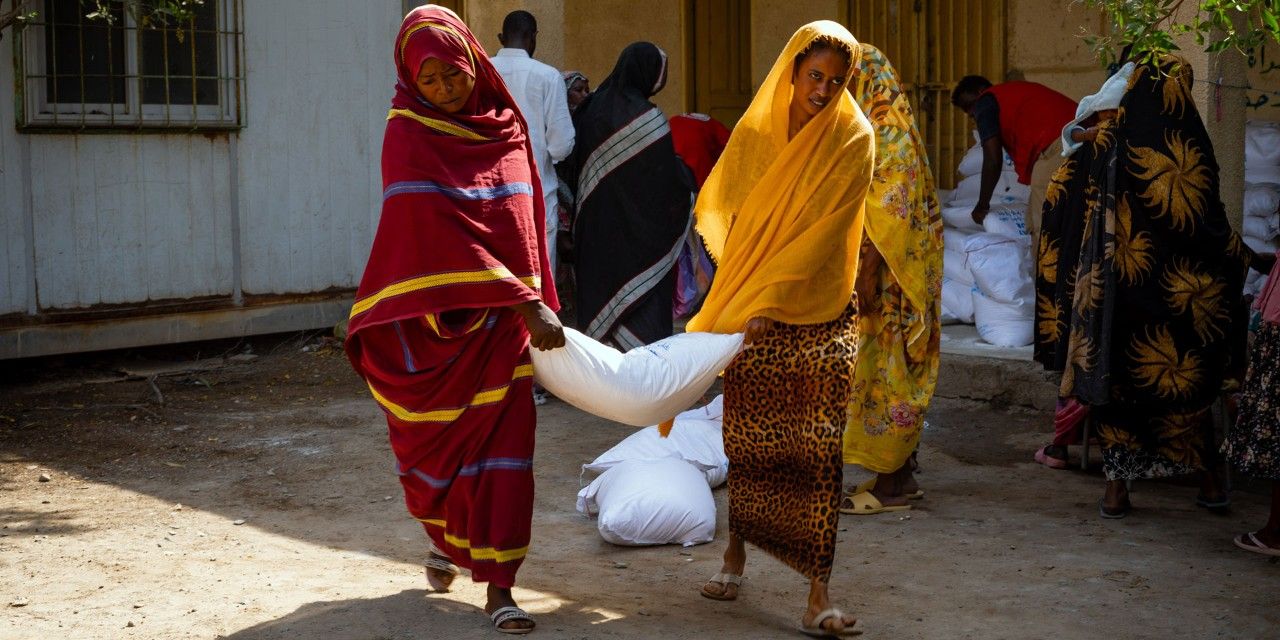
The conflict, which began in April 2023, has plunged Sudan into one of its gravest humanitarian crises in recent history. It has worsened an already dire humanitarian situation, especially in the states of Khartoum, Darfur and Kordofan, pushing humanitarian needs to unprecedented levels across the country. The United Nations reports that in 2024, 24.8 million people, or one in every two inhabitants, will need humanitarian aid. This figure is three times the population of Switzerland and nine million more than in 2023.
Vulnerable communities lack access to essential goods and services, including food, water, shelter, electricity, education, healthcare and nutrition. People are left to fend for themselves, with few resources to ensure their physical and psychological well-being. Incidents of rape, sexual violence and abuse have surged since the crisis began, putting millions of women and girls at increased risk of violence.
Mass population displacement
Before the conflict began, Sudan was home to approximately 3.8 million internally displaced persons, a majority of whom were in the Darfur region, where the security situation has been unstable for nearly two decades. The current crisis has rekindled dormant inter-ethnic tensions, leading to further displacements.vor dem Ausbruch des Konflikts gab es im Sudan rund 3,8 Millionen Binnenvertriebene. Die grosse Mehrheit befand sich in der Region Darfur, wo die Sicherheitslage seit fast zwei Jahrzehnten instabil ist. Die aktuelle Krise heizte die latenten interethnischen Spannungen wieder an, was zu weiteren Vertreibungen führte.
Sudan also hosted over a million refugees from neighbouring countries, including more than 800,000 South Sudanese nationals, as well as individuals from Eritrea and Ethiopia. Many have returned to their countries of origin. By the end of January 2024, over 1.7 million people had crossed the border into Egypt, Chad and South Sudan – countries that are themselves grappling with significant humanitarian, security, and climatic challenges.
Increased, flexible and regional commitment
Having been active in Sudan for many years, the SDC has managed its operations remotely since the temporary closure of the Swiss embassy in Khartoum at the end of April 2023, owing to ongoing fighting in the capital. This situation has not hindered the SDC from dedicating additional resources to meet the growing needs in Sudan and the affected neighbouring countries.
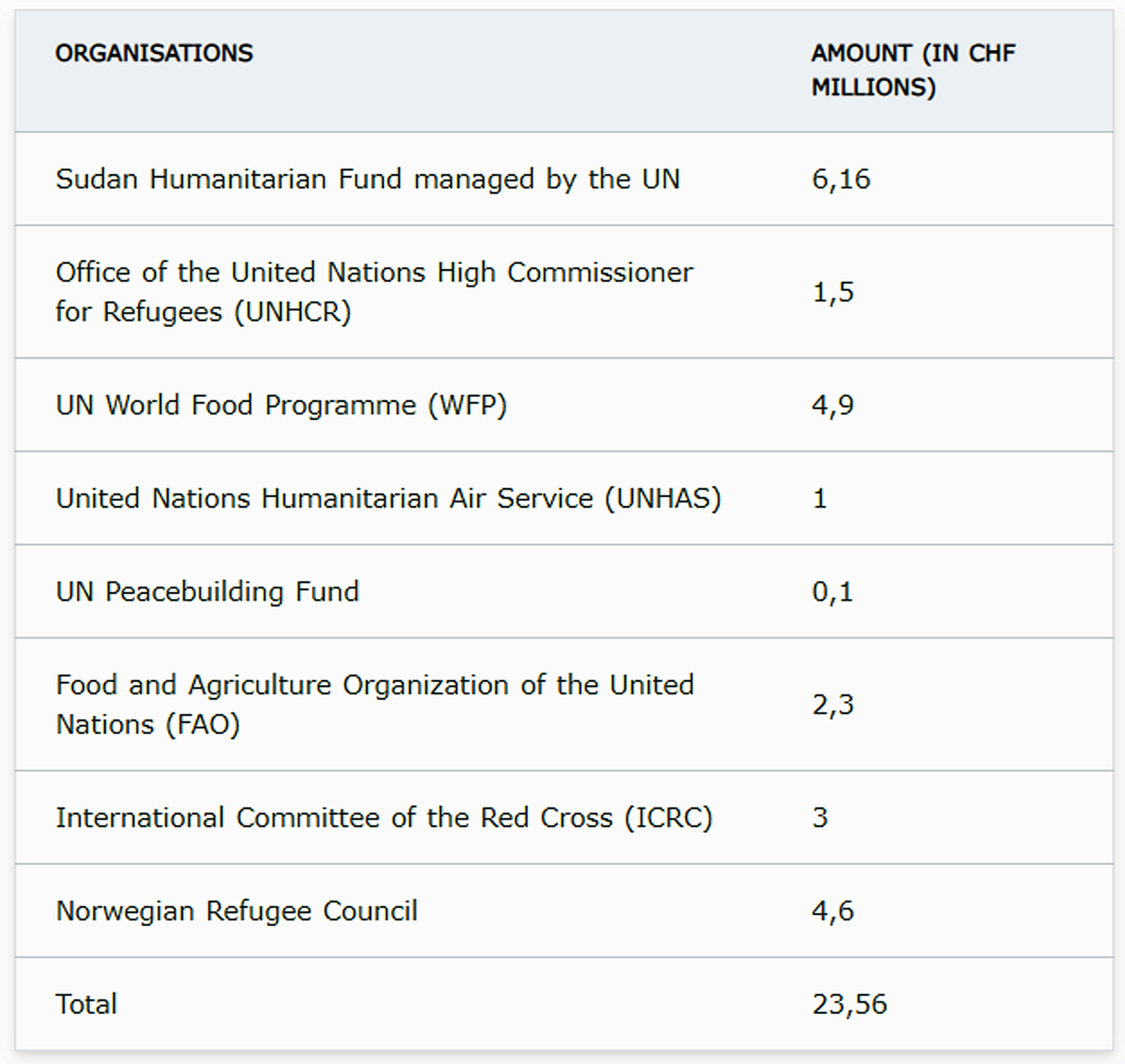
In 2023, Switzerland earmarked almost CHF 64 million, allocating one-third for humanitarian activities in Sudan and two-thirds in the neighbouring countries impacted by the conflict. The SDC has made budget reallocations and, together with its partners, has demonstrated flexibility by reprogramming some activities to provide more resources for the humanitarian response.
Cash and vouchers for basic necessities
In November 2023, a Swiss delegation visited Port Sudan in the east of the country. This coastal city, home to half a million residents, has become a refuge for numerous Sudanese men and women who have journeyed thousands of kilometres to escape violence. The SDC is funding a World Food Programme (WFP) project on the ground, which provides cash and vouchers to people who have had to leave everything behind, enabling them to meet their basic needs for food and other essentials.
@WFP_Sudan, social media platform X, 01.12.2023
Needs throughout the region
Sudan's neighbours have also been severely affected by the repercussions of the crisis. By the end of 2023, Chad had taken in more than 495,000 refugees. Furthermore, some 130,000 Chadians who had been living in Sudan returned to their home country. Patricia Danzi, director general of the SDC, visited the town of Adré on the border with Sudan in October 2023 and saw first-hand the immense challenges posed by this migratory flow in regions where infrastructure and services are lacking. Present in N'Djamena, the SDC has released an additional EUR 11.2 million to support host communities in the health, education and food security sectors in the east of the country. Chad is an extremely fragile country. Additional funding will be crucial to ensure that aid provided to Sudanese refugees does not come at the expense of the Chadian population, which is already facing security, food and climate shocks.
The Sudanese refugees have lost everything. They've been sleeping in makeshift shelters for months, waiting to be transferred to a camp. Mothers are often left alone with their children, having either lost their husbands or not knowing their whereabouts.
The situation in South Sudan is equally complex. The young country, which gained independence in 2011, faces considerable fragility and volatility, with nine million people in need of humanitarian assistance. The influx of approximately 530,000 people from Sudan in late January 2024 has exacerbated the situation. A vast majority (80%) of these individuals are South Sudanese nationals who had previously left their country seeking a better life in Sudan. Now, they've had to reverse their journey, joined by thousands of Sudanese refugees.
The SDC also runs operations in Juba. In 2023, it released an additional CHF 11 million to support its partners, including UN agencies and the ICRC, in meeting new needs. Operations are focused on border localities where refugees are arriving in significant numbers. Renk, a town in the north-east of South Sudan, has become a key arrival point for many fleeing Sudan. SDC assistant directors general Dominik Stillhart and Nicole Ruder made a visit to the town in early November 2023.
I recall an encounter in Renk with a young woman and her family. She was forced to abandon her promising studies and flee Sudan, leaving her utterly distraught. The image of this young woman, once brimming with hope for a fulfilling life, only to face such a dramatic shift overnight, remains etched in my memory.
Access to communities in need remains a challenge
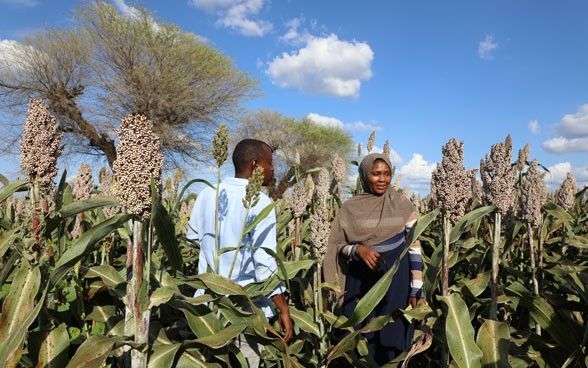
Since the onset of the crisis, humanitarian actors have stepped up their efforts despite facing numerous challenges, including insecurity, bureaucratic and administrative obstacles, and the looting of humanitarian goods, infrastructure and food. Furthermore, access to Darfur and Kordofan is increasingly restricted as a result of the worsening conflict, making it difficult for humanitarian aid to reach a large proportion of the population in need.
Switzerland's agenda on the UN Security Council
Switzerland is also working at the multilateral level to bring about a positive outcome to the conflict that lies at the root of the crisis in Sudan. Within the UN Security Council, Switzerland has reiterated its support for the UN secretary-general's personal envoy for Sudan and for regional peace efforts. It has also called on all parties to the conflict to fulfil their obligations under international humanitarian law, particularly regarding the protection of civilians.