
Swiss Dual Education Takes Root in Georgia’s Countryside
Switzerland supports Georgia make farming more modern, innovative, and attractive for young people. Young professionals like Nino Akhaladze are living proof that Swiss dual vocational education can turn passion into enterprise and that when skills, knowledge, and opportunity come together, they (can) bring new life to rural areas.
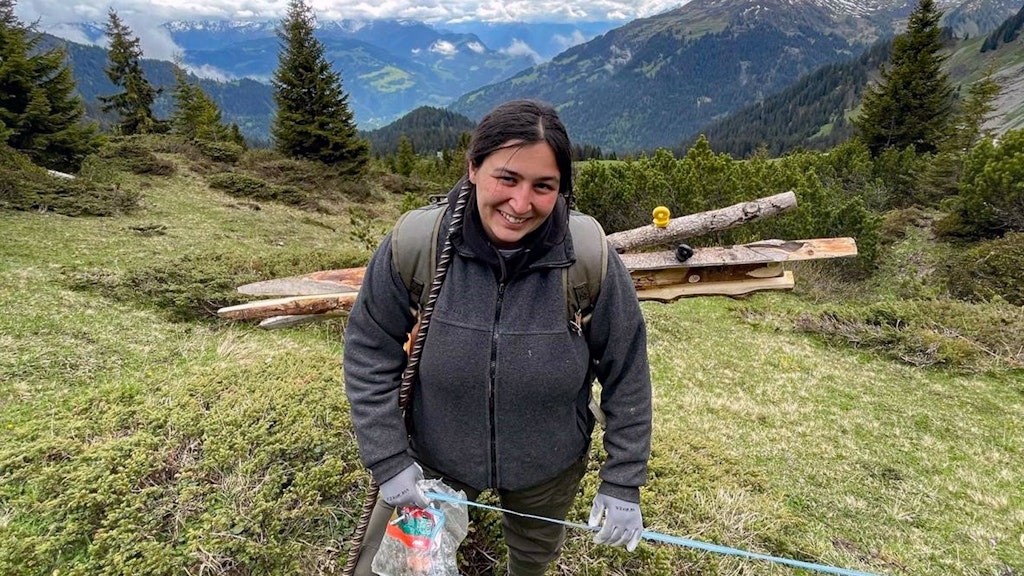
The story of Nino Akhaladze, now 26 years old, begins like that of many young people from Tbilisi — a city girl with dreams still taking shape. But the COVID-19 pandemic, which reshaped lives around the world, also transformed the course of hers. Confined within the walls of a city apartment, Nino began to question the purpose of staying in Tbilisi when life itself seemed to pause. Seeking a breath of freedom, she moved to her grandmother’s village. There, she found something she didn’t expect — life moving on peacefully, in harmony with nature. The world was uncertain, but she found comfort and meaning.
“I’ve always loved animals,” she recalls. “Wherever I went, if I saw a stray animal, I brought it home.”
One evening, while talking with a friend, Nino heard about the Swiss Agricultural School Caucasus (SASC) - a discovery that would change her path.
“I didn’t waste a minute. The next day I collected all the information and documents and registered. During the interview, I wasn’t sure what exactly I wanted to become, only that I wanted to work with cattle and make cheese. They recommended the dairy products technology faculty — and it turned out to be the perfect choice.”
Striving for Swiss quality standards is the hallmark of the new school
Founded in 2017 through the initiative of Georgian businessman Mikheil Svimonishvili and supported by the Swiss foundation Gebert Rüf Stiftung, SASC is an unprecedented private initiative in Georgia’s agricultural vocational education sector. The school offers dual education — a blend of theory and hands-on practice — guided by Swiss professors. The involvement of Swiss experts has been made possible through the funding and support of the Swiss Agency for Development and Cooperation (SDC). The modern campus in Dmanisi includes a dairy farm, a cheese-making plant, and classrooms surrounded by alpine landscapes.
Nino recalls her first year at the school as very dynamic. “Everything was new and interesting. The atmosphere was wonderful — our professors were eager to teach and always encouraged us to grow professionally. The most important thing I learned was the culture of hard work”, she says. One of her mentors, Markus Racine, a Swiss professor, became a key figure in her journey. “Whatever I know, I learned from Markus. He taught me everything, helped me whenever I needed advice, and encouraged me to go to Switzerland for practical experience.”
“It was the hardest thing I’ve ever done”
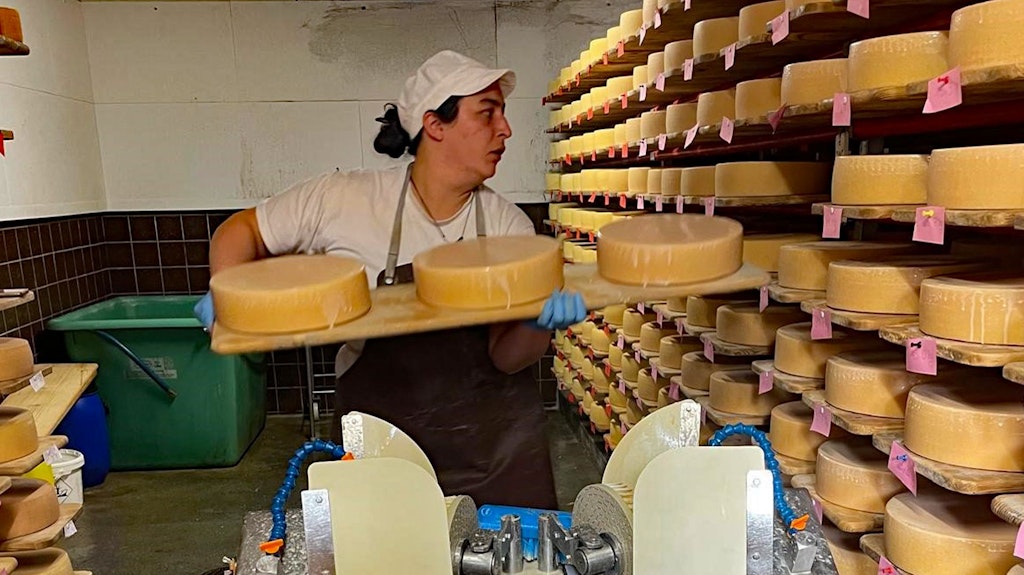
That encouragement soon took shape. With the guidance of another mentor, Nino took a bold step — she decided to go to the Swiss Alps to experience authentic Alpine cheesemaking. Her first visit in 2024 lasted three weeks, working on a Swiss farm. The following year, she returned to Switzerland, this time to work independently, as Nino was already a cheesemaker.
“It was hard, but rewarding,” Nino says. “We milked 2,000 liters of milk per day. The work required precise distribution of tasks, time, and resources, including electricity and water. I would wake up at 1:30 a.m. to make butter, then cheese until 11:00, rest until 14:00, and continue until evening. That was the routine of the first two months.”
A young farmer on the road to success
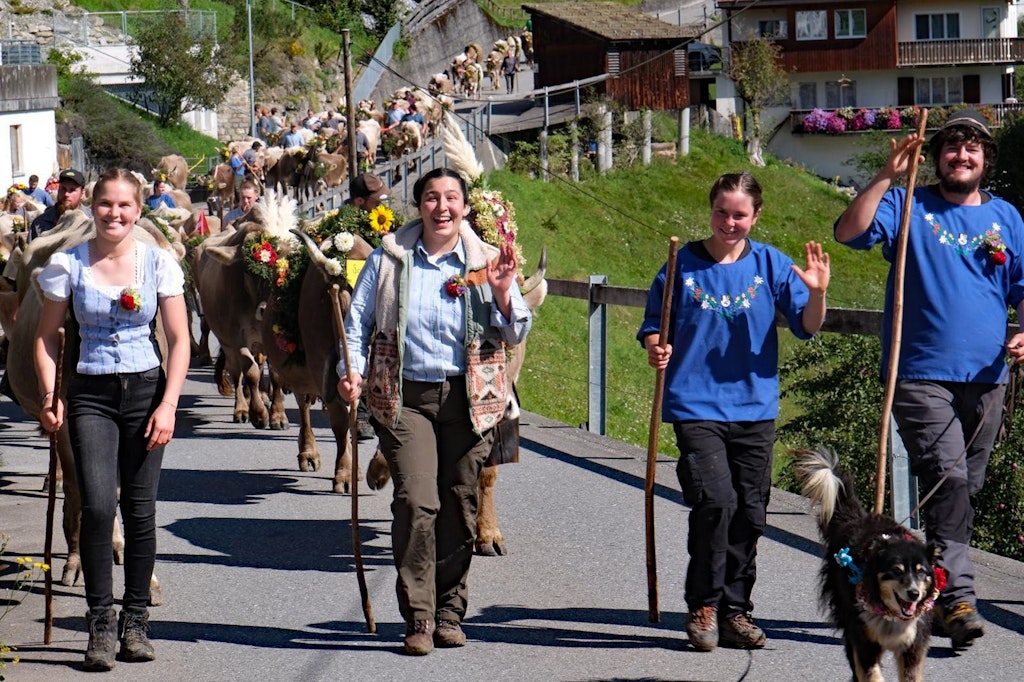
From June until the descent from the Alps in September, Nino lived and breathed the art of cheesemaking. “It was the hardest thing I’ve ever done,” she admits. “But it was my dream, and I had to prove to myself that I could do it. Whenever I faced challenges, I would call Markus, who was always there to support me.”
This year, Nino participated in a cheese competition where her cheese proudly named after her - “Nino’s Cheese” - won a bronze medal.
Now back in Georgia, Nino’s story continues. She rents a small farm near SASC. Her plan is to expand it and start producing her own cheese. With her experience in the Swiss Alps and the knowledge gained from SASC, Nino is determined to succeed.
How Switzerland is strengthening Georgia's agriculture sector
Agriculture is an important source of livelihood for a large part of the Georgian population and employs around 40 per cent of the total working population. However, the sector continues to suffer from low productivity and limited modernisation, which contributes to persistent income disparities. To address these challenges, Switzerland, through the Swiss Agency for Development and Cooperation (SDC), is supporting Georgia in reforming and modernising agricultural education and vocational training. These efforts aim to strengthen farmers' technical and entrepreneurial skills, promote sustainable production practices and improve competitiveness, with the ultimate goal of reducing rural poverty and stimulating inclusive growth in this sector.
The Swiss Agricultural School Caucasus was founded in 2017. In 2021, it received state accreditation and began teaching. The school's conceptual partner is the Swiss Agricultural School Plantahof, which assists with programme development, teacher training and quality assurance. The school offers two-year programmes in agriculture and dairy processing. In addition, active farmers and milk processors can take part in continuing education courses. The school offers six state-recognised courses, which have produced 180 graduates to date. The school also offers non-formal training and advisory services for farmers, in which over 500 farmers have participated since its foundation.
Links
Contact
Eichenweg 5
3003 Bern