
Switzerland–Nepal: building bridges on the path to federalism
Nepal has seen profound changes in recent decades, from a monarchy to the adoption of a federalist constitution in 2015. Swiss development cooperation, which has been present in the country for over 60 years, has been continuously adapting its approach to ensure its continued effectiveness. Ahead of the visit to Kathmandu of SDC Director General Patrizia Danzi and Barbara Böni, head of the Asia Section, we examine the past and future of Switzerland's work in this Himalayan country.
«Switzerland has done a tremendous job in Nepal and various organisations have done a lot of good work. As a mountainous country, it's only natural that Switzerland should have a special interest in Nepal. Despite the obvious differences, this plays no small part in our warmth towards the country.»
In July 1962, Raymond Probst, head of what was then the FDFA's Political Service (West), remarked in a diplomatic note to Federal Councillor Friedrich Wahlen that because Switzerland and Nepal shared similar natural environments and cooperation had yielded good results, the relationship between the two countries ought to be nurtured over the long term.
Relations between Switzerland and Nepal have grown from strength to strength in a variety of areas since then. Sharing know-how and adapting to Nepalese realities have been the hallmarks of Switzerland's successful contribution to the country.
On the eve of her departure for Kathmandu and the publication of the new Swiss cooperation strategy for Nepal for the 2023–26 period, Ms Böni, head of the Asia Section, answered three questions about similarities between the two countries and the outlook for the future.

«Everything still needs to be done»
Lal Bahadur Koli is a young man from the Dhangadhi region of western Nepal, on the border with India. His family, of modest means, has lived there for generations. They still remember the arrival of Swiss development cooperation workers in Nepal. His parents were among the crowds lining the streets of Kathmandu during King Mahendra Bir Bikram Shah's coronation in 1955. Clemente Rezzonico, Switzerland's diplomatic representative to Ceylon, India, Nepal and Thailand among the invited dignitaries. «Everything still needs to be done», noted Rezzonico in his report to the Federal Council upon his return to Switzerland.
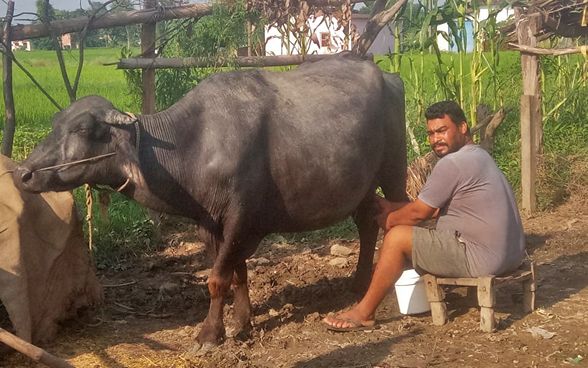
Initially, Swiss assistance mainly involved the transfer of technical know-how aimed at improving people's everyday lives, for example in cheese making and agriculture. In the 1970s, the focus was on best practices for potato growing. Swiss-supported research to determine the best potato variety to plant in this mountainous country enabled Mr Koli's parents' generation to increase their potato yields and Nepal to achieve national self-sufficiency in this staple.
Building bridges, building communities
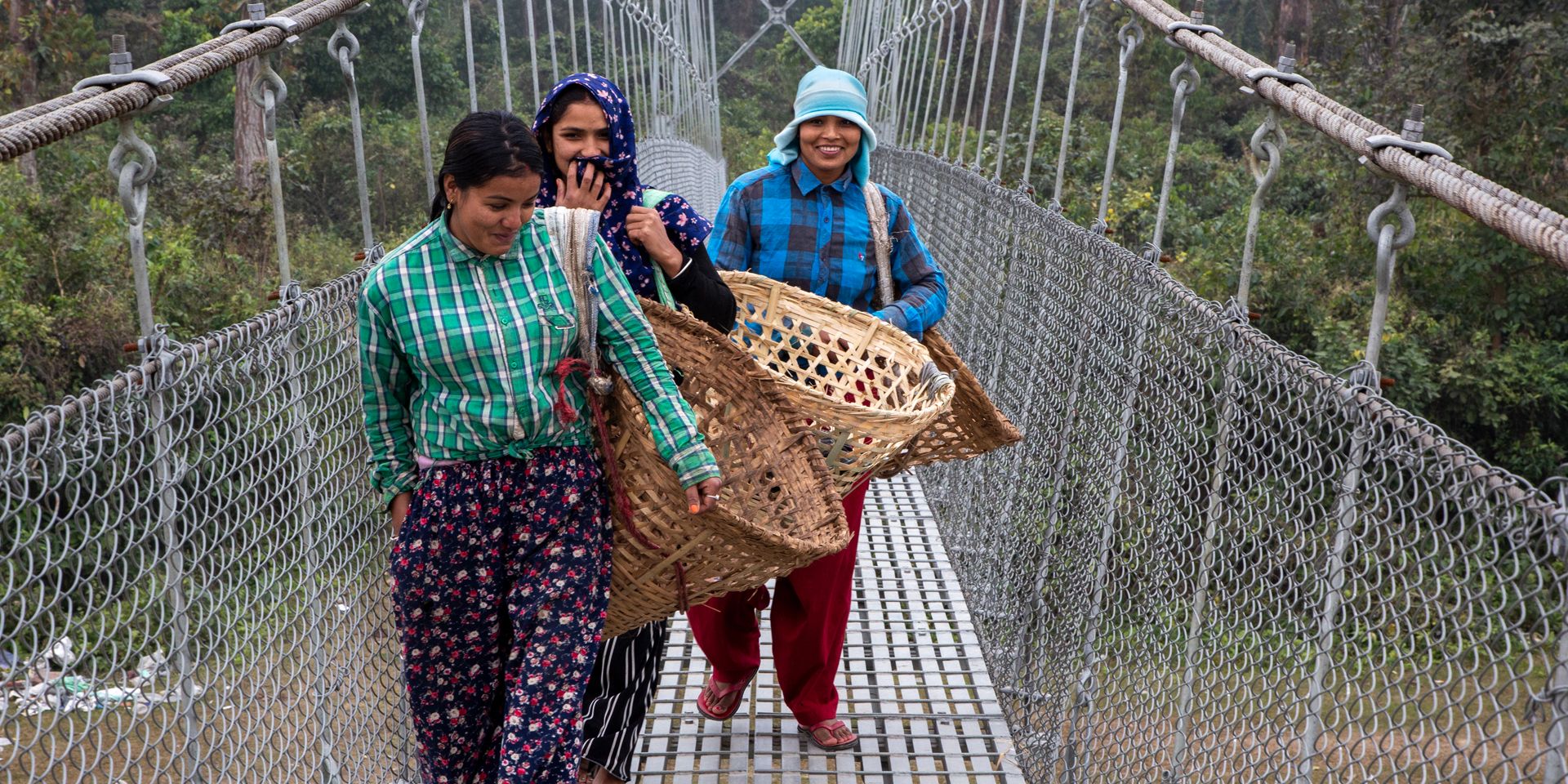
Agriculture, one of the country's main sources of livelihood, ran up against constraints. Apart from the limited land area available for cultivation, inadequate roads and transport infrastructure made it difficult to reach mountainous areas. Moreover, village populations lacked access to basic services. If Nepal was to start on the right path to development, something had to be done to improve this situation. In the 1960s, the main goal was to improve the daily lives of the population. Switzerland therefore began by passing on its know-how in the construction of trail bridges. The bridges saved Mr Koli's parents' generation a considerable amount of time and therefore increased their agricultural productivity.
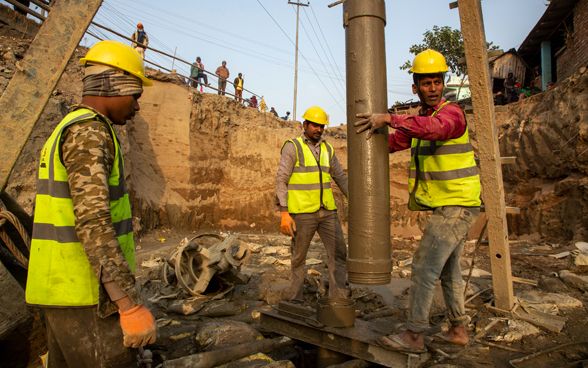
In the 1990s, the approach changed. Mr Koli's generation became involved in participatory bridge-building projects. As a day labourer, he was among large numbers of people who found employment in construction projects and also in agriculture, which benefited greatly as rural areas became more accessible.
Since 2015, Switzerland has been providing more systemic infrastructure support. Specifically, the SDC has been working at the request of the Nepalese government on defining mandates, establishing legal, policy and regulatory frameworks for bridge construction, and helping to enhance the institutional capacities of provincial and local authorities in this sector.
Mr Koli's parents witnessed the construction of the first trail bridge by the SDC in 1961. Their sons and grandchildren can now see for themselves the difference the over 9,000 trail bridges that have been built since then have made to the lives of the approximately 16 million Nepalese people who use them. On average, 1.6 million people cross these bridges every day. In addition to reducing journey times, school attendance has increased by 16% in areas where bridges have been built. This has greatly improved access to education for Mr Koli's three children and their peers across the country.
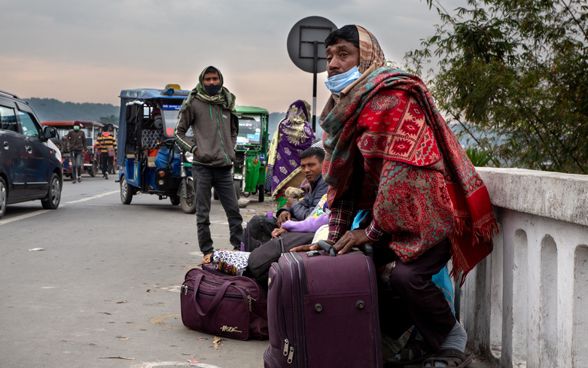
Safe outward and return migration
Mr Koli's daily wage was too low to allow him to adequately provide for his family. Like many other Nepalese people, he decided to migrate abroad in search of work. Large numbers of people emigrated during the civil war period from 1996 to 2006. At the time, the government did not recognise the major social and economic implications of this workforce's departure to other countries.
Emigration is a decision fraught with risks for those who take it, as Mr Koli learned from bitter experience. Struggling to find work, he met someone who told him he could get him a job as a security guard in the United Arab Emirates. Elated by his good fortune, Mr Koli gathered his family's entire savings to pay for the recruitment fee, and in 2020 he flew out to Abu Dhabi. Once he arrived there, there was no one to meet him at the airport. Without a penny to his name, he had no alternative but to resort to begging and sleeping rough, spending several days on the streets.
Fortunately, the Nepalese government's attitude towards labour migration has changed over the past decade. There is now official recognition of the role of migration in the country's socio-economic development. In the meantime, Mr Koli has received assistance under an initiative launched in 2011 – the Safer Migration Project. This SDC-supported government project provides potential migrant workers with information and training to help them avoid exploitation.
As was the case with the bridge-building projects, in tandem with its efforts to help consolidate Nepal's federalist state, Switzerland now provides systemic support. Switzerland is still involved in the migration sector and intends to step up its efforts to institutionalise support for migrant workers and their families in the coming years. It also plans to support the sustainable economic and social reintegration of migrant workers in order to better leverage their contribution to local economic growth, thereby helping to prevent repeated cycles of migration.
The SDC's commitment to safe outward and return migration flows is long-term.
Swiss–Nepalese cooperation in federalist reforms
In 2015, Nepal adopted a new federal constitution, creating 753 local government units and seven provinces. The 2017 elections led to the appointment of thousands of newly elected officials from a variety of social and economic backgrounds. Switzerland served as a model for this new form of governance in Nepal.
Nevertheless, forging a political culture that responds to the needs of the population at large remains a challenge, as are the practical aspects of running a federal system of government. To maintain its effectiveness, Swiss development cooperation has adapted to this new reality, adopting a more systemic approach to its assistance to Nepal.
This approach is consistent with Switzerland's long-standing reputation, expertise and network of relationships in Nepal, and is responsive to the evolving situation. It supports Nepal's transformation processes to ensure the inclusiveness and accountability of the federal state and improve the socio-economic well-being of the local population. A key aspect of this commitment is the effort currently underway to improve the business climate. Switzerland also strives to provide SMEs in the agri-food and other sectors with support in the areas of innovation and access to finance.
It also promotes the development of vocational skills through an apprenticeship model geared towards young women and men from disadvantaged communities in particular. Switzerland is working to bring large companies and corporations on board. Apprenticeships provide young Nepalese men and women with the skills they need to find jobs and improve their earning potential.
Links
- Bilateral relations Switzerland–Nepal
- Development and cooperation, Nepal
- Swiss Cooperation Strategy Nepal
- Reintegration of Returnee Migrant Workers Project
- Trail Bridge Sub-Sector Program Safer Migration SaMi III project
- Publication platform for federal law
- Diplomatic Documents of Switzerland, Dodis
Documents
Contact
Eichenweg 5
3003 Bern