
The International Cooperation Strategy 2025–28 adapts to an evolving international context
The Federal Council is requesting four credits from Parliament totalling CHF 11.27 billion for the period from 2025 to 2028. This budget will be used to finance the various pillars of international cooperation: humanitarian aid, development cooperation, economic cooperation, and the promotion of peace and human rights. Below are the key takeaways from the new strategy.
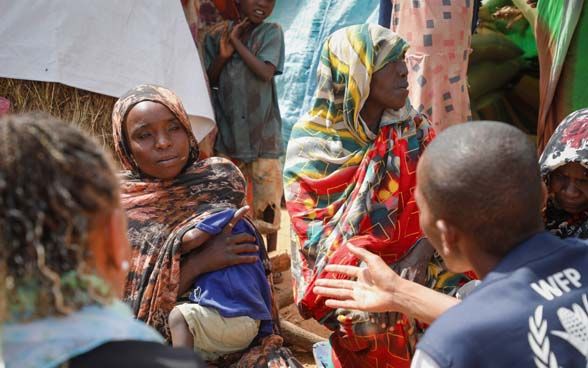
The international context is currently marked by manifold crises. The COVID-19 pandemic, the war in Ukraine, the escalating conflict in the Middle East, the energy crisis, food insecurity, and climate change all have a direct impact on the world's population, and on Switzerland. In concrete terms, the world is changing rapidly. It is in a state of flux and is volatile, fragmented and unpredictable. Against this backdrop, all actors – both state and non-state – need to be increasingly agile. Being flexible while continuing its commitments has therefore become Switzerland's main objective. This is reflected in the new international cooperation strategy for the period from 2025 to 2028.
International cooperation (IC) is one of the instruments that allows Switzerland to work with other partners to respond to global challenges. IC addresses economic and structural challenges, climate change, pandemics, irregular migration, and conflict prevention. It promotes the values that represent Switzerland's strengths, including the rule of law and democracy, the market economy, human rights, dialogue, solidarity, and the principles of international humanitarian law. In an unstable world, international cooperation bolsters Switzerland's commitment and influence at the international level.
The term ‹international cooperation› covers the activities of humanitarian aid, development cooperation, economic development cooperation, and the promotion of peace and human security. It is implemented by the Federal Department of Foreign Affairs (FDFA) and the Federal Department of Economic Affairs, Education and Research (EAER), and seeks to combat poverty, promote peace and human rights, and support sustainable development in its three dimensions – economic, environmental and social.
Switzerland's need for flexibility in its commitment and action is one of the lessons learned from the previous International Cooperation Strategy 2021–24, which runs until the end of this year. In addition, the outcomes achieved by IC over the last few years have underscored the relevance of the strategic framework set out in the previous strategy – namely the development objectives, thematic priorities and geographic focus areas. The new 2025–28 Strategy will therefore build on the findings of the evaluation of the previous period.
For these reasons, the four objectives of the IC Strategy 2021–24 will continue to apply in the new strategy. They afforded the necessary flexibility to respond to numerous challenges while contributing effectively to the mandate given. The four priority regions of the 2021–24 strategy (sub-Saharan Africa, Asia, Eastern Europe, and the Middle East and North Africa) also remain unchanged. Switzerland's IC is therefore taking a long-term approach to consolidate the results achieved thus far.
Four objectives: four specific examples in the four priority regions
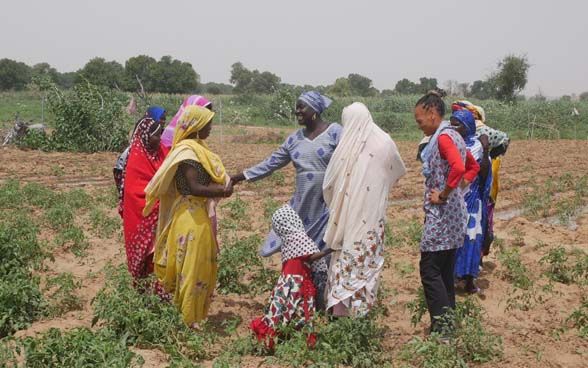
Sub-Saharan Africa: in Chad, IC is contributing to capacity-building of state institutions
Chad is a priority country in Switzerland's bilateral development cooperation. For several years, the country has ranked near the bottom of the Human Development Index. Its public institutions, such as the administration, education and health systems, are under-developed. It faces a number of regional and global challenges, such as armed extremist groups, flows of refugees (particularly from Sudan due to the conflict in Darfur since 2003), and the growing impacts of climate change, which are additional obstacles to the country's development.
Through political dialogue, institution-building and lessons learned from field experience, Switzerland is helping to increase the effectiveness of state and non-state systems for organising and delivering basic social services, systems that are under pressure from demographic challenges.
In the education sector, the quality of basic education for girls and boys needs to be improved. Through its programme, Switzerland supports the training of teaching staff, promotes innovation in teaching methods and facilitates access to basic education for vulnerable groups thanks to adapted learning and teaching systems. Through its support, Switzerland encourages the accountability of public health services at all levels and contributes to improving knowledge of water resources, and therefore their planning and use.
Eastern Europe: in Serbia, Swiss IC works to reform processes aimed at reinforcing European values and standards
The collapse of Yugoslavia in the 1990s severely affected Serbia’s economy and infrastructure. The country has made considerable progress since then, however. In 2014, negotiations on EU membership began, numerous promising reforms for public administration and the economy were adopted, and unemployment began to fall. But there are still major challenges to overcome before prosperity can be guaranteed for all, in particular with regard to the rule of law, the democratic participation of civil society, freedom of the press, the challenges of climate change and access to the labour market.
Switzerland is coordinating its transition cooperation closely with local authorities, other donor countries and international organisations such as the EU, UN and the international financial institutions. All programmes of the SDC and State Secretariat for Economic Affairs incorporate the principles of good governance and gender equality.
Asia: in the Mekong region, IC helps build resilience to climate change
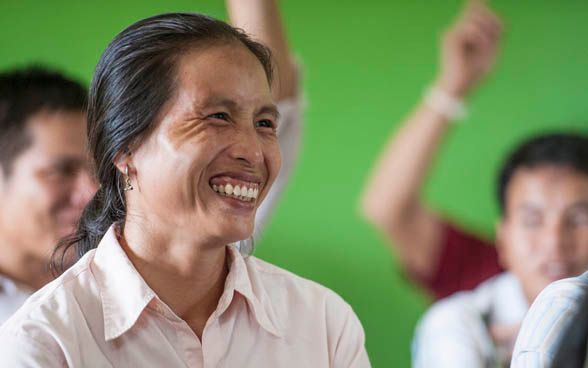
Despite high economic growth since the early 2000s, which has enabled the Mekong countries to achieve progress in reducing poverty, inequality is rising, affecting rural populations in particular. The COVID-19 pandemic caused a major economic crisis. The most vulnerable groups, such as women, ethnic minorities and people living in remote areas, are also the worst affected by an economic model built on the unsustainable exploitation of natural resources.
Middle East and North Africa: in the Middle East, IC promotes peace and the rule of law
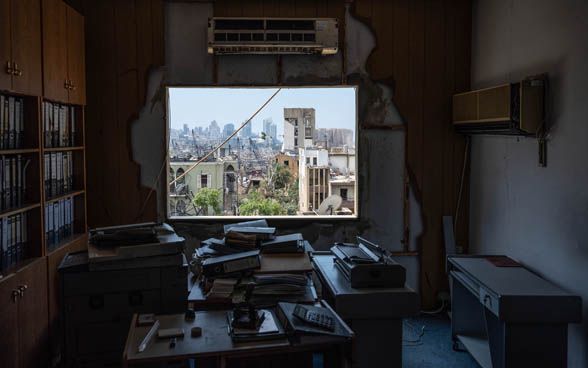
Ongoing and past armed conflicts have led to extensive humanitarian needs in the Middle East. Switzerland is supporting delivery of aid and services to protect people affected by violence and is actively involved in peace promotion and the prevention of violent conflicts. It also works to ensure sustainable water management, quality education and income creation for refugees, internally displaced people, vulnerable migrants and host communities in Iraq, Jordan, Lebanon, Syria and Turkey.
The overarching aim of Switzerland in the Middle East is to create a safe environment for conflict-affected and other vulnerable persons by saving lives and empowering community, reducing fragility and generating development perspective. At policy level, it promotes good governance as well as the respect of international human rights, including refugee rights, and international humanitarian law. It also supports conflict prevention and transformation.
Three strategic directions
In a volatile world, having a consistent strategy is crucial as it is the compass that guides Switzerland's IC activities. While the war in Ukraine and its consequences feature prominently in this strategy (see below), Switzerland’s humanitarian tradition requires that IC maintain its commitment in the rest of the world. The strategic orientation of the IC Strategy 2025–28 is therefore based on three analysis criteria.
CHF 1.5 billion earmarked for Ukraine (and affected countries in the region)
The uncertain outlook as to how the conflict in Ukraine will evolve, and the economic and social impact it might have, call for a high degree of flexibility. As Ukraine has been a priority country for IC since 1999, Switzerland's activities in the country are based on long-standing partnerships. Switzerland attaches strategic importance to supporting and reconstructing Ukraine.
Within the framework of IC and using other instruments, it shows solidarity by contributing to the reconstruction of Ukraine and promotes just and lasting peace. Switzerland's response involves two elements:
- humanitarian aid, development cooperation, and the promotion of peace, democracy and human rights; and
- reconstruction. The two elements differ not only in their time frames but also in terms of their political and financial rationale. A figure of CHF 1.5 billion has been allocated for this response.
Policy coherence
The coherence of Switzerland's international relations activities is key. Certain sectoral federal policy areas have a significant impact on developing countries. The Federal Council coordinates policy with the aim of minimising interference and enhancing the impact of its action. It also takes care to ensure that its decisions are coherent. The two departments in charge of implementing the IC Strategy (FDFA and EAER) liaise to ensure full cooperation with each other and with the offices in charge of sectoral federal policy.
Contact
Eichenweg 5
3003 Bern