
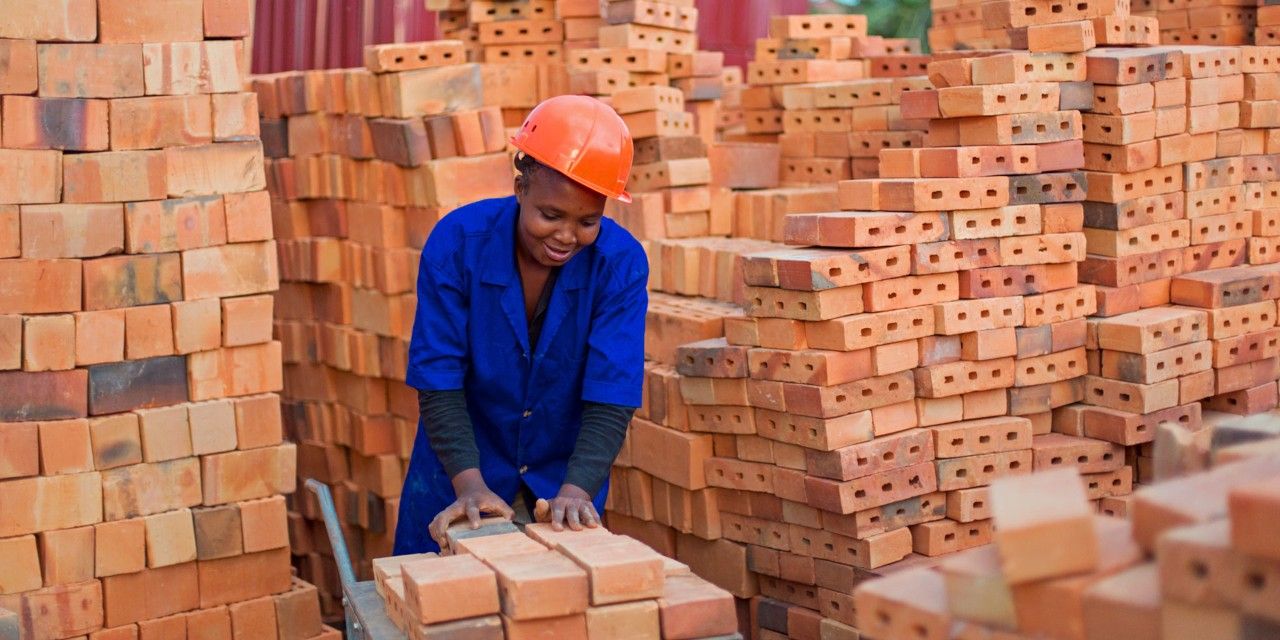
The modern, eco-friendly brick
Cities across Africa are experiencing unstoppable growth. Through its PROECCO project, the SDC is supporting sustainable urban development in the Great Lakes region. The project centres on a technology for manufacturing modern bricks. In the Rwandan capital of Kigali alone, the project has saved 115,000 tonnes of CO2 emissions since it launched in 2013.
The stereotypical idea of Africa's landscape is of vast and inhospitable savannah, with animals congregating by rivers and waterholes. Yet this ignores one of the continent's key realities – urbanisation. According to the World Bank, 43% of people in sub-Saharan Africa lived in urban areas in 2023, and this figure is set to rise further. Amid the climate crisis, this rapid urbanisation poses a significant challenge.
Despite its primary focus on rural development, the SDC has initiated a beacon project that promotes sustainable urban development in the Great Lakes region (Democratic Republic of the Congo, Rwanda, Burundi) – an urbanisation hotspot. PROECCO (Promoting Employment through Climate-Responsive Construction) is implemented by Swiss consulting firm SKAT. By supporting the project, the SDC aims firstly to boost employment in urban areas, and secondly to reduce the carbon footprint of the construction sector through the use of modern bricks.
The climate impact of urban areas
The migration to cities is due to the increasingly uncertain living conditions in rural areas. Climate change is having a devastating impact on populations who rely on agriculture for their survival, while climate-induced crop failures are putting significant pressure on farmers. Away from agriculture, rural areas are also lacking sustainable employment opportunities. Those who have the misfortune to live in a conflict-affected region also have to contend with armed groups. Cities not only provide refuge, they also offer a realistic prospect of economic advancement.
However, urban infrastructure is generally unable to cope with this influx of people. The market is unable to provide enough jobs to meet the demand for work, and many newcomers end up underemployed in jobs in the informal sector. They often live in informal settlements, which are particularly vulnerable to climate-related disasters. According to Daniel Wyss, PROECCO project manager at SKAT, «newcomers in the city build the sort of houses they know from their villages. In other words, small houses that cannot withstand extreme weather conditions in very densely-populated neighbourhoods.» As a result, living in the city contributes to precarious livelihoods for many migrants. PROECCO is working to tackle this problem in several respects: by creating jobs in the formal construction sector and by building high-quality settlements.
Newcomers in the city build the sort of houses that cannot withstand extreme weather conditions in very densely-populated neighbourhoods.
The construction of informal settlements takes a heavy toll on the climate and the environment, as cement and traditional bricks have a high carbon footprint. In the Great Lakes region, urbanisation requires extensive production of local building materials, which emits high levels of CO2. On top of that, widespread deforestation is taking place to provide fuel for traditional brick-making.
The ‹modern› brick
Green and eco-friendly urbanisation is therefore key as many cities in Africa are set to become metropolises over the course of this century. PROECCO has established itself as an innovative project in this area, laying the foundations for sustainable urbanisation in Rwanda, Burundi and the Democratic Republic of the Congo. At the heart of the project is a new technology that makes this urbanisation possible – the modern brick. Compared with the traditional brick it features a number of properties that help make it more sustainable:
- It is precisely shaped and therefore requires less cement mortar;
- it is pressure-resistant, which allows multi-storey and therefore high-density construction;
- it is weather-proof, durable and maintenance-free, which means maintaining the constructed infrastructure is easy and inexpensive;
- bio-waste is used to fire the brick, making it virtually CO2 neutral to manufacture.
As the modern brick had gained a level of recognition in the industry, the last phase of the project involved supporting the local private sector in order to scale up the project's impact.
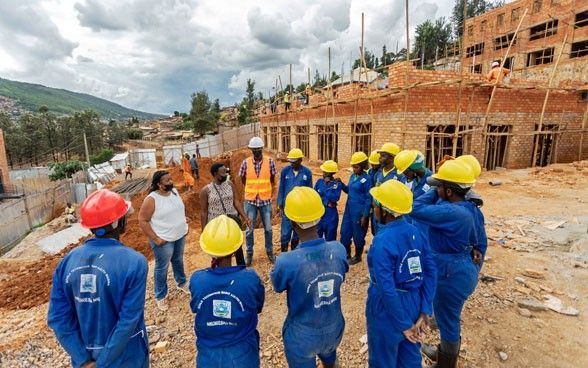
From sustainable building to sustainable urban development
The nature of the project's intervention has also changed accordingly, with activities focusing on knowledge transfer in recent years. Responsibility for the next stage of the project will therefore be handed over to vocational training centres, local small- and medium-sized enterprises (SMEs) and public bodies in charge of urbanisation. The hope is that by training engineers, construction workers and other actors involved in the building process, the sector will be sufficiently advanced to be able to support itself.
Despite the strength of the cement industry and the prevalence of traditional building methods, SKAT speaks of a «surprisingly rapid market penetration», which is indicative of the project's success. Once all the SMEs implicated in the project are operational, PROECCO will have sparked a ten-fold increase in production. Estimates suggest that the project will save more than 125,000 tonnes of CO2 a year in the Rwandan capital of Kigali.
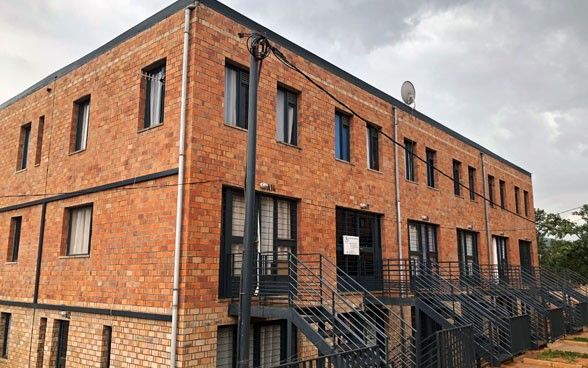
The eco-friendly city of the future is currently under construction
African cities are growing at an unprecedented rate. The decisions made today will shape the development of these metropolises in the long term. By supporting PROECCO, Switzerland seeks to contribute to the innovative and green transformation of urban areas.
The inclusive transformation of informal settlements supported by PROECCO, using locally-produced and sustainable building materials, has increased the resilience of urban populations to natural disasters, which are being further exacerbated by climate change.
The brick technology has since been further developed and can now be found in a growing number of cities, such as Dar es Salaam and in the urban corridor from Abidjan to Lagos in West Africa. Africa's landscape therefore continues to change at a rapid pace.
Contact
Eichenweg 5
3003 Bern