
Where communication builds bridges: Stories from the Caucasus – Georgia
Getting up early was never Ekaterine Kvavadzes strong point, but since giving birth to her son – who has now started nursery school – there's a new structure to her day, with fixed times for when she leaves the house and returns again. In between, she works as a communications officer at the Swiss embassy in Georgia. Each day starts the same way: with coffee. I can't function without coffee, she says with a laugh.
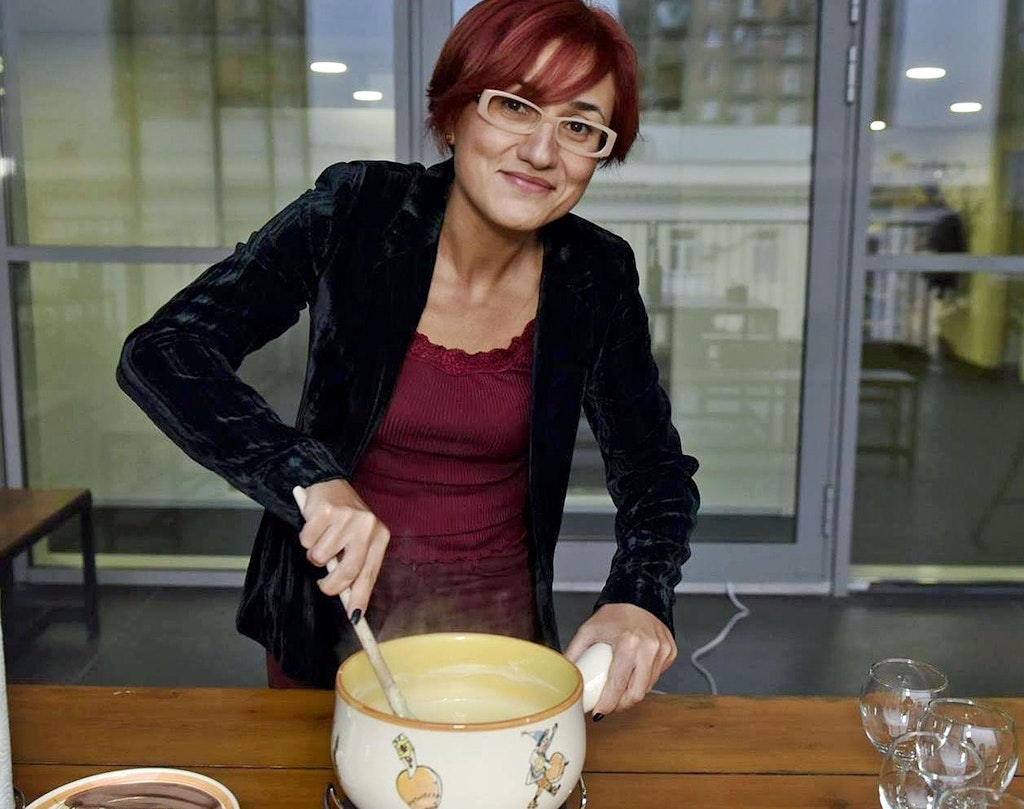
After her must-have morning coffee, it's time to check her emails and the calendar. What's on the agenda today? And what's coming up in the next few days? Eka reads the news, keeping a close eye on what's happening in both Switzerland and Georgia. She makes sure that anything concerning the SDC is put in the embassy's official communications, always with a view to the Georgian context.
As communications officer, close coordination with the head of mission and the head of international cooperation is part of her everyday work. There are weekly planning meetings to discuss the content, tone and intended impact of the embassy's communications – not to mention the numerous articles, factsheets, background texts and social media posts that need to be written.
The last few weeks have been particularly memorable, with Eka joining a social media training session with other communications officers from different Swiss representations in the South Caucasus and Central Asia. The exchange helped generate new ideas and furthered cooperation between the representations.
Recently, one of Eka's biggest challenges was writing an article about a project promoting SMEs in rural Georgia, with a specific focus on improving access to finance. “Finance has never been my thing,” she admits openly. “But that's exactly what made it exciting.” While working on the article, Eka visited the project and spoke to the people taking part, which gave her writing that personal touch. “When I'm out in the field, I don't do standard interviews with a rigid structure or a set list of questions,” she says. “I just talk to people. And then they open up.” Delving into people's everyday lives creates a closeness that has sharpened Eka's eye for presenting the content of her communications more clearly and realistically.
She had a similar experience with the project to modernise agricultural vocational training in Georgia. At a college, she spoke with IT specialists and farmers learning to better market their products and use computer software for design processes. Eka was so inspired by this personal exchange that she wrote the entire article in one go.
Since her son was born, Eka's workdays are followed by evenings spent with the family. They cook, play and laugh together until he goes to bed – a welcome distraction from her days at work. In recent years, the overall situation in Georgia has become increasingly difficult. The last two years in particular have been marked by heightened uncertainty. Political dynamics, including long-standing foreign policy aspirations, seem more volatile and opaque than before. And the space for civil society has shrunk noticeably.
Given this environment, Eka sees her work as all the more important: listening, explaining, contextualising. Telling stories about people who keep going despite everything. And starting afresh every morning – after the first cup of coffee.
Contact
Eichenweg 5
3003 Bern