
Build better, emit less: lessons from a long-term partnership
In a rapidly urbanising world, especially in Asia and Africa, cities are expanding to meet the growing need for housing, schools, hospitals and infrastructure. But this expansion comes at a cost: the construction sector is responsible for around a third of carbon emissions globally. Added to this are episodes of (extreme) heat, of flooding or of more frequent storms. Buildings should therefore be designed not only to consume less energy, but also to be more resilient to the effects of climate change.

For almost 20 years now the SDC has been supporting partners in Asia, Africa and Latin America to promote buildings that are both more energy-efficient and more resilient to the effects of climate change. In this dossier on sustainable construction, we look back at the principal outcomes of the SDC’s commitment, and on the lessons learned from almost two decades of experience on the ground. Christian Frutiger, Assistant Director General of the Swiss Agency for Development and Cooperation and head of the Thematic Cooperation division, offers his view.
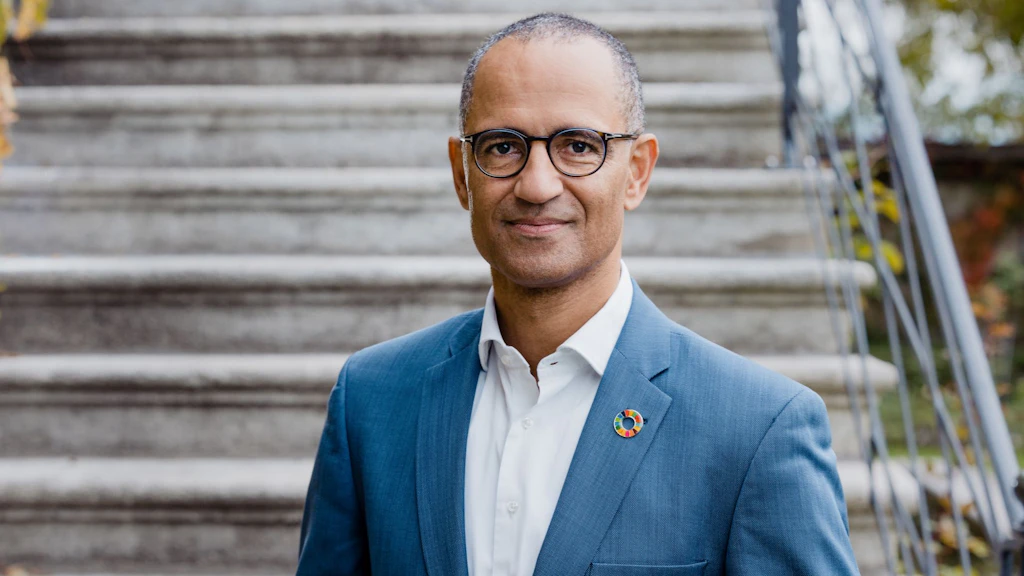
Interview
How, exactly, does a family living in a region exposed to high temperatures, flooding or storms benefit from smart building design?
Smart building design primarily protects the family’s health. Insulation, reflective roofing isolation and ventilation to combat the heat, raised floors and watertight materials keep interiors liveable and reduce incidences of illness and heatstroke. Less sickness also means higher incomes, because parents lose fewer days of work. That burden is carried disproportionately by women. Finally, a sound structure protects the home – often a modest household’s only real asset – against the destruction that can wipe out savings and plunge the family into poverty.
The SDC has been working in this area for almost 20 years. Can you give specific examples of the impact of this commitment on the ground?
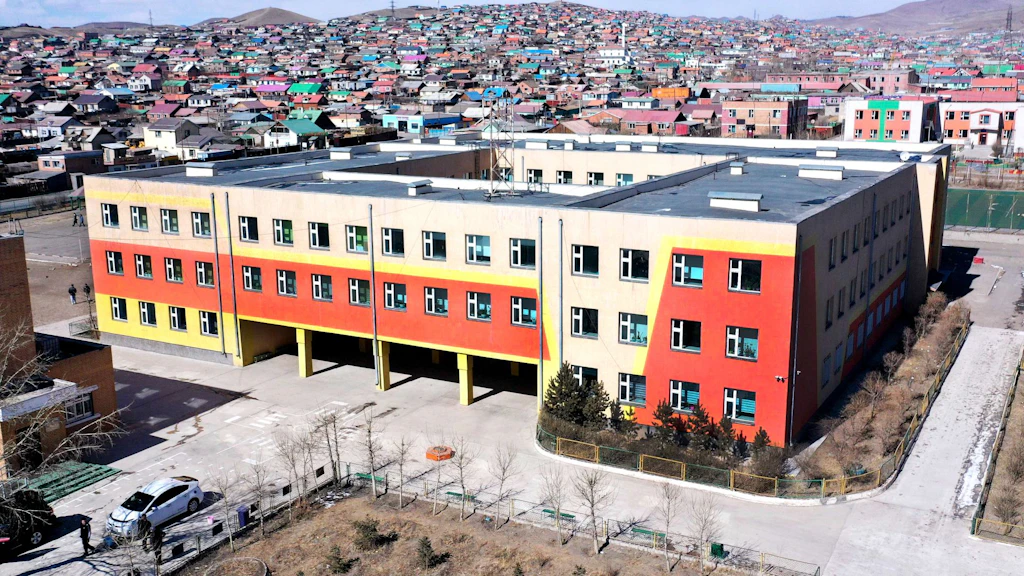
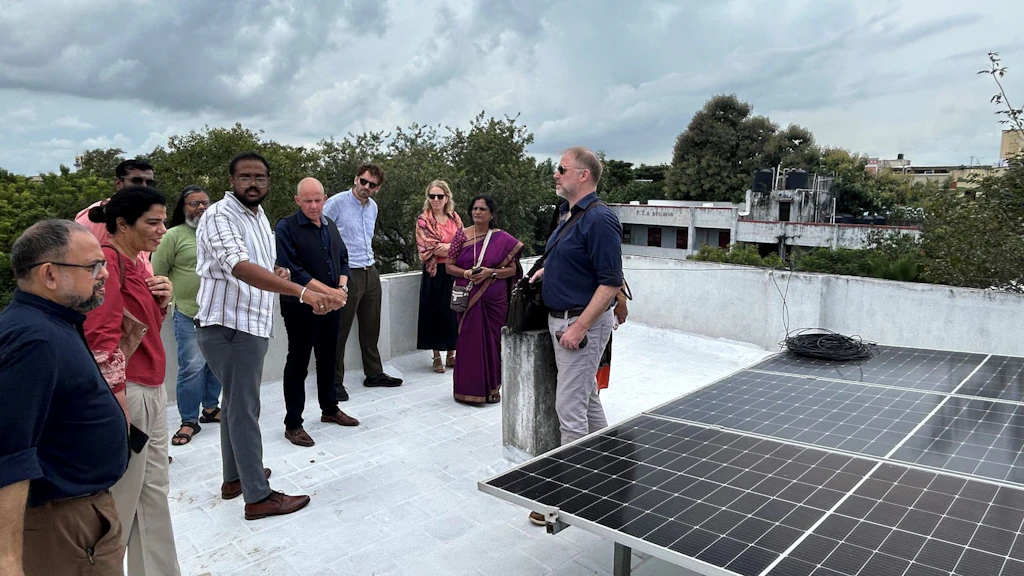
The results speak for themselves. In India, we helped the government to draw up the Eco-Niwas Samhita, the country’s first energy conservation building code for the residential sector. It sets out simple design rules to make homes more comfortable without air conditioning, and should save some 100 million tonnes of carbon emissions by 2030. Where materials are concerned, the LC3 cement developed by EPFL with partners in India and Cuba emits up to 40% less CO₂ than regular cement, at comparable cost. In Africa’s Great Lakes region, the PROECCO project has given rise to a market for affordable, low-carbon bricks that are resistant to extreme climatic conditions. Yet the most compelling effects are often the human ones. In Mongolia, for example, upgraded insulation in schools has increased classroom temperatures from around 15 to 22°C, cutting children’s absences from illness by up to 48%, and shortening the amount of time parents have to take off work to care for them.
These projects span very different contexts – India, Mongolia and the Great Lakes region in Africa. How does the SDC adapt its approach from one country to another?
We don’t transfer a one-size-fits-all model, but rather an approach. The principle remains the same, i.e. reduce greenhouse gas emissions and improve families’ health and incomes by building better, but the actual solutions differ according to the climate, available materials, household finances and the institutional context. In India, for example, the challenge is the heat and achieving energy efficiency at scale. In Mongolia, it is insulation against extreme cold. And in a fragile and highly unstable region such as the Great Lakes, we take a different tack based on what is possible, and work first and foremost with local actors. Specifically, adapting our approach means building each solution in partnership with those who best know their needs, and then embedding it in the local fabric of businesses, institutions and authorities.
In what respect does this work in these far-off contexts also serve Swiss interests?
Climate change knows no borders. Each tonne of CO₂ saved in India or anywhere else helps to meet the global goals on which our own climate security also depends. So our commitment here directly serves Swiss interests. It also highlights recognised Swiss expertise in building standards, energy efficiency and innovative materials such as LC3, a product of our laboratories. In addition, it opens up new opportunities for Swiss businesses and technologies in fast-growing emerging markets, where the standards being adopted today will determine purchasing tomorrow. Finally, by reinforcing the resilience of fragile regions, our work reduces the risk of future crises, displacement and humanitarian costs that will ultimately also affect us.
Development cooperation alone is not enough to have a lasting global impact. How can the public and private sectors, and funding partners, work together to accelerate this transition, especially in rapidly expanding cities?
None of these actors can get there by themselves. The public sector makes the rules. In cities that are growing fast, it is vital to have building codes that are clear and actually applied in practice, because each building constructed today will impact on the climate for decades. However, rules are not enough if everyone stands to gain – or lose – something different from them: the developer who wants to build at lowest cost, the investor who wants a high return, and the resident who has to pay the energy bills. These interests therefore have to be reconciled, for example via lower-interest loans for low-energy buildings, or clear information about their energy performance. Funding partners, meanwhile, can exert leverage. By assuming some of the risk attached to initial projects, they can attract private financing. It is this combination, rather than a single tool, that takes things to a different level.
This kind of transformation takes time and demands a lasting commitment. How does the SDC stay the course long term as political priorities and local contexts evolve, sometimes very quickly?
In construction, change does take time. That’s true. It is a cautious sector wedded to certain ways of doing things, and to long-standing codes. In India it took almost 15 years of continuous work to bring our programme to fruition. Staying the course requires several things, most of all flexibility. A project has to be able to adapt, take the opportunities that present themselves and overcome unforeseen obstacles, without losing sight of its objective. It is also very important to create an atmosphere of trust, and the only way to do that is with a long-term plan and a local presence. Lastly, you need a vision that transcends the cyclical nature of politics. That said, real success is not measured only in terms of our presence, but also in what lasts when we are no longer there. That is why we have tried since the start to embed change in institutions, standards and local markets, and to entrust it to partners we know can take it forward. Transformation takes root when it becomes independent of those who planted it.
That said, real success is not measured only in terms of our presence, but also in what lasts when we are no longer there.
The next phase
On the back of two decades of experience, the SDC has been able to prove that it is possible to reconcile development, resilience and emissions reduction, provided you pull on the right levers with the right partners, and settle in for the long run. The challenges remain huge. In Asia and Africa alone more than 100 billion square metres of new construction is expected to spring up by 2050. What we choose to build today, and how we choose to build it, will determine the living conditions of billions of people over the decades to come.
The SDC intends to build on what has been learned. Even if the focus were to shift gradually towards sustainable cooling solutions, its commitment to low-carbon, resilient construction will remain one of the over-arching priorities of its international cooperation work.

BeCool: smart buildings to fight record-breaking heat
BeCool: ventilation, shading, greening and reflective roofs in India are designed to ensure that buildings do not heat up in the first place.

Adapting to heat: staying cool without air conditioning?
Heatwaves are affecting Switzerland just as much as countries in the Global South. In episode 18 of the Why Care podcast, Mirjam Macchi Howell, head of the Climate, Disaster Risk Reduction and Environment section, talks about projects to cool buildings and cities, and about Switzerland's role at the multilateral level. Listen to the episode by clicking here.
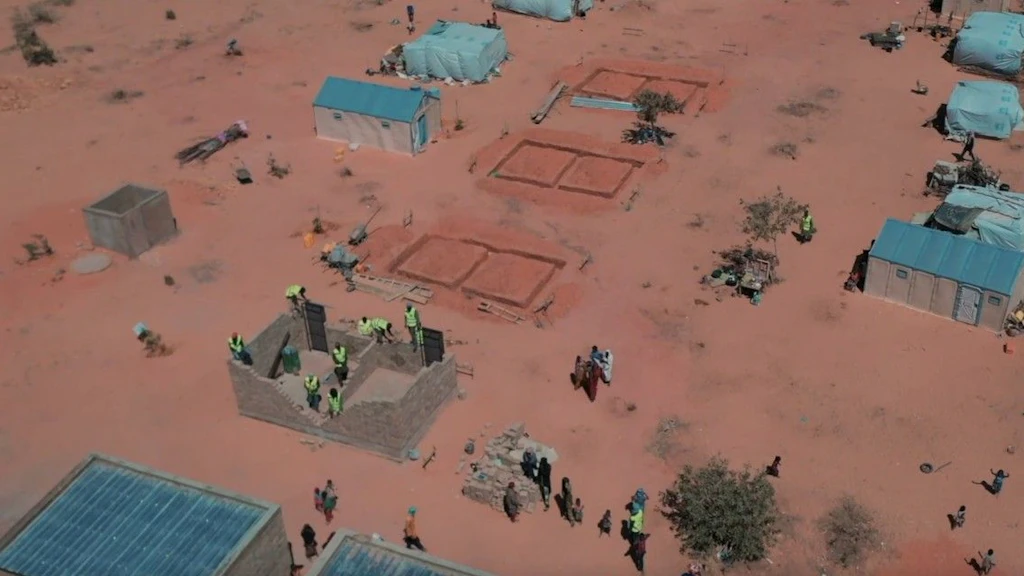
Reducing the environmental footprint of the humanitarian shelter sector
Web article on the Shelter Sustainability Assessment Tool developed by the Geneva Technical Hub with support of the SDC.
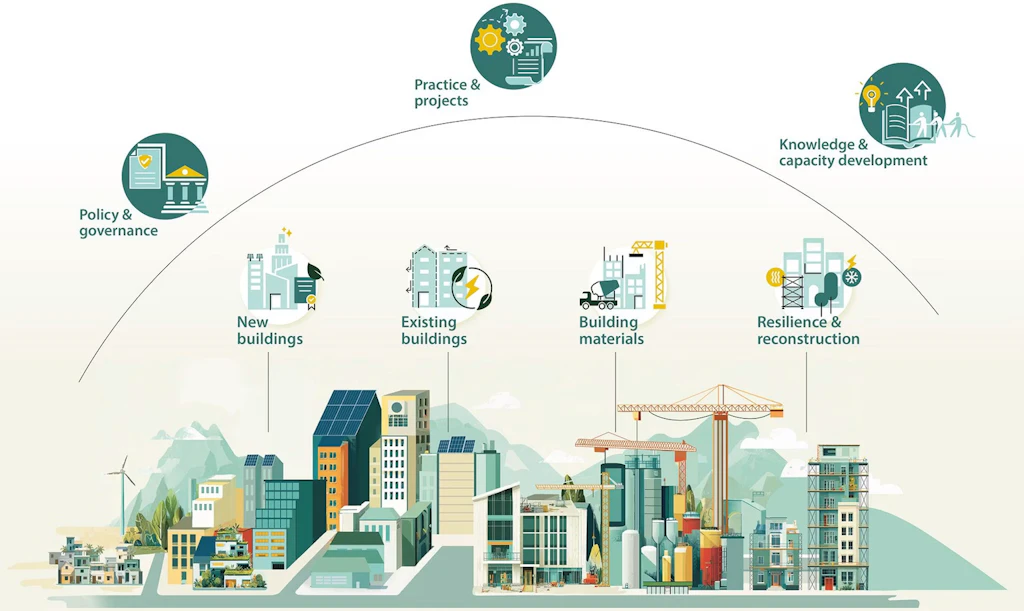
Low carbon & resilient built environment
The SDC has supported a wide range of projects in the built environment, spanning the themes, new buildings, existing buildings, building materials, as well as resilience and reconstruction. Learn more via the Climate, DRR and Environment thematic network.
Contact
Eichenweg 5
3003 Bern