
Policy coherence
Policy coherence for sustainable development is essential to maximise impact and effectiveness, and to strengthen the reliability, accountability and transparency of international cooperation and the achievement of the 2030 Agenda. The SDC fosters critical reflection on development issues and contributes to debates and decision-making processes both in Switzerland and internationally in the field of development policy.

The SDC fosters critical reflection on development issues and contributes to debates and decision-making processes in Switzerland in the field of development policy. It monitors emerging issues and trends to contribute to the strategic direction of Switzerland's international cooperation. Its commitment is also based on an assessment of global interactions in international cooperation. In its activities, it considers the work and positions of Swiss organisations and international players such as the United Nations (UN), the World Bank (WB), the Organization for Security and Co-operation in Europe (OSCE), the European Union (EU), and the Organisation for Economic Co-operation and Development (OECD). It incorporates the perspectives of selected partner countries, academic institutions, civil society and the private sector into Switzerland's development policy.
Switzerland is committed to targeted multilateralism, which ensures an international order based on the rule of law rather than power relations. It plays an active role in international and multilateral processes aimed at shaping the global architecture of international development cooperation. The increasingly global nature of these challenges requires a global response. Switzerland is involved in facilitating and influencing intergovernmental negotiations. This commitment is implemented in close collaboration across the entire federal administration. As a member state of multilateral organisations and through its involvement in their governing bodies, Switzerland influences their direction and lends them its expertise in international cooperation.
For example, Switzerland has been a member of the OECD’s Development Assistance Committee (DAC) since 1968, and it participates in various DAC working groups. It draws on its core strengths of maintaining the integrity of official development assistance (ODA), promoting peer-to-peer learning, generating knowledge, and setting standards. Switzerland is also a member of the Global Partnership for Effective Development Cooperation (GPEDC), a multi-stakeholder forum for shared responsibility, peer-to-peer learning, and experience-sharing to support the principles underlying effective development cooperation.
Through its bilateral programmes and projects, the SDC also assists its partner countries in developing policies and standards for addressing global and regional challenges. Building on its experience and practical expertise, the SDC is working to establish favourable framework conditions for sustainable development worldwide.
The 2030 Sustainable Development Strategy (SDS) and its four-year action plans, both adopted by the Swiss Federal Council, are key tools for integrating sustainable development into sectoral policies and contributing to the achievement of the 2030 Agenda. The SDS guides the Federal Council's sustainability policy and establishes sustainable development as a key requirement for all federal policies. To promote sustainable development, it is essential for Switzerland to ensure the coherence of its external relations. A number of federal sectoral policies have a significant impact on developing countries. The Federal Council coordinates Switzerland's commitments to minimise negative interference and maximise the impact of its actions. It therefore focuses on the following areas: finance and taxation, trade, investment and corporate responsibility, migration issues, and environmental, climate and health challenges.
The two departments responsible for implementing the international cooperation strategy – the Federal Department of Foreign Affairs (FDFA) through the SDC and the Peace and Human Rights Division, and the Federal Department of Economic Affairs, Education and Research (EAER) through SECO – work closely with each other and with the offices responsible for sectoral policies. All federal departments contribute to sustainable development. The goal is to ensure that Switzerland’s external relations are coherent from environmental, economic, and social perspectives. Through its own analyses and external studies, the SDC examines the synergies and potential conflicts between development policy and sectoral policies. In this way, Switzerland's international cooperation supports political processes and contributes to the preparation, implementation, and evaluation of specific measures, while also encouraging public debate. It provides a platform for development policy stakeholders' views in existing consultation processes (consultations with offices, joint reporting procedures, interdepartmental working groups), ensuring that their input is incorporated, where possible, in policy development. The current SDS action plan for 2024-2027 includes a provision for conducting qualitative and quantitative analyses of the potential positive and negative impacts (spillovers) of policies and regulations on other countries. In this way, Switzerland ensures that new policies consider the potential positive and negative effects they may have on existing policies and other countries.
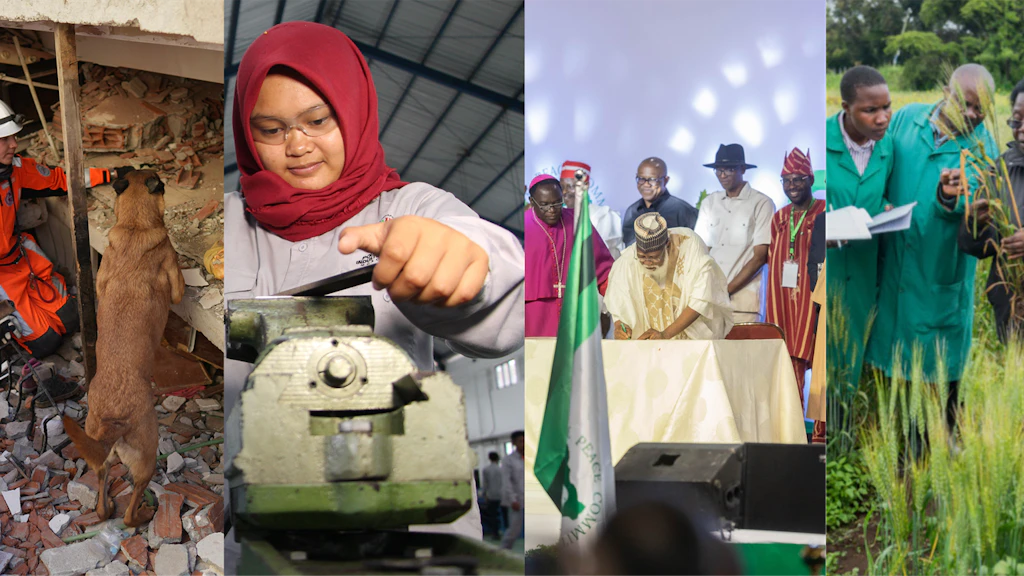
Switzerland’s international cooperation strategy 2025-2028
The general aim of international cooperation is to end poverty and support sustainable development worldwide.
Contact
Eichenweg 5
3003 Bern