
Where needs are greatest: Switzerland’s Support Through the Afghanistan Humanitarian Fund
The humanitarian situation in Afghanistan is marked by structural and systemic challenges, including a lack of essential services, a strained economy, and recurring climatic and seasonal shocks, such as floods, harsh winters and droughts. In 2025, an estimated 22.9 million people in Afghanistan are requiring humanitarian assistance. Swiss contributions to the Afghanistan Humanitarian Fund ensure that humanitarian assistance reaches those whose needs are greatest.
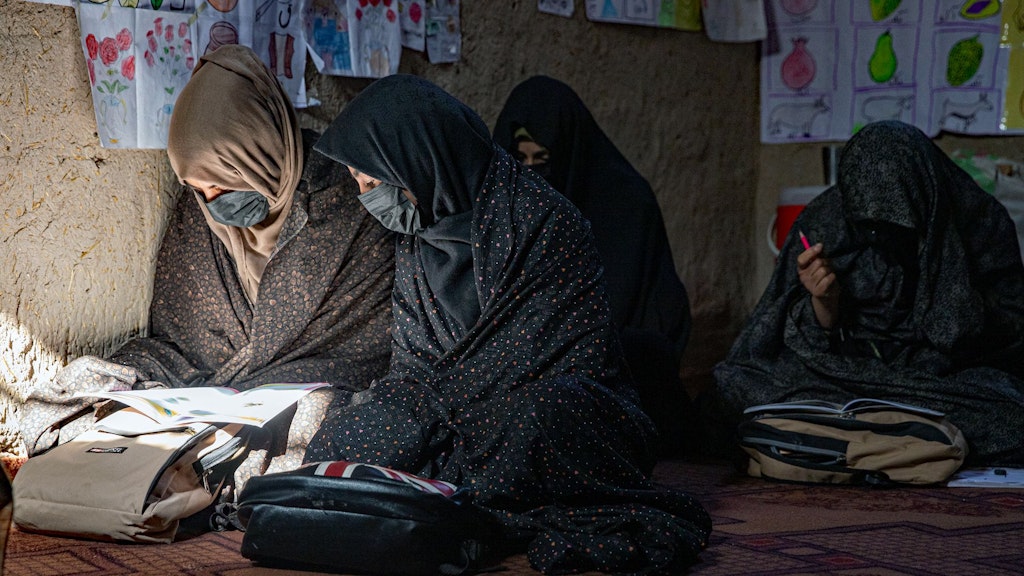
After decades of conflict, Afghanistan is still facing major economic and environmental challenges, weakening community resilience and coping mechanisms. At the same time, the slow but steady implementation of laws and regulations by the de-facto authorities is heightening protection risks for women, girls, and other at-risk groups, further complicating the provision of humanitarian assistance. The Swiss Agency for Development and Cooperation (SDC) reaffirmed its enduring commitment to the people of Afghanistan by reopening its Humanitarian Office in Kabul in March 2025 - enabling effective, efficient and accountable engagement with communities and partners to address urgent needs and foster long-term resilience.
For more than a decade, the Afghanistan Humanitarian Fund (AHF), a so-called Country-Based Pooled Fund (CBPF) managed by OCHA, has been a steady lifeline and key partner of Swiss humanitarian assistance in the country. It has channeled over USD 15 million in that last 3 years, supporting local humanitarian organizations in delivering critical aid to people in need across Afghanistan.
A strategic and reliable fund
CBPFs are established when an emergency occurs or when an existing crisis deteriorates. Contributions through the fund support humanitarian organisations - international and local non-governmental organisations (NGOs) or Agencies of the United Nations like the World Food Programme (WFP) - to assist affected communities. A common overarching aim of Switzerland and the CBPFs is to promote and support more local and national NGOs with direct funding. In 2024, the AHF strengthened the humanitarian response by providing 27 percent of its funding, directly and indirectly, to national NGO partners as well as offering targeted and interactive trainings for 120 partners, including 66 national organizations. This ensures efficient humanitarian responses and capacity strengthening of local and national partners to assist their own communities.
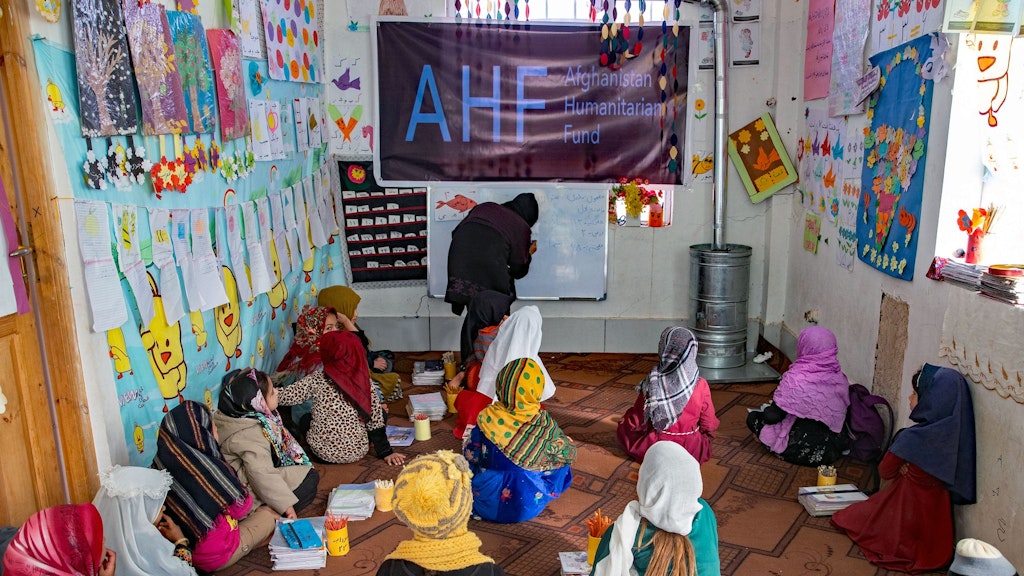
Launched in 2014, the Afghanistan Humanitarian Fund (AHF) managed by OCHA is a beacon of hope and an effective and efficient instrument for people grappling with the aftermath of over 40 years of conflict, natural disasters and displacement. In the past decade, the AHF has supported many local NGOs and women-led organizations to empower and enable the country’s most-affected communities. Afghan women now face harsh restrictions that limit their participation in public life, including in humanitarian efforts.
The country has suffered from decades of persistent conflict, underdevelopment, poverty and, more recently, COVID-19. This led to yet another crisis: hunger. An Integrated Food Security Phase Classification analysis from 2025 revealed that over 12.6 million people – almost a third of the population – faced acute food insecurity, prompting urgent action. The AHF funded food security and agriculture projects for 1.2 million people across the country.
Combatting Malnutrition in remote villages
In response to the high need for nutrition support in Nangarhar province, the Swiss NGO Terre des hommes launched a nutrition project in 2024 funded by AHF. The project aims to prevent and treat severe acute and moderate acute malnutrition in children and women. One of the key challenges in this district was the lack of facilities and services available in villages, especially in remote areas, to treat children and women suffering from malnutrition. Terre des hommes has created centers where specialists provide nutrition services from families who often bring their children in a critical state. At the health facilities in these villages, children are assessed, monitored and treatment as they recover from malnutrition. The project by Terre des hommes not only provides life-saving services, but empowers families with knowledge on nutrition, hygiene, and proper care for their children.
Services provided by and for Afghan women
Sakena Yacoobi Hospital in Herat Province is testament to the resilience and empowerment of Afghan women, despite the challenges they face. Staffed entirely by women, this sanctuary provides essential health-care services tailored to the unique needs of women and children in rural areas. From antenatal care to mental health services, the hospital, funded by AHF and the World Health Organization (WHO), is a lifeline for between 5,000 and 6,000 patients each month.
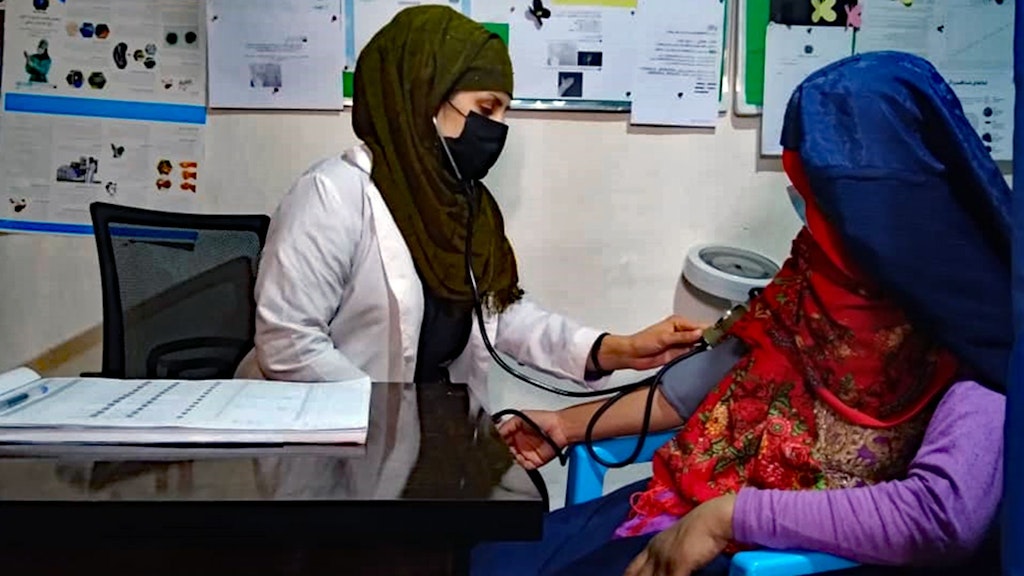
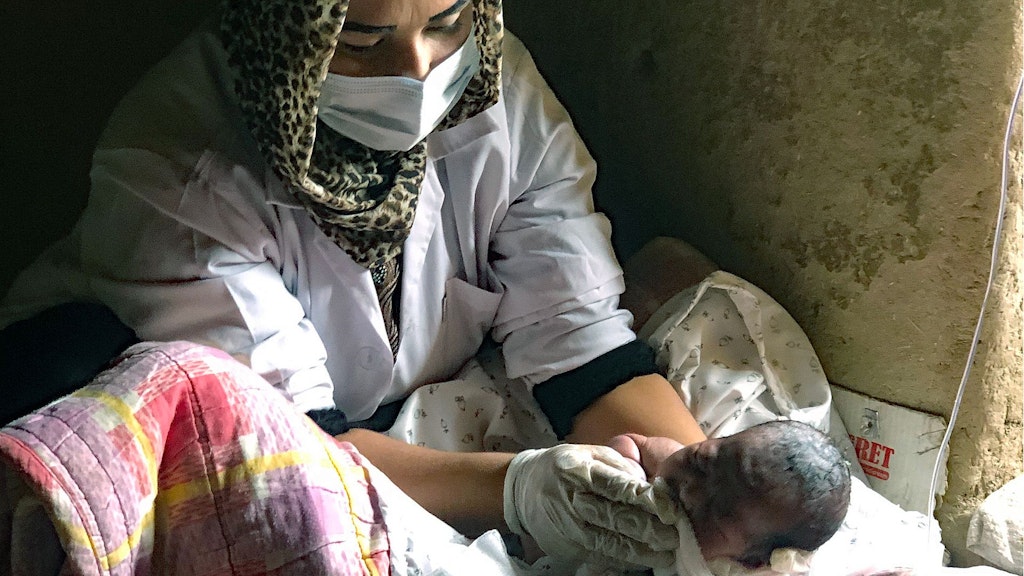
With funding from the AHF, the Afghan Women’s Rights Organisation (AWRO) deliveres life-saving maternal and newborn care to women experiencing severe childbirth complications through its Mobile Health and Nutrition Team, in the case of the remote Adina Masjid village in the northeastern Badakhshan Province. Unable to reach the nearest health facility in time, they receive emergency obstetric and skilled birth assistance under challenging conditions from the team’s midwife, who safely delivered the babies, saving the lives of both the mothers and the newborns. The team provides essential medicines and counselling after the delivery on feeding and nutrition for both infant and mother, as well as health and hygiene practices. These services are improving access to critical healthcare for families in remote and hard-to-reach areas of Badakhshan Province. With this project, AWRO aims to reach a total of 20,000 women with a range of health and nutrition services, in addition to 32,000 children and 4000 men.
Addressing multiple shocks
In 2025, the country once again has been hit by multiple shocks, further straining the resilience of the Afghan people. Between January and August, over two million Afghans forcibly returned from neighbouring countries, arriving with acute humanitarian needs. The overwhelming majority are undocumented, have lost assets and livelihoods, and have been traumatized by their experience. With livelihoods in many areas of the country already overstretched, the staggering number of returnees will continue to have severe demographic, economic and development consequences for years to come.
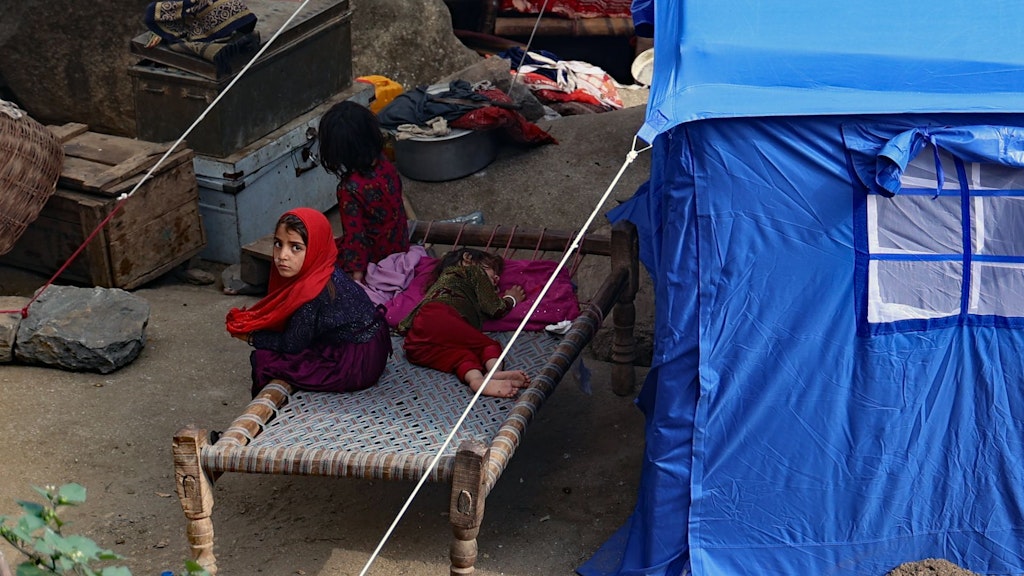
Meanwhile, Afghanistan is battling drought with 3.3 million people affected, together with acute malnutrition, a shortage of essential health services, and lack of basic services. In addition, on 31 August a devastating earthquake hit the country's remote and mountainous region. The initial quake and subsequent aftershocks killed almost 2,000 people, injured a further 3,600 and destroyed and damaged more than 8,500 homes along with critical infrastructure, farmland and livestock.
The humanitarian challenges and needs in the country remain high, with communities lacking access to health facilities and women facing restrictions to participate in public life. Switzerland remains engaged in the country and the Afghan Humanitarian Fund is a key instrument to assist affected communities in Afghanistan and to support and strengthen local humanitarian organisations. The Swiss humanitarian office is on site in Kabul to ensure vulnerable communities are getting support to meet their basic needs in a country where people have been suffering for decades from conflict, poverty and hunger.
Country-Based Pooled Funds
The AHF is one of OCHA’s Country-based Pooled Funds (CBPFs). Contributions by donors are collected into single, unearmarked funds dedicated to for a specific humanitarian context. These funds channel resources efficiently and support high-priority projects being undertaken by those best placed to respond (including international and national NGOs and UN agencies) through an inclusive and transparent process.
Managed by OCHA and in close consultation with donors and partners, CBPFs ensure that funding is directed to where needs are greatest. At a time when global humanitarian budgets are under severe strain, pooled funds are more vital than ever. Their flexibility and speed make it possible to reach people quickly in emergencies. They strengthen efficiency and locally-led action by supporting frontline actors – including women-led organizations such as AWRO in Afghanistan. Pooled funds play a key role in the ongoing efforts to reform the global humanitarian system. Switzerland advocates for more flexible funding of this kind to ensure quick and efficient allocation of resources in humanitarian contexts.
Contact
Eichenweg 5
3003 Bern