
Development cooperation
Through its development cooperation, the SDC supports its priority countries in Africa, Asia, the Middle East and Eastern Europe on their path to sustainable development across the three dimensions of the environment, economy and social integration. Key challenges include climate change, poverty and inequality. To address these, the SDC assists in establishing institutions that serve the entire population.
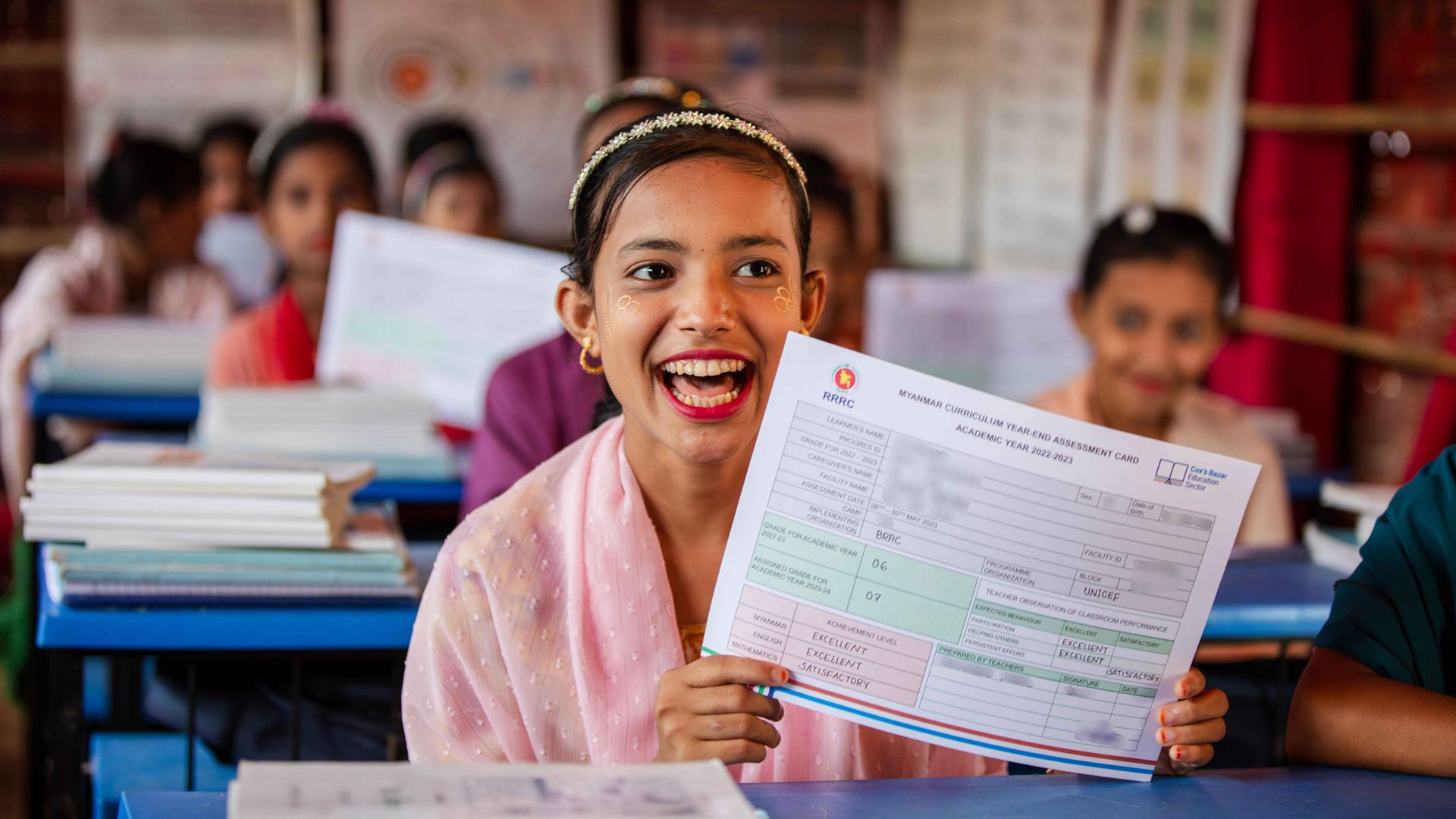
The SDC prioritises the least developed countries. Extreme poverty is most acute where state structures are weak, basic services are lacking and populations face arbitrary treatment or violence. Climate change increasingly exacerbates these challenges, particularly affecting agriculture and water supply.
Guided by the United Nations (UN) 2030 Agenda for Sustainable Development’s 17 Sustainable Development Goals (SDGs) and the ‹leave no one behind› principle, the SDC collaborates with local partners to improve living conditions. It creates opportunities for women, young people, minorities and other disadvantaged groups by fostering their participation in the economy and society. Key focus areas include water, health, education and employment opportunities. To promote sustainable development, the SDC also enhances the rule of law, democratic participation and environmental responsibility.
Legal basis and mandate
The SDC’s development cooperation work aligns with Swiss foreign policy, as set out in Article 54 of the Federal Constitution. This stipulates that Switzerland should «assist in the alleviation of need and poverty in the world and promote respect for human rights and democracy, the peaceful co-existence of peoples as well as the conservation of natural resources». The legal basis is the 1976 Federal Act on International Development Cooperation and Humanitarian Aid, with the UN’s 2030 Agenda and its 17 SDGs serving as additional guidance. Every four years, Parliament deliberates on the international cooperation strategy presented by the Federal Council and approves the corresponding commitment appropriations. Multi-year programmes are developed with partners for implementation in priority countries and regions.
Principles
The SDC drives significant change through its development cooperation, consistently promoting gender equality and the inclusion of marginalised population groups. It partners with public and private entities, promoting good governance principles and sustainable development practices. These partnerships are crucial for ensuring locally relevant, sustainable projects. Thanks to its long-term support, its flexibility and the trust that Switzerland enjoys in its partner countries, the SDC can consistently address obstacles to development.
Priorities
The SDC’s development cooperation currently focuses on 34 countries, mostly among the world’s poorest and structurally weakest. These include 13 countries in sub-Saharan Africa, four in North Africa and the Middle East, eight in Asia and nine in Eastern Europe. The SDC’s bilateral engagement in Latin America and the Caribbean has been gradually phased out, concluding at the end of 2024.
Development cooperation has the following thematic priorities:
- Strengthening basic services: ensuring universal access to high-quality education, basic medical services, water and sanitary facilities.
- Economic development through private sector promotion, especially small and medium-sized companies (SME): facilitating access to financial services for all businesses, including micro-enterprises.
- Labour market-oriented vocational training and value chain development in particular support job creation and enhance earning potential.
- Strengthening the rule of law and national and local institutions: public administration should serve all citizens through transparent, accountable operations. Anti-corruption efforts and domestic mobilisation of financial resources are emphasised. Strengthening civil society is crucial in this area.
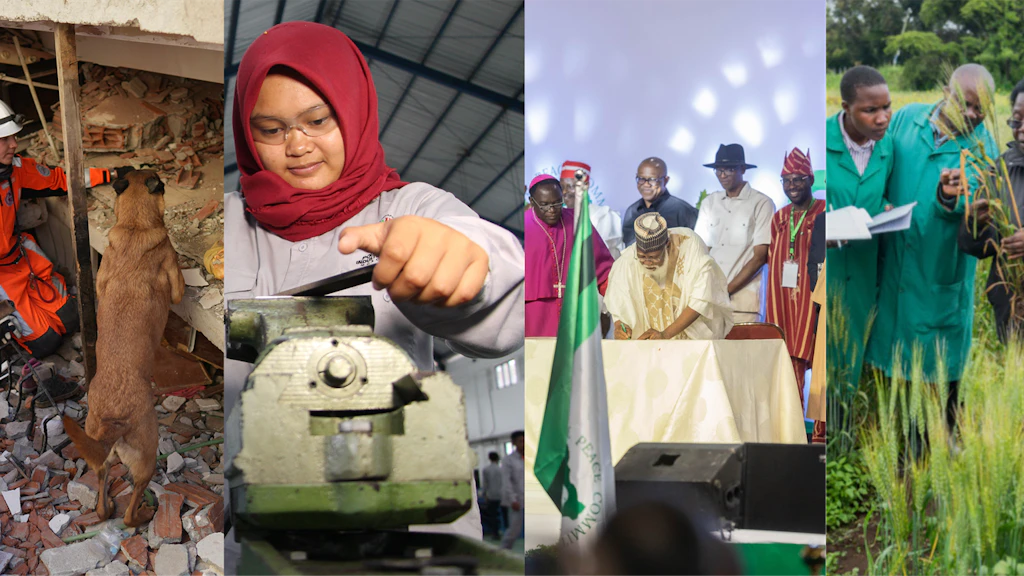
- Disaster risk reduction, climate change mitigation and adaptation: promoting adapted, resilient agriculture for food security and effective water management for sustainable resource use.
- Crisis prevention and conflict transformation: tackling the causes of conflicts in order to prevent new conflicts and create lasting peace.
Switzerland’s international cooperation strategy 2025-2028
The general aim of international cooperation is to end poverty and support sustainable development worldwide.

Cooperation with Eastern Europe
Through its development cooperation in Eastern Europe, Switzerland supports countries in the Western Balkans, Eastern Europe, the South Caucasus and Central Asia.

The Swiss cooperation, a reliable and flexible actor
Interview with the general director of the SDC, Patricia Danzi, on her visit to Benin and Chad, where she went to Adré, on the border with Sudan.
Contact
Eichenweg 5
3003 Bern