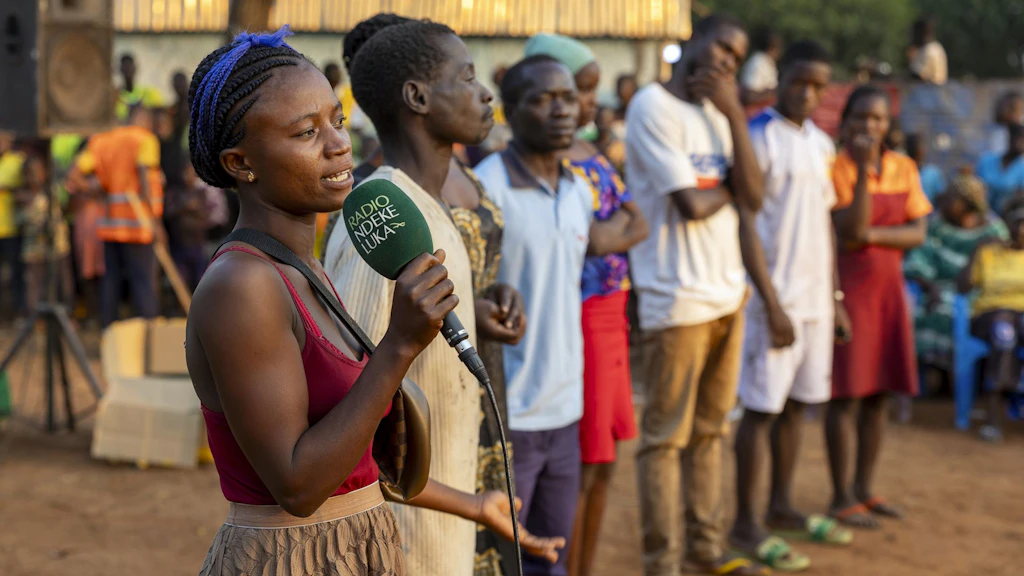
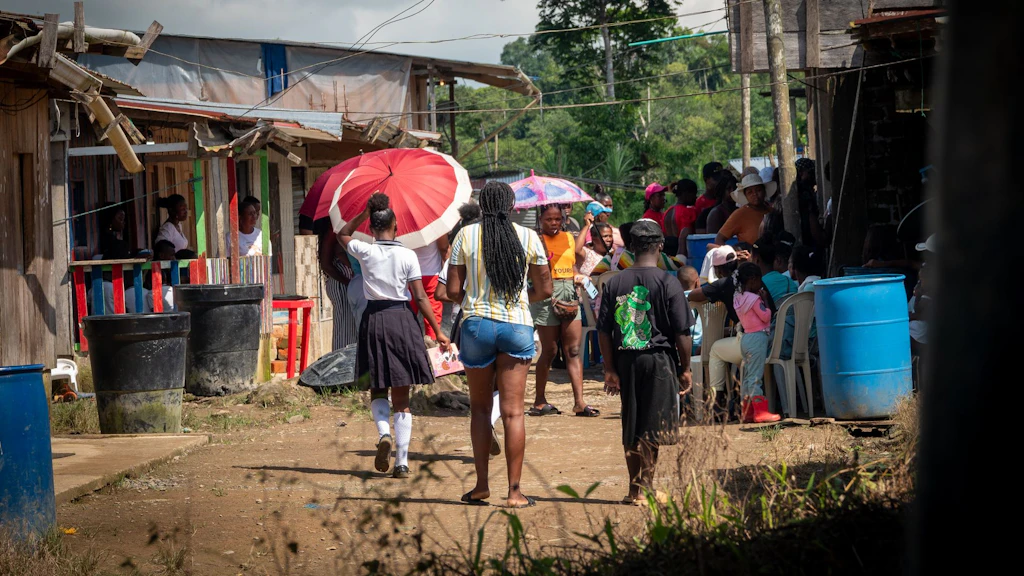
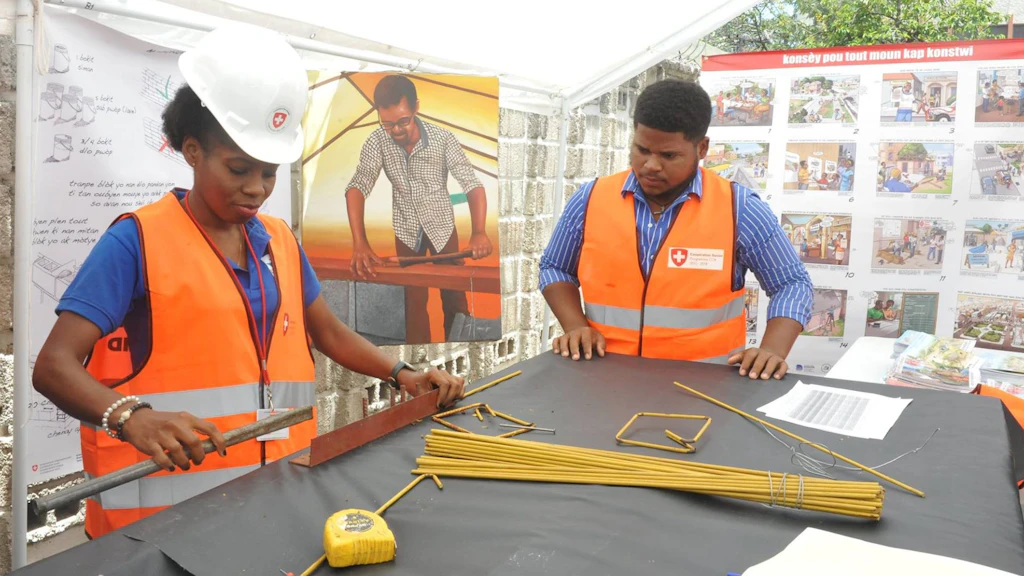
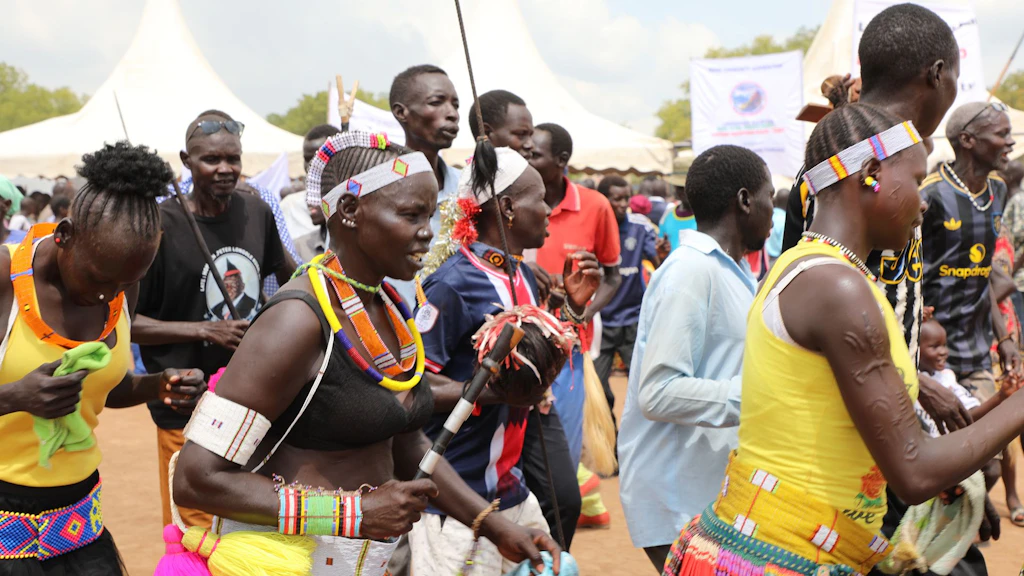
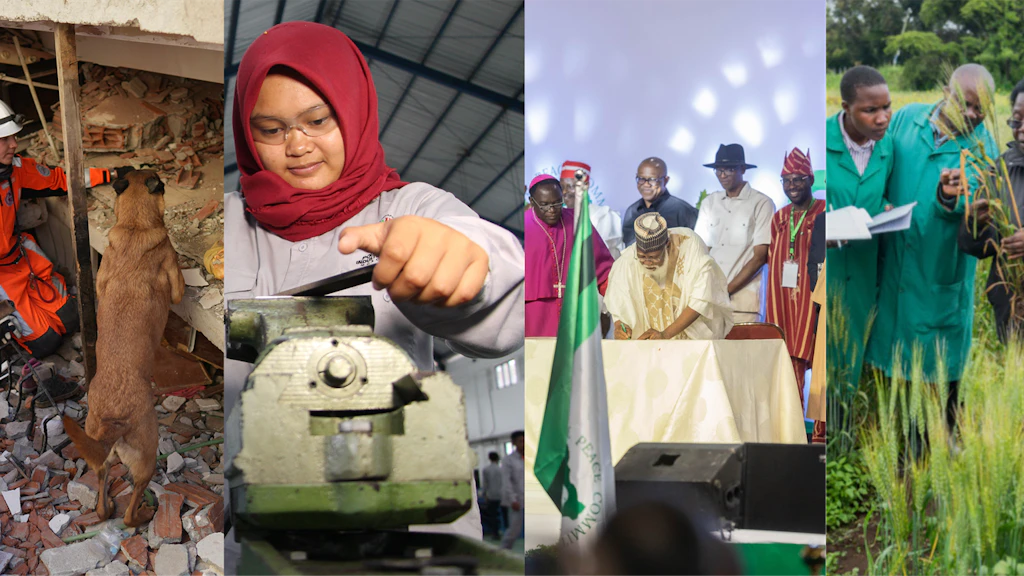
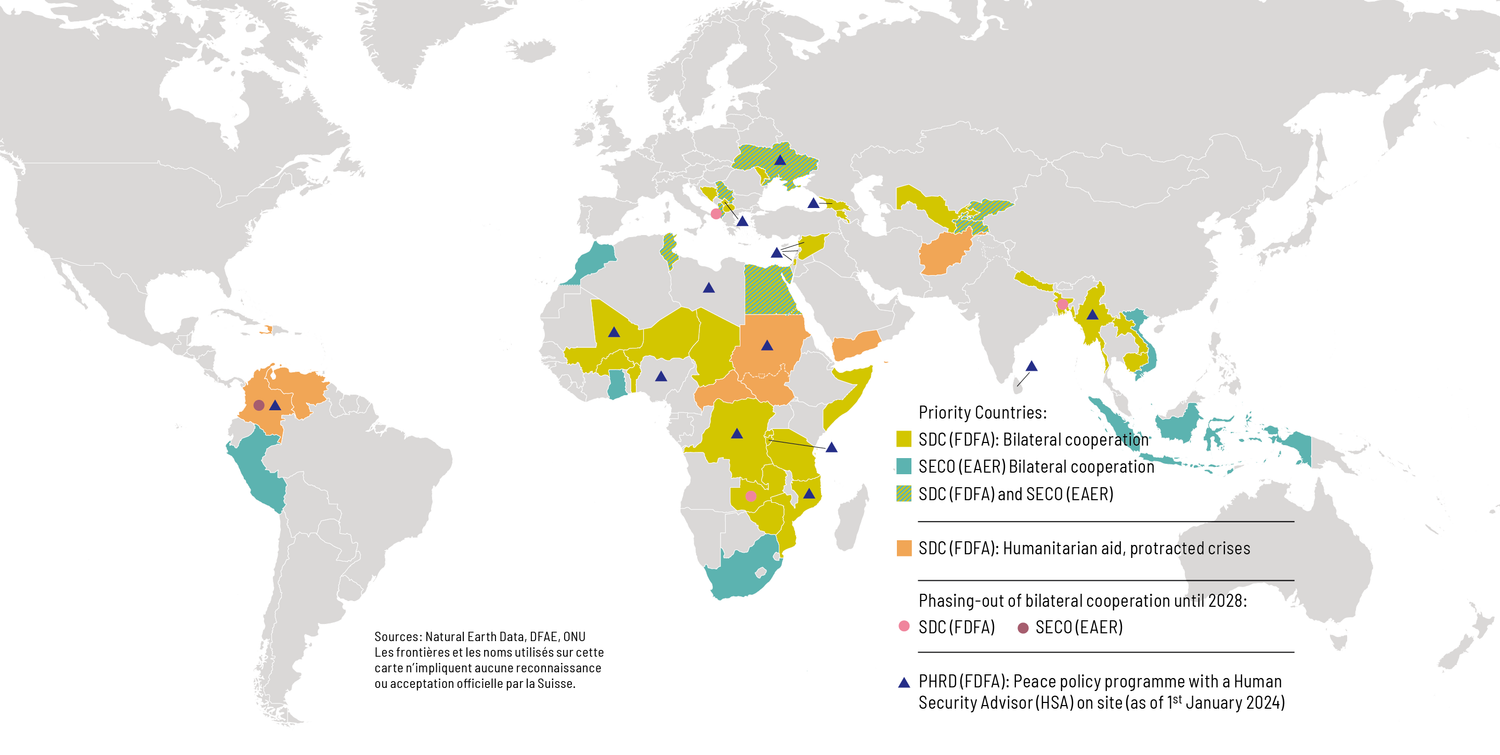
Switzerland’s international cooperation focuses on four priority regions: sub-Saharan Africa, North Africa and the Middle East, Asia and Eastern Europe. The SDC is active in 34 countries with bilateral development cooperation projects. It also has a universal mandate to deliver humanitarian aid and provides immediate emergency assistance during crises and disasters. There are seven countries in which the SDC has maintained its commitment for several years due to the protracted nature of the crises.
The four priority regions of Switzerland’s Strategy for International Cooperation 2021-2024 (sub-Saharan Africa, North Africa and the Middle East, Asia and Eastern Europe) continue to be relevant and have been retained for the period 2025-2028.
In its bilateral development cooperation, the SDC has reduced the number of priority countries receiving long-term assistance from 35 to 34.
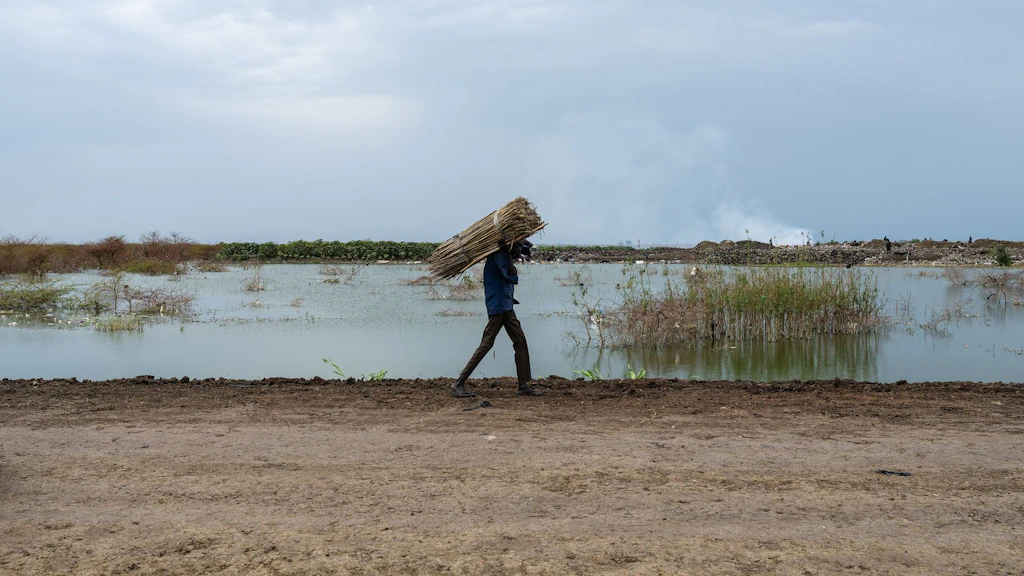
The SDC has a universal mandate to provide humanitarian aid. It is not possible to predict the kinds of disasters (for example, earthquakes, floods, famines, cholera) and responses that will be needed during 2025-2028. It has been observed, however, that many crises are protracted and require humanitarian interventions lasting multiple years. In seven countries, the SDC’s humanitarian aid has consequently been maintained for a longer period due to the protracted nature of the crises.
Adapting instruments to the context
Switzerland’s international cooperation does not follow the same approach or the same objectives in every country. In some countries the focus is on its humanitarian mandate of saving lives and alleviating suffering, while in others IC supports partner country efforts towards sustainable development and poverty reduction. Increasingly, IC is adopting a short, medium and long-term approach. This allows it to respond to emergencies but also to address the structural factors that are responsible for fragility and low resilience, and thus promote stability.
Regional and thematic programme approach
In certain contexts, Switzerland’s international cooperation adopts a regional and thematic approach, such as in: priority countries facing crises (e.g. Syria, Somalia and Colombia), crises that impact neighbouring countries, and cooperation programmes on regional and transboundary issues, for example in the Mekong region, South Caucasus and Central Asia.
8 April 2025
Albania
Switzerland supports Albania’s democratic transition and its efforts to boost economic competitiveness, with the aim of strengthening European integration.
17 March 2026
Bangladesh
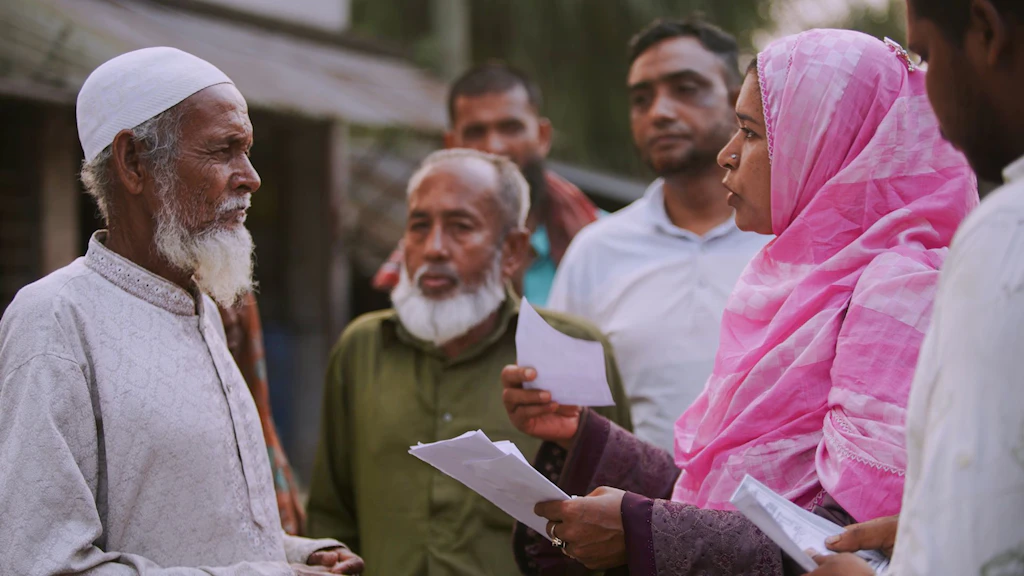
In Bangladesh, Switzerland is promoting sustainable development that leaves no one behind. It is mobilising the private sector and strengthening political participation.
8 April 2025
Benin
Switzerland is committed to sustainable development in Benin, focusing on governance, peace, the economy and skills development.
14 April 2025
Bosnia and Herzegovina
Switzerland supports Bosnia and Herzegovina in building a peaceful, cohesive and democratic society, on its way to being a member of the EU.
15 January 2026
Burkina Faso
In Burkina Faso, Switzerland is contributing to lasting peace by protecting communities, strengthening social cohesion and creating economic opportunities.
5 December 2025
Burundi
Switzerland promotes peace, economic development, the fight against poverty, and healthcare in the Great Lakes region through its international cooperation activities.
14 April 2026
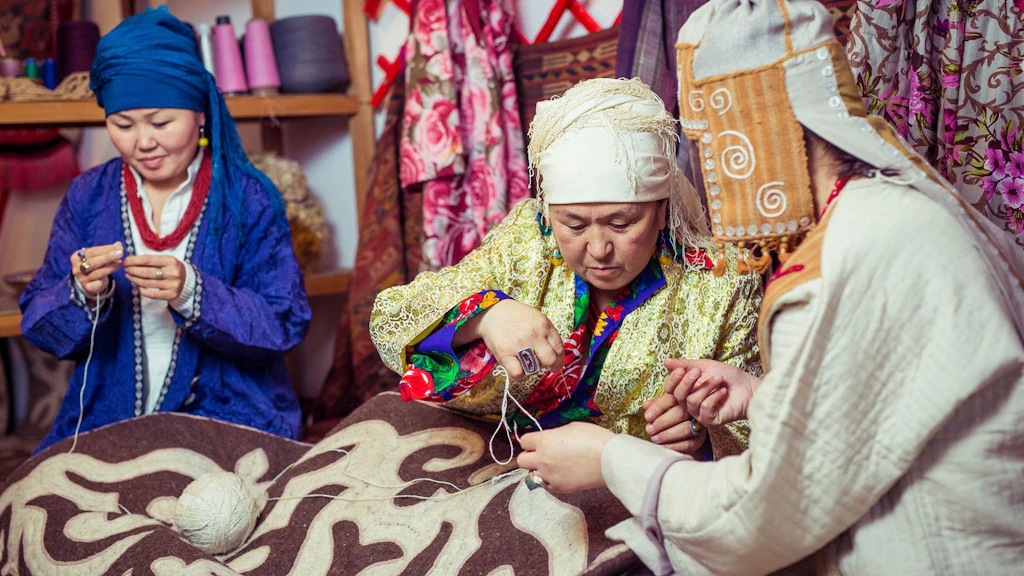
Central Asia: Kyrgyzstan, Tajikistan, Uzbekistan
Switzerland supports water management and energy as well as sustainable economic development in Central Asia. Governance, human rights and gender equality are promoted regionally.
22 April 2025
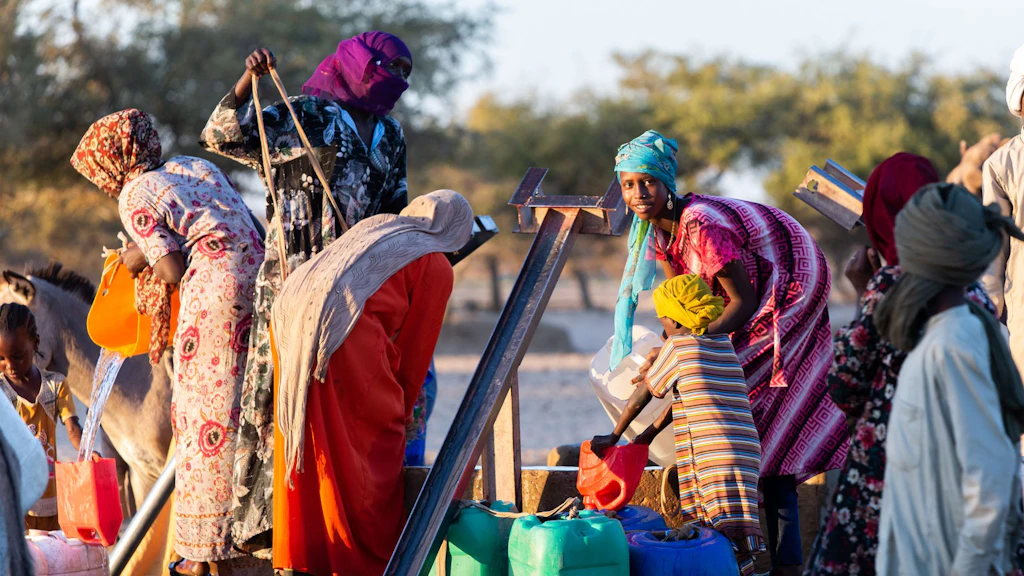
Chad
In Chad, Switzerland is strengthening state institutions, enhancing public service delivery and supporting the development of sustainable markets.
19 February 2026
Democratic Republic of the Congo
In the east of the DRC, Switzerland supports the protection of civilians, economic resilience and access to basic services through a combination of humanitarian aid, development and peace promotion.
31 October 2025
Egypt
In Egypt, Switzerland focuses on protection and socio-economic integration, sustainable and green economic development, strengthening human rights and governance.
14 April 2025
Kosovo
Switzerland is supporting Kosovo in strengthening its stability, with a focus on democratic governance, economic development, inclusive services, and migration.
12 May 2026
Mali
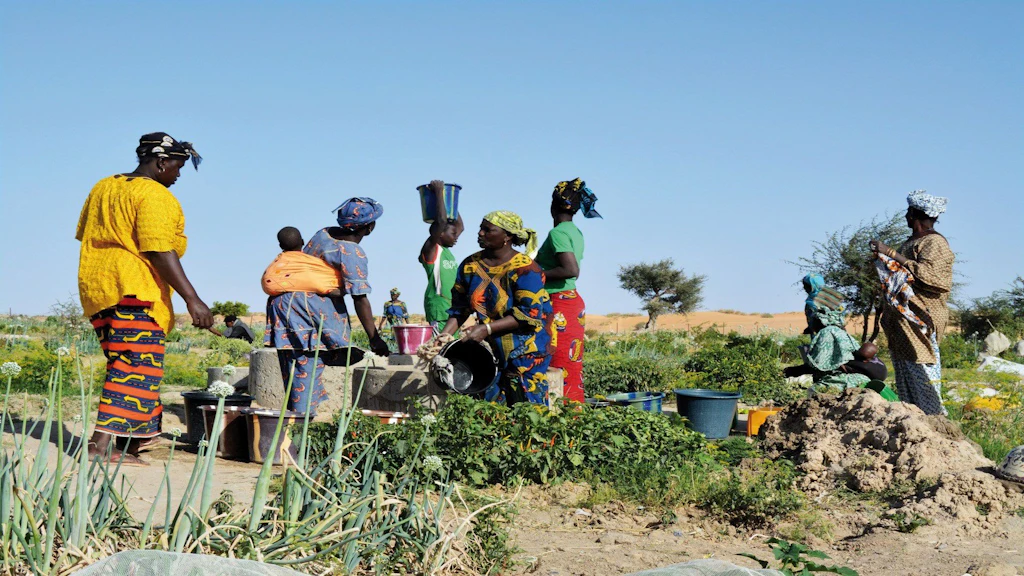
Switzerland supports the people of Mali through humanitarian aid, development cooperation and peacebuilding, with the aim of strengthening governance and economic resilience.
Switzerland is promoting sustainable development and democratic governance structures in Cambodia and the Lao People’s Democratic Republic.
2 September 2026
Mozambique
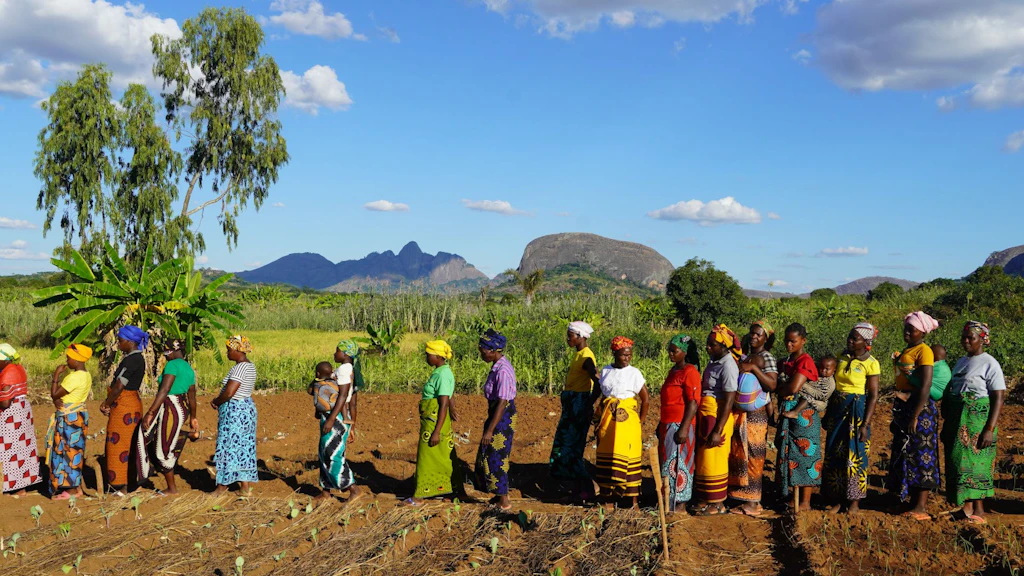
In Mozambique, Switzerland focuses on universal access to high-quality public services and on enhancing economic development, employment and incomes.
15 April 2025
Myanmar
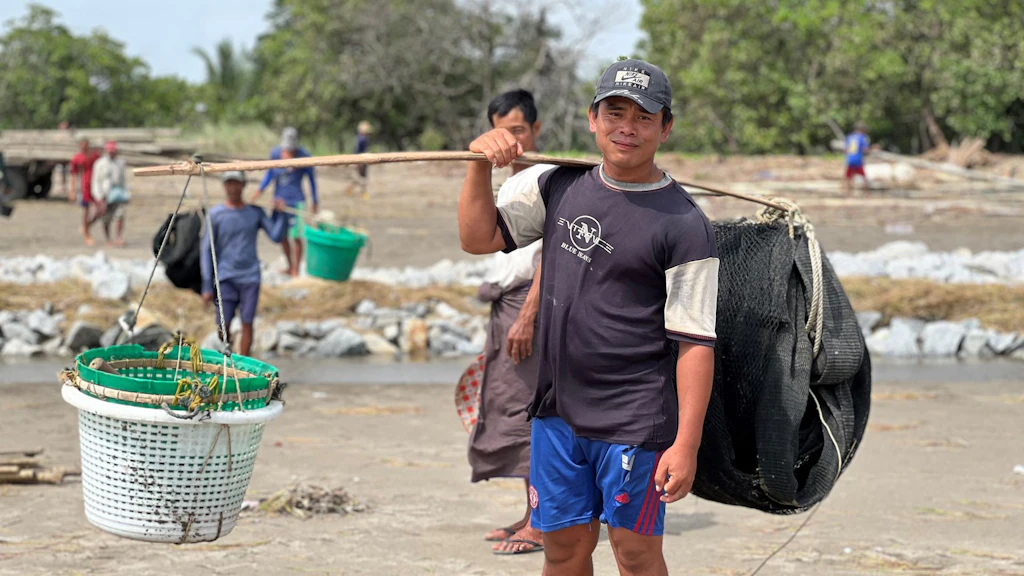
The SDC works in Myanmar mainly in the areas of peace, state-building and protection, vocational training and market development, and health.
15 April 2025
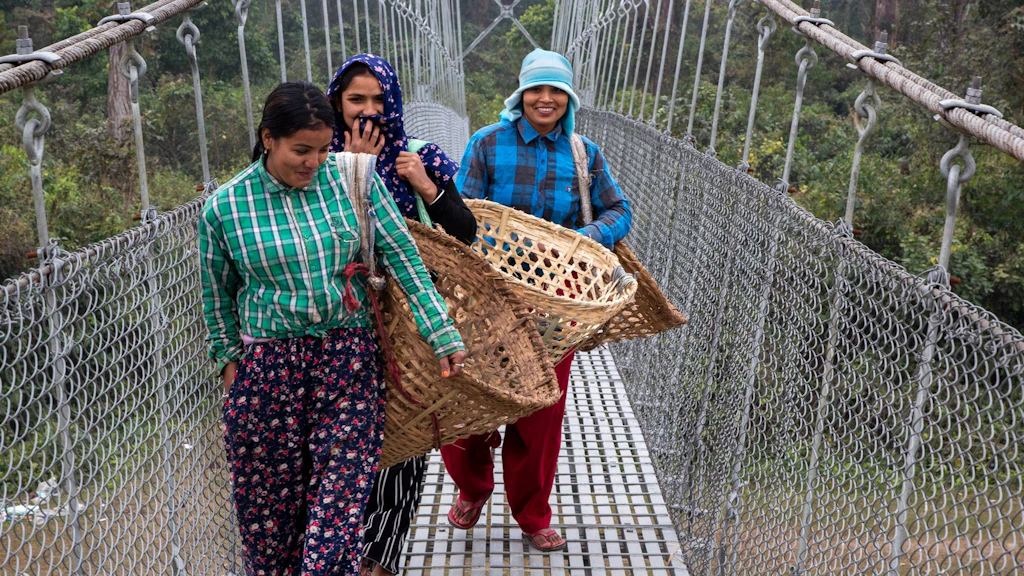
Nepal
In Nepal, the SDC is supporting the establishment of the new federal state and is helping to improve public services and the business environment.
15 April 2025
Niger
In Niger, Switzerland focuses on food security and resilience, education in emergencies and vocational training, as well as local governance and protection.
15 April 2025
North Macedonia
Switzerland supports North Macedonia’s democratic, economic, and environmental reforms towards European integration.
14 April 2025
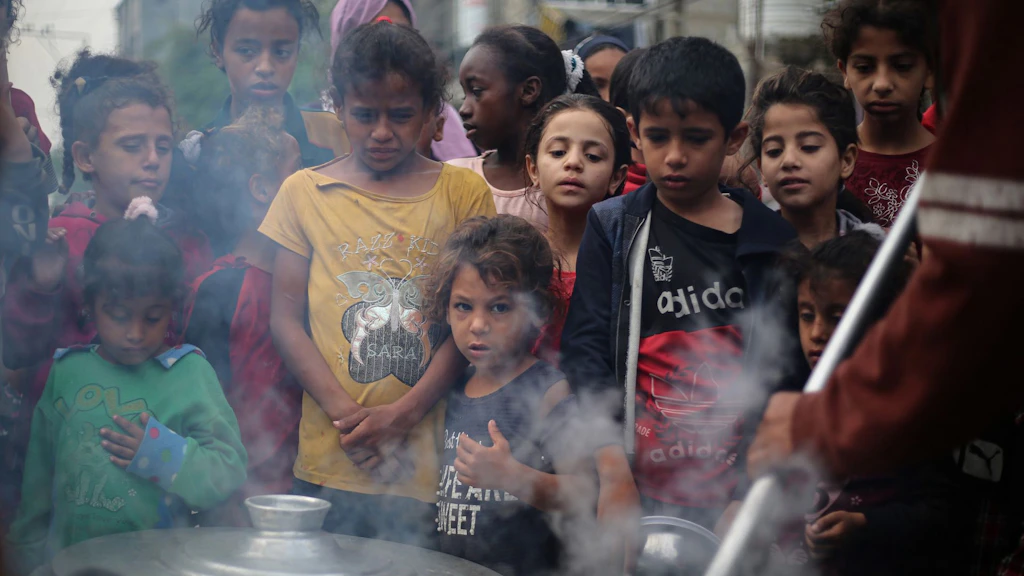
Occupied Palestinian territory and Near East
Swiss humanitarian aid protects lives in the occupied Palestinian territory. Development cooperation creates prospects for young people.
14 April 2025
Republic of Moldova
Switzerland’s activities in Moldova focus on governance and social cohesion, economic development and resilience, as well as health and local public services.
5 December 2025
Rwanda
Switzerland promotes peace, economic development, the fight against poverty, and healthcare in the Great Lakes region through its international cooperation activities.
24 August 2026
Serbia
Switzerland supports Serbia’s European integration through democratic governance, economic development and climate resilience.
10 July 2026
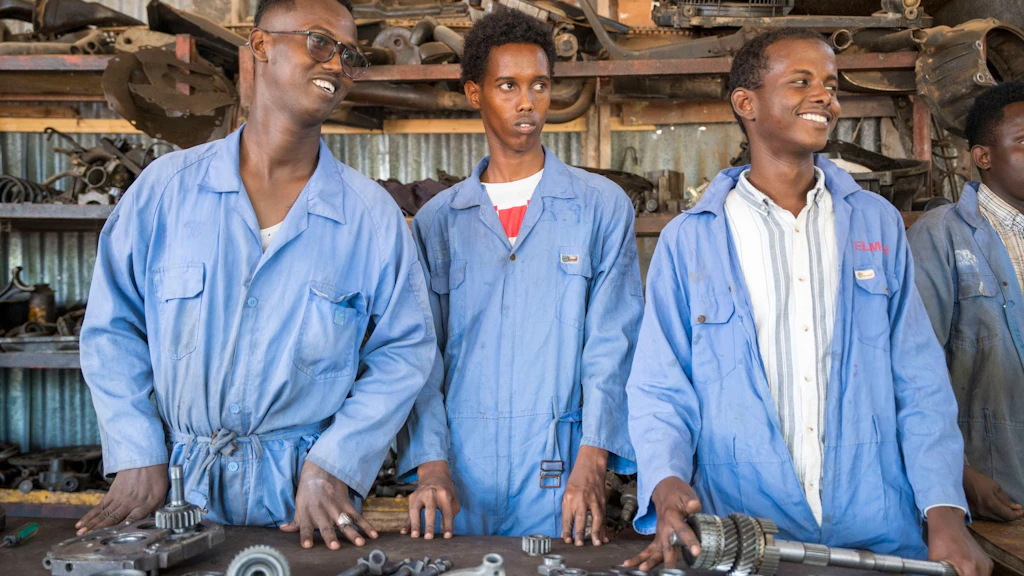
Somalia
In the conflict-prone Horn of Africa, Switzerland's activities are focused on good governance, food security, health and migration.
17 February 2026
The South Caucasus region: Armenia, Azerbaijan and Georgia
Switzerland is supporting the South Caucasus region (Armenia and Georgia) in the priority areas of democratic governance, climate resilience and economic development.
21 April 2026
Syria and Middle East: Lebanon, Jordan, Iraq, Turkiye
Switzerland supports Syria and neighbouring countries towards stability, peace and economic resilience through aid, dialogue and technical expertise.
24 August 2026
Tanzania
Switzerland supports stronger institutions, inclusive livelihoods and civic participation in Tanzania, with a focus on vulnerable groups and climate resilience.
28 April 2025
Tunisia
In Tunisia, Switzerland is committed to peace and stability through a close partnership.
15 June 2026
Ukraine
Switzerland delivers its largest-ever country programme in Ukraine, combining humanitarian aid, recovery and reconstruction toward a CHF 5 billion commitment to 2036.
15 April 2025
Zimbabwe and Zambia
The SDC’s cooperation with Zimbabwe and Zambia focuses on food security, health, and the strengthening of civil society and public institutions.
8 April 2025
Afghanistan
Switzerland supports Afghanistan with humanitarian measures and long-term projects to safeguard the basic needs of the population and to protect human rights.
13 May 2026
Central African Republic
Switzerland supports efforts to better protect civilians, improve access to basic services and promote peace and reconciliation in the CAR.
14 April 2025
Colombia
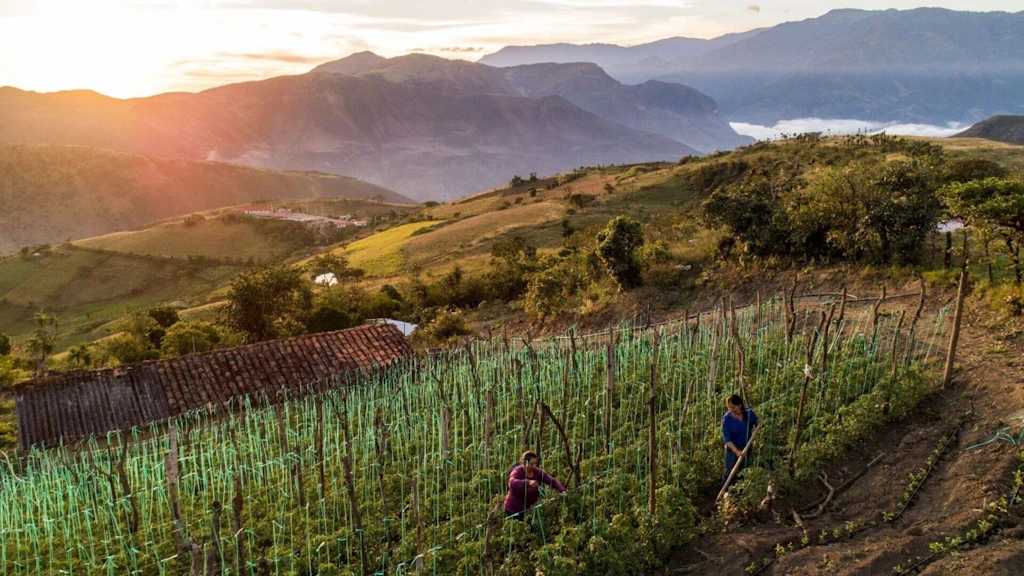
The SDC’s priorities in Colombia are humanitarian aid, protection of the civilian population and a sustainable management of natural resources.
9 April 2025
Haiti
In Haiti, Switzerland is focusing on the protection of vulnerable groups and strengthening disaster resilience for local people and institutions.
15 April 2025
Sudan
Switzerland’s main objective in Sudan is to save lives and to protect the victims of armed conflicts and natural disasters.
1 June 2026
South Sudan
Switzerland supports South Sudan through humanitarian aid, development cooperation and peace promotion, with a focus on food security, sustainable livelihoods, protection and social cohesion.
20 April 2026
Venezuela
In Venezuela, the SDC is helping to support the most vulnerable groups through access to basic services and protection from violence and exploitation.
14 April 2025
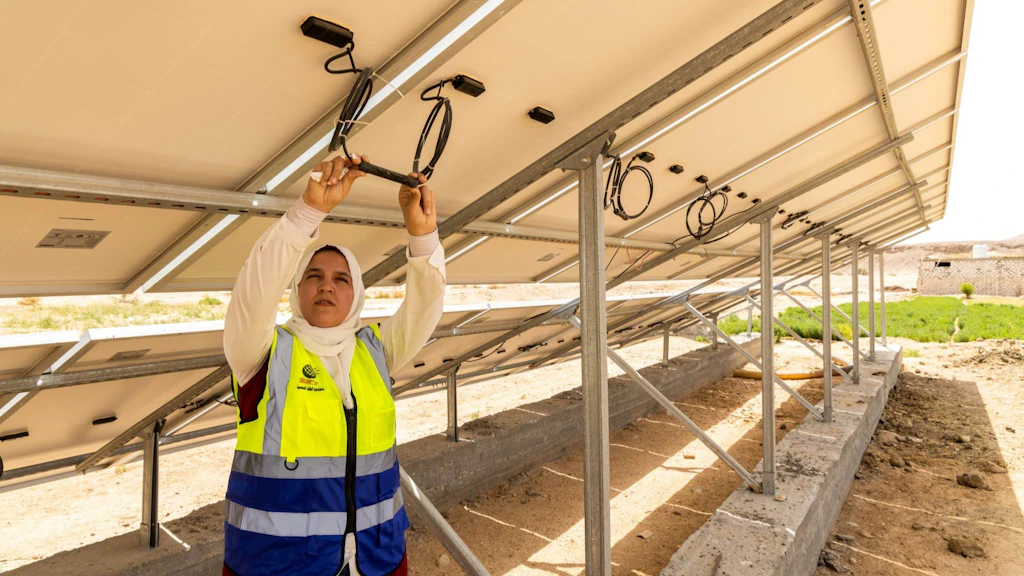
Yemen
Switzerland is promoting sustainable water use and the protection and resilience of civilians in Yemen.
29 April 2025
Switzerland’s international cooperation strategy 2025-2028
The general aim of international cooperation is to end poverty and support sustainable development worldwide.
24 March 2025
Humanitarian Aid
The SDC’s Humanitarian Aid focuses on emergency relief, reconstruction and rehabilitation of affected areas, and disaster risk reduction.
9 September 2024
Development cooperation
The SDC's development cooperation supports countries in Africa, the Middle East, Asia and Eastern Europe on the path to sustainable development.
8 April 2025
Global approach
Global challenges impact low- and middle-income countries. The SDC uses global programmes and international dialogue to provide sustainable solutions.
18 March 2025
Multilateral cooperation
Multilateral engagement, alongside bilateral and thematic cooperation, is a cornerstone of Swiss international cooperation.
Contact
Swiss Agency for Development and Cooperation (SDC) Eichenweg 5 3003 Bern










.png?rect=0%2C78%2C1500%2C844&w=1024&auto=format)