
Ukraine
Russia’s war continues to devastate Ukraine, with 10.8 million people dependent on humanitarian aid. As Switzerland’s lead agency, the SDC delivers its largest country programme to date - combining humanitarian assistance, development cooperation and reconstruction support under a long-term commitment to Ukraine’s resilience and recovery.
.png?w=1024&auto=format)
Context (Ukraine)
On 24 February 2022, Russia launched its war against Ukraine, considered by the UN as a violation of international law and causing a humanitarian crisis across Ukraine, in particular its frontline regions. Since then, millions of people have required humanitarian assistance and have been impacted by the widespread damage to essential infrastructure. Over 3.7 million have been displaced within Ukraine and a further 5.9 million have sought protection abroad, while insecurity in frontline areas continues to permanently threaten life, hinder access to essential services and impede recovery. The war has placed considerable pressure on State institutions and local administrations, disrupted the economy, damaged critical sectors, and left extensive areas contaminated by mines and explosive remnants of war.
Switzerland has made the support for Ukraine a strategic priority, as defined in the Foreign Policy Strategy 2024-27 and the International Cooperation Strategy 2025-28. Building on its long-standing presence in Ukraine, the Federal Council plans to invest CHF 5 billion in Ukraine’s reconstruction between 2025 and 2036, of which CHF 1.5 billion has been allocated for the Ukraine Country Programme 2025-2028.
Key Figures
- 10.8 million Ukrainians in need of humanitarian assistance
- 3.7 million people are internally displaced
- USD 588 billion is the estimated total cost of reconstruction
- 139’000 square kilometres (20%) of Ukrainian territory are suspected of contamination from explosives (mines and other remnants of war)
- CHF 1.5 billion has been allocated by Switzerland for the Ukraine Country Programme 2025-2028
- CHF 900 million – Switzerland’s International Cooperation contribution to the war-affected population and the region since 2022
Switzerland’s Ukraine Country Programme 2025-2028
Faced with ongoing humanitarian, social and economic pressures, Ukraine requires both immediate support and long-term reconstruction. Adopted on 12 February 2025 and headed by the Federal Council’s Delegate for Ukraine Jacques Gerber, the Ukraine Country Programme 2025-2028 brings together humanitarian aid, development cooperation, and peacebuilding to achieve those very goals. The Programme sets the strategic framework for Switzerland’s support during the first phase of its long-term engagement in Ukraine and focuses on three priority areas:
- Economic Recovery
- Public Services and Governance
- Protection of Civilians and Peace
It is part of a 12-year commitment to invest CHF 5 billion in Ukraine’s reconstruction (2025-2036), with CHF 1.5 billion allocated for 2025-28. Implementation takes place through bilateral and multilateral partnerships, working closely with Ukrainian authorities, civil society, municipalities, and international organisations such as the UN, World Bank, European Bank for Reconstruction and Development (EBRD), and Council of Europe.
The SDC’s role in Ukraine
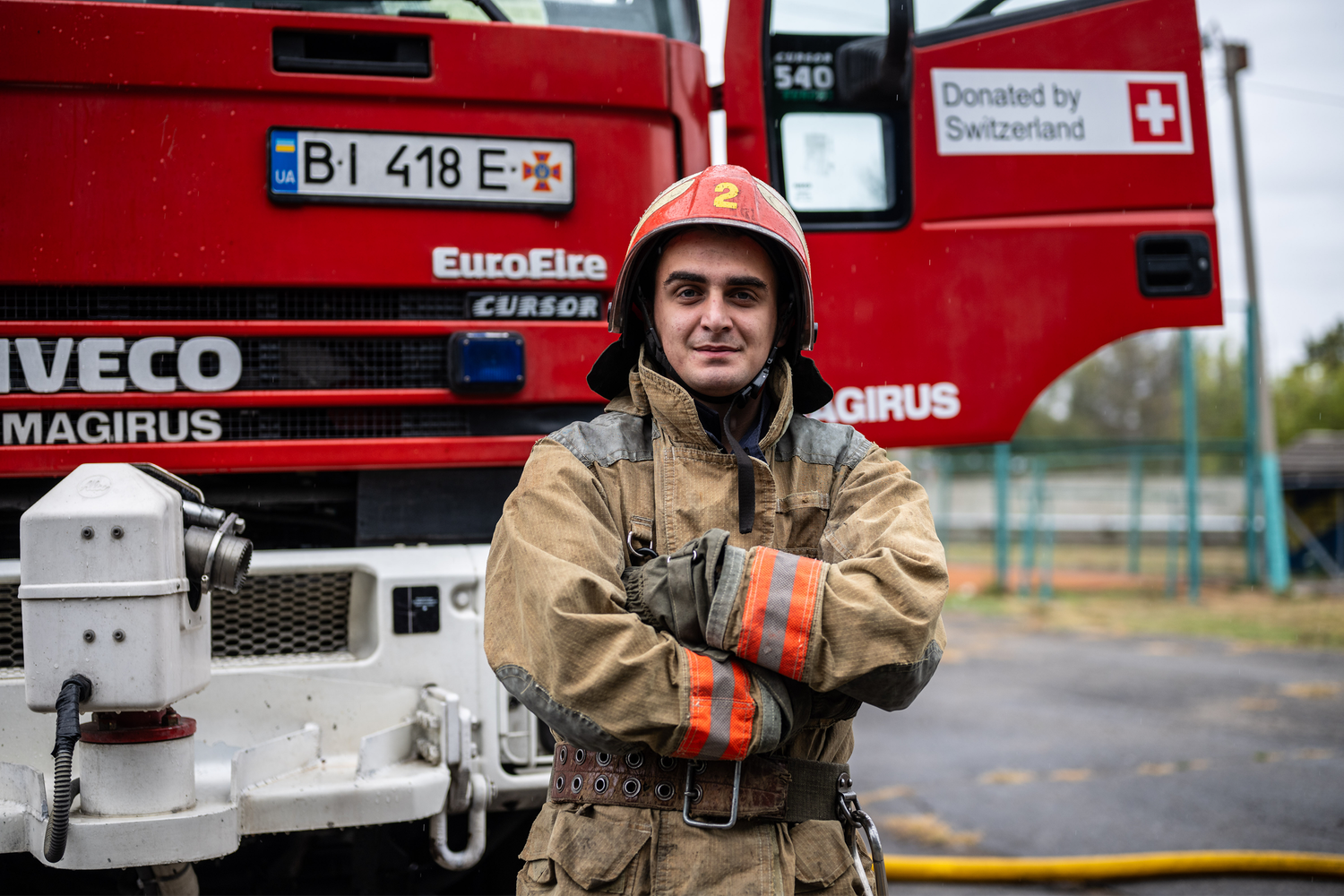
Within this broader framework, SDC deploys its three complementary roles in Ukraine: as a donor, a direct implementor, and an advocate. As a donor, SDC finances and steers a wide portfolio of projects implemented by bilateral and multilateral partners across the three priority areas of the Country Programme. At the same time, through the permanent deployment of Swiss Humanitarian Aid (SHA) experts in Ukraine, SDC carries out direct operational activities, particularly in emergency response, winterisation, and the restoration of essential infrastructure. In its advocacy role, it engages in policy dialogue, promotes international humanitarian law and accountability, and contributes to donor coordination and reform processes.
SDC ensures coherence between emergency relief, medium-term recovery and long-term development efforts, working closely with Ukrainian authorities, civil-society organisations and international partners. SDC also brings in Switzerland’s thematic expertise in decentralisation, digital governance, public services, protection and mine action. Through its permanent presence in Kyiv and its coordination mandate in the field, it ensures that Switzerland’s engagement remains needs-driven, conflict-sensitive and aligned with Ukraine’s reform and reconstruction priorities.
Priority Area 1: Economic Recovery
Ukraine’s economy has been severely disrupted by the war: supply chains have broken down, industrial facilities have been damaged, and many regions face acute labour shortages. In alignment with the needs of the partners on the ground, SDC supports the general framework for an investment-friendly economy allowing local businesses and communities to recover. It further works with municipalities to restore energy systems, utilities, and urban infrastructure, allowing companies to operate again and creating the foundations for local economic activity to resume. By supporting reforms and higher export standards, SDC helps Ukrainian producers strengthen their competitiveness, including in view of closer integration with the EU single market. At the same time, Swiss private-sector expertise has become an increasingly important pillar of reconstruction. Through a first call for proposals, Switzerland is co-financing twelve projects by Swiss companies with CHF 93 million – part of a total project volume of over CHF 112 million – to supply equipment, services, and technical solutions needed for Ukraine’s recovery.
Flagship Projects:
- REMARKET – Recovery and Empowerment through Market Access and Resilient Economic Transformation in Ukraine: This project supports internally displaced persons, returnees and host-community members in Ukraine by improving access to markets and promoting sustainable economic inclusion. With a contribution of CHF 2.757 million, the programme provides grants, vocational training and tailored business-development services to micro-, small- and medium-enterprises, helping them rebuild, scale up and reconnect to regional and European markets.
- Partnership Fund for a Resilient Ukraine 2 (PFRU-2): PFRU-2 is a multi-donor initiative that strengthens resilience and early recovery in communities affected by the war. The programme helps restore essential services, supports local authorities in leading recovery efforts, and improves the conditions for inclusive economic and social development. SDC’s contribution enables coordinated, agile support in regions close to the frontline, helping stabilise communities and rebuild confidence in public institutions.
Priority Area 2: Public Services
Ukraine’s public services are under immense pressure. Many communities face difficulties in accessing clean water, heating, health care, education and transport, while local and regional authorities work with limited resources to keep essential services running. SDC supports these institutions by helping to stabilise and repair critical infrastructure, strengthening municipal and regional capacities, and advancing reforms that make public administration more transparent, efficient, and responsive to citizens. This includes continued support for decentralisation, good governance and the rule of law, along with efforts to reduce corruption and strengthen accountability. Digital public services remain a particular focus: SDC works with Ukrainian partners to expand secure e-services and digital tools that allow people to access state services reliably, even during wartime disruptions and displacement.
Flagship Projects:
- E-Governance for Accountability and Participation (E-GAP): EGAP strengthens Ukraine’s digital transformation by helping national and local authorities introduce innovative digital tools that make public services more accessible, transparent, and resilient. The programme supports the Ministry of Digital Transformation in developing e-services used by millions of citizens and businesses, improves digital public sector management, and empowers local governments to provide efficient, user-centred services even under wartime conditions. By consolidating digital reforms across key sectors, EGAP contributes to Ukraine’s EU integration process and to the creation of more inclusive, resilient communities.
- Direct Humanitarian Actions, Reconstruction of WASH Infrastructure: This SDC-led programme provides emergency water, sanitation, and heating support to communities along the frontline, while laying the groundwork for sustainable reconstruction. It restores damaged water and sanitation systems, supports municipalities with repairs and technical expertise, and pilots innovative solutions such as energy-efficient systems and circular construction approaches. By combining life-saving WASH interventions with long-term planning, the programme strengthens community resilience and contributes to Ukraine’s broader reconstruction efforts.
Priority Area 3: Protection & Peace
Protecting civilians and supporting peace are central to Switzerland’s engagement in Ukraine. Millions of people remain in need of assistance, and the effects of the war continue to be felt most strongly in frontline regions. SDC provides life-saving humanitarian support, strengthens psychosocial and rehabilitation services, and works with local organisations that deliver protection and social assistance. Widespread mine contamination remains one of Ukraine’s most serious long-term challenges, and SDC contributes significantly to humanitarian mine action, including clearance, risk education, support to victims, and recovery for affected farmers. Through this combination of humanitarian aid, protection work, mine action, and peacebuilding, SDC aims to reduce suffering today while reinforcing the foundations for a just and lasting peace.
Flagship Projects:
- Accelerating Land Release and Recovery in Ukraine: This project supports Ukraine in safely and quickly releasing land contaminated by mines and explosive remnants of war, protecting civilians and enabling social and economic recovery. Drawing on the expertise of APOPO and its innovative dog-based technical survey methods, SDC strengthens the Ukrainian Deminers Association and builds national capacity to manage and deploy animal detection teams. By restoring access to critical land and infrastructure, and by anchoring mine action expertise within Ukrainian institutions, the project contributes to safer communities and supports long-term recovery in heavily affected regions.
- Trauma Rehabilitation Ukraine (TRUE): TRUE strengthens Ukraine’s rehabilitation system so it can respond effectively to the enormous rise in war-related injuries and long-term disabilities. Implemented by a Swiss-Ukrainian consortium, the project improves national rehabilitation governance, builds a functioning network of services from hospitals to communities, and expands training for rehabilitation professionals. It also supports inclusive policies and partnerships that reduce stigma and improve the social and economic reintegration of people with disabilities. Through this work, TRUE contributes to Ukraine’s health reform and ensures that recovery efforts leave no one behind.
Approach and Key Partners
SDC’s engagement in Ukraine is built on close cooperation with local authorities, civil society, Swiss organisations, and international partners. Effective reconstruction and long-term resilience require coordination among many actors, and SDC draws on a broad network that combines local ownership, Swiss expertise, and multilateral reach.
Local and National Partnerships in Ukraine
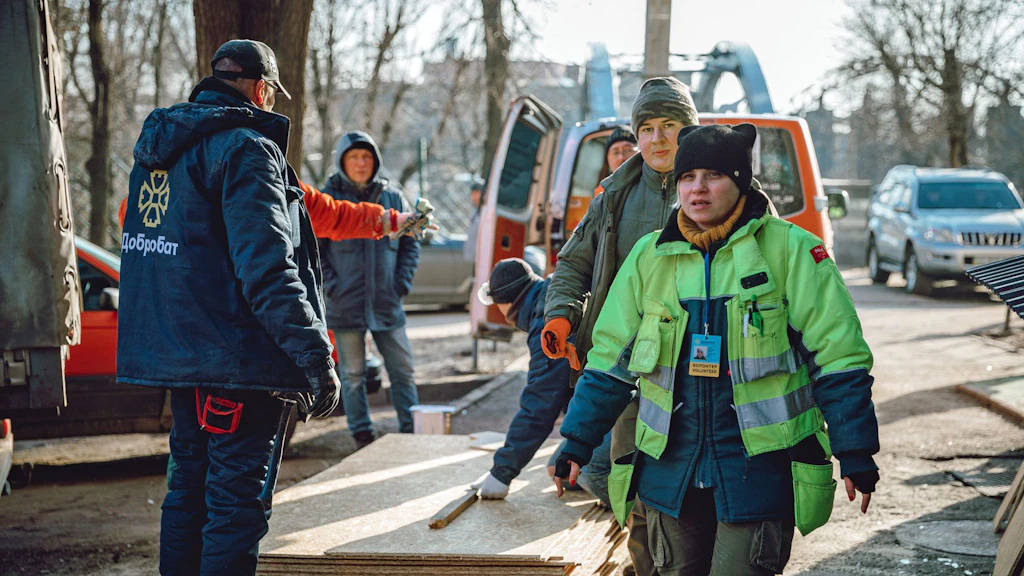
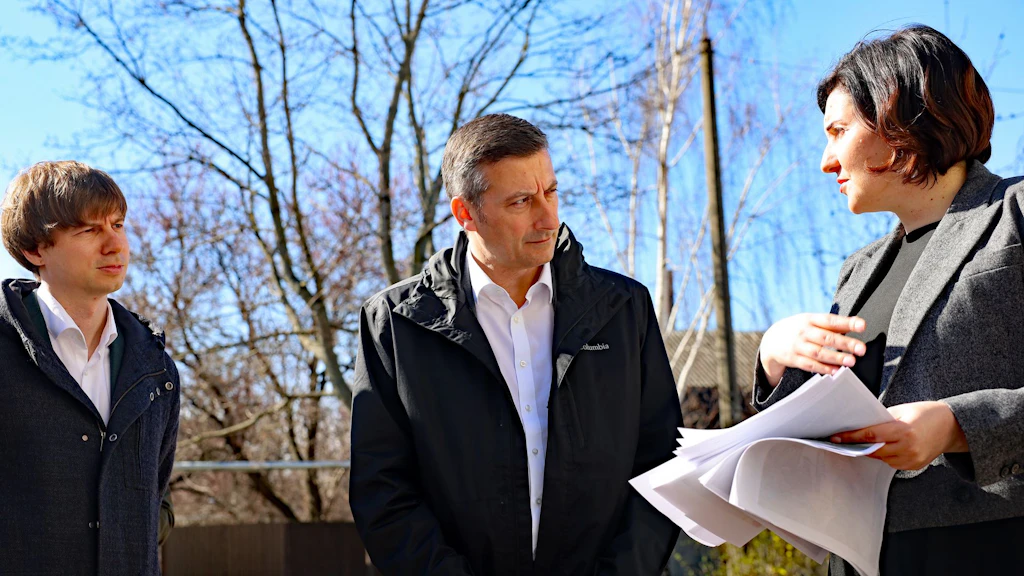
Cooperation with Ukrainian partners lies at the heart of SDC’s approach. SDC works directly with municipalities, regional authorities, and public institutions to strengthen service delivery, promote local economic development, and support reconstruction efforts. These partnerships build on decades of experience in decentralisation and digital governance, enabling Ukrainian cities and communities to maintain essential services, plan reconstruction, and involve citizens in decision-making. Local civil-society organisations also play a central role, particularly in protection, social cohesion, humanitarian response, and mine action, ensuring that support reaches the most affected communities and responds to evolving needs on the ground.
Partnership with Swiss NGOs and Implementing Partners
Swiss NGOs and specialised organisations bring long-standing expertise, operational capacity, and innovation to Ukraine. They work closely with local actors to deliver humanitarian assistance, support vulnerable groups, strengthen public services, and contribute to mine action and reconstruction. Organisations such as Helvetas, Solidar Suisse, FSD, APOPO, and others implement projects ranging from vocational training and community development to digital governance, urban planning, and demining. Academic and medical institutions in Switzerland also contribute through partnerships in health, mental health, rehabilitation, and governance, providing technical expertise and supporting capacity development.
Cooperation with International Organisations
Multilateral cooperation is essential for Ukraine’s reconstruction, given the scale of needs and the importance of coordinated donor action. SDC works with major international organisations including the United Nations, the World Bank, the International Monetary Fund, the European Bank for Reconstruction and Development, the Council of Europe, and the OSCE. Through these partnerships, SDC contributes to large-scale infrastructure projects, reform efforts, humanitarian assistance, and the protection of human rights and international humanitarian law. SDC also supports the EU’s Ukraine Facility and participates in the Ukraine Donor Platform to ensure coherent and transparent international support aligned with Ukraine’s reform and reconstruction plans. Cooperation with the ICRC remains central for the protection of civilians, the search for missing persons, and access to people in need.
Together, these partnerships ensure that Switzerland’s support is well coordinated, locally rooted, and aligned with broader international efforts to help Ukraine recover, reform, and build a sustainable, democratic future.
Background and Timeline
Switzerland has been active in Ukraine since the 1990s, supporting reforms in governance, health, SME development, and decentralisation. Engagement intensified after Russia’s annexation of Crimea and the outbreak of armed conflict in eastern Ukraine in 2014, when SDC expanded its support for conflict-affected regions and delivered humanitarian assistance on both sides of the line of contact. Between 2014 and 2021, Switzerland provided bilateral international cooperation assistance worth CHF 250 million, including CHF 41.5 million for humanitarian aid.
Following Russia’s war against Ukraine in February 2022, Switzerland scaled up its support dramatically, expanding its engagement in humanitarian assistance, protection, mine action, reconstruction, and diplomacy. Key milestones include the Ukraine Recovery Conference in Lugano (2022), the Summit on Peace in Ukraine in Bürgenstock (2024), and the Ukraine Mine Action Conference in Lausanne (2024). Together, these developments have shaped Switzerland’s longstanding and evolving partnership with Ukraine, informing the priorities and direction of the current country programme.
Links
Documents


Contact
Eichenweg 5
3003 Bern